Planning your first African family safari can be thrilling, overwhelming, and a little frightening all at once. You may have heard tales from friends about herds of elephants strolling in the sunset, and the hours you spent researching and scrolling through safari photos, wishing your children could experience the magic, too. However, as a parent, naturally, you also worry about the long game drives, heat, dust, and safety too, with the question that stays on your mind: Will this really be suitable for my kids?
Many parents hesitate to book an African safari because they worry about the unpredictable outdoor encounters with wildlife. Some fear the risk of malaria, long transfers, and children growing bored and asking when it is time to go home. Safari planning can be like uncharted territory to first-timers.
This is where South Africa stands out as a first-time family safari destination. Not only is South Africa one of the most accessible wildlife destinations on the continent, but it also offers a variety of malaria-free zones to visit as first-timers. You will also find comfortable lodges with kid-friendly amenities and guides who understand children. Below is how to go about a family safari to South Africa for first-timers.
Why South Africa works so well for family safaris
An ideal first-time safari for a parent should feel exciting yet safe, memorable, and adventurous without being exhausting. South Africa meets all these expectations in ways that many other destinations do not.
Malaria-free zones to ease parents’ concerns
One of the biggest concerns when planning a family safari is malaria. Although there is medication, it is not recommended for young children. South Africa offers a major advantage in this regard, with several of its top safari destinations being malaria-free.
Places like Pilanesberg National Park, Madikwe Game Reserve, and many more reserves in the Eastern Cape are free from the risk of malaria.
The freedom allows you and your children to enjoy seeing wildlife up close without worry. The best part? The malaria-free zones do not compromise on wildlife experience. There are excellent opportunities to meet the lions, elephants, rhinos, and leopards in reserves like Madikwe.
Ease of travel and flexible pacing
Travel logistics are crucial when children are coming along. South Africa excels here, too. The majority of the family-friendly safari reserves are within a few hours’ drive of major cities. This means less time sitting in cars and more time exploring the wild. Pilanesberg National Park is just a 2.5-hour drive from Johannesburg, so you can arrive, check in, and go on a game drive the same day.
Even for flights, South Africa’s domestic air network is efficient, connecting all major cities to safari destinations with ease. Shorter connections and transfer times mean fewer opportunities for your little ones. Choose a family safari package that offers convenient transfers.
Lodges and guides that understand families
Many lodges in South Africa are purpose-built for families. They go beyond providing accommodation, offering child-friendly amenities, flexible meal times, supervised activities, and dedicated child guides. These offers are available for both affordable family safaris in South Africa and luxury family safaris in South Africa.
Some lodges have adventure clubs, dedicated kids clubs, or even junior ranger programs to keep children entertained with activities like treasure hunts, spoor tracking, and wildlife identification games.
For example, Marataba Safari Lodge in the malaria-free Marakele National Park offers Mack & Madi Kids’ Adventure Safari Club. Here, children track animal prints, paint rocks, and camp under the stars. Experiences like this make children actively a part of the trip rather than just tagging along.
Privately guided safari vehicles for flexible family time
If you don’t want to be constrained by fixed safari schedules or be a part of a larger group, private safari vehicles with a guide are perfect for you. It allows for breaks when the kids are tired. After seeing elephants at dawn, you can head back to the lodge for relaxation or a swim without missing out. It also allows for as many stops as you want so that the children can watch lions lazing in the morning sun, zebras grazing, or birds bathing. You can browse private guided safari options in all-inclusive family safari holiday packages.
Comfort, safety, and modern facilities
Beyond game drives and exploration, South Africa provides excellent infrastructure and easy access to medical facilities. This added layer of reassurance for parents makes the country an ideal destination for a first-time family safari. Lodges are fitted with reliable communication and emergency protocols, while major hospitals are available near most safari regions.
In the best luxury family safari lodges in South Africa, there are several modern facilities, including interconnecting suites, family rooms, swimming pools, and on-site restaurants.
Language and cultural ease
South Africa is an English-speaking environment, with translators available for many languages upon request. Without the hurdle of a communication barrier, families visiting for the first time will not need to worry about discussing dietary needs or safety concerns. This will make the travel feel less stressful for both kids and adults.

What children actually gain from a safari experience
As you plan a safari for the first time, you want more than just wildlife sightings. If you are weighing between safari and other destinations, here are reasons why a family safari to South Africa should be your choice.
Learning in the wild, not from a textbook
A safari is like stepping out of a book and into a living ecosystem. Children will meet the animals they have been taught about in person. They will learn and watch lions hunt, meet the majestic, towering elephants in their herds, and understand the delicate balance of nature. Safaris are particularly exciting for children in that regard. Nothing comes quite close to seeing wildlife in their natural habitat.
Cultivating respect and empathy
While on safari, children cultivate respect for wildlife and the planet. As they learn how animals interact and coexist in nature, they understand that everyone has a place on the planet. These lessons lead to long-term environmental awareness and responsibility.
Outdoor skills and confidence building
Safari offers both physical and mental engagement. Children learn practical outdoor skills, such as identifying birds, tracking animal footprints, using binoculars, and navigating trails. These small exercises will build confidence and self-reliance in ways indoor activities do not.
Creativity and expression
Nature is powerful in inspiring creativity. While on safari, children will be surrounded by vibrant colours, vast landscapes, and diverse wildlife. They will express themselves through photography, journaling, drawing, and storytelling. Be sure to give them time in the evenings to narrate their day and everything that excited them.
Strengthening family connections
An underrated impact of a family safari is that the shared experiences ultimately bring families closer. Away from screens and scheduled activities, families get to spend uninterrupted time observing wild animals, sharing discoveries, and experiencing breathtaking moments. The memories create lasting impressions that carry beyond the holiday snapshots and become childhood stories they carry into adulthood.

Safari activities by age group
In safari, not all safari activities are suitable for every child for safety reasons. The best family safaris are planned around age, attention span, and energy levels.
Toddlers and preschoolers under 4
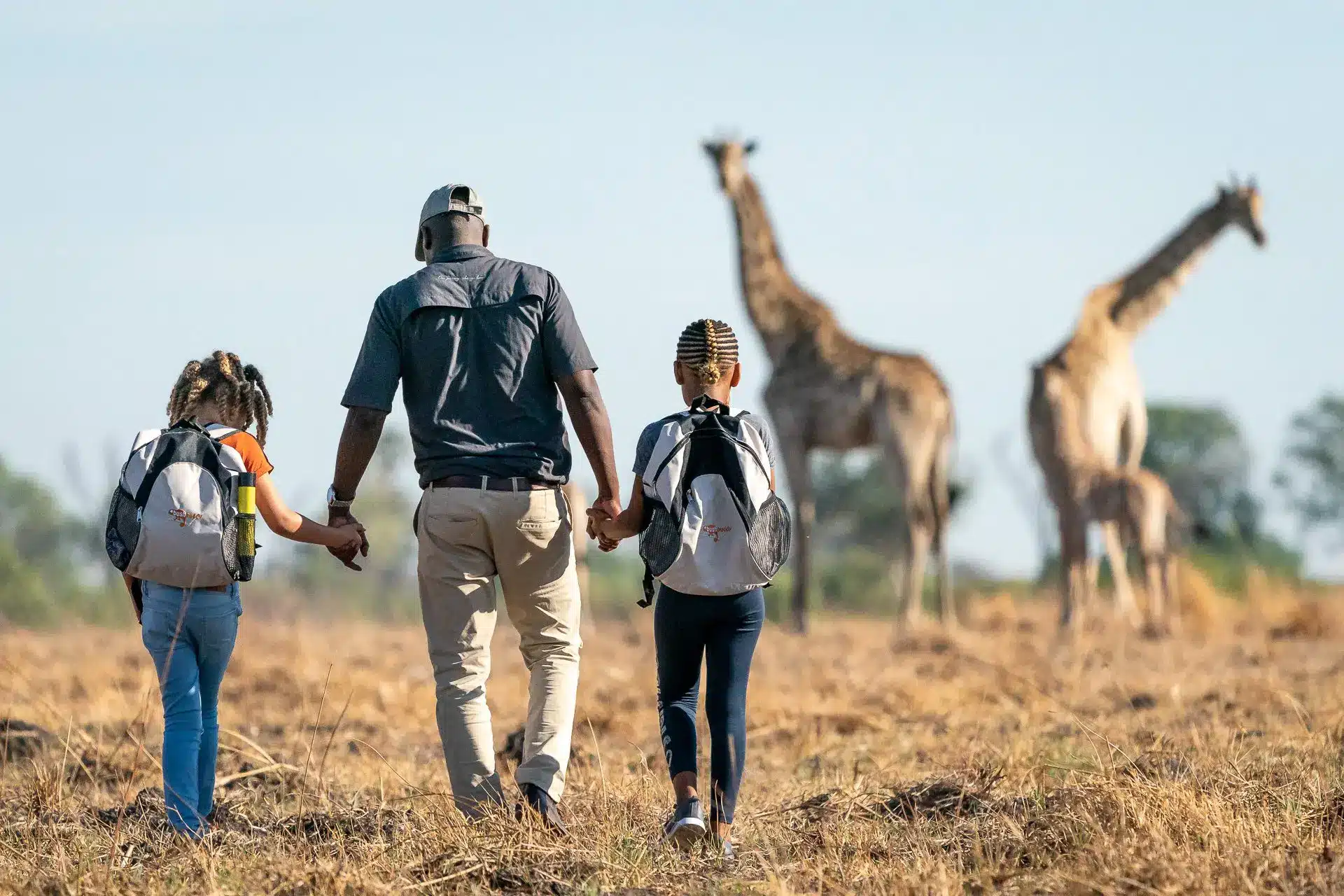
For this age group, the focus is on short experiences and comfort. Most reserves do not allow very young children on standard game drives; however, family lodges offer various alternatives. They include guided walks, animal spotting from decks, simple wildlife-themed games, and storytelling.
Young children aged 4 to 7
Children this age can start gently on game drives. The drives are usually shorter and focused on common animals like zebras, elephants, and giraffes. There are also ranger programs, bush treasure hunts, and animal tracking to keep children engaged.
Older children aged 8 to 12
Children this age can take part in longer game drives and more hands-on activities. These include learning to identify animal tracks, bush walking with guides, conservation talks, and basic photography.
Teenagers
Teenagers will enjoy night drives, conservation projects, advanced tracking, wildlife photography, and cultural visits.
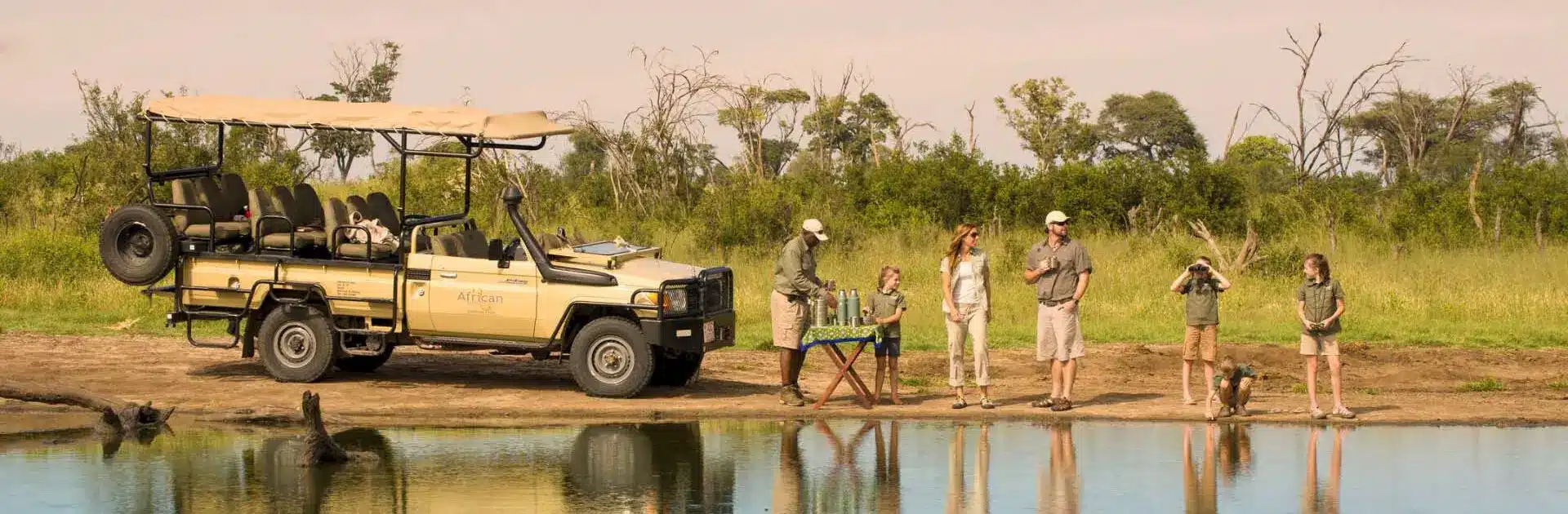
Family-friendly safari destinations in South Africa
For families traveling on safari for the first time with their children, the best safari destinations are not always the most famous. They are the places that prioritize safety, ease, and flexibility.
Malaria-free reserves for young families
Malaria-free zones are always a top choice for families with young children. Reserves such as Pilanesberg, Madikwe, and private reserves in the Eastern Cape are ideal. They allow parents to enjoy wildlife viewing without worrying about malaria. They also offer sightings of the Big Five.
Private game reserves over national parks
Private game reserves are a better option for families rather than large national parks. Here you can have flexible game schedules, private vehicles, and guides who tailor activities to children’s needs.
Combining safari with city or coastal stays
A great way to enjoy a safari in South Africa with your children is to pair it with time in Cape Town or along the coast. This balance helps children recharge and makes the trip less exhausting. Parents also get to enjoy wildlife, culture, and time to relax at the beach.
A family safari in South Africa is more than ticking animals off a list. It is about slowing down and sharing moments of discovery while giving your children an experience of a lifetime. For first-time visitors, South Africa offers the right balance of adventure and comfort. You will find malaria-free options, flexible safari schedules, and family-focused lodges.