- Multi-generational safari at a glance
- What makes a multi-generational safari different?
- What ages work best for a family safari?
- How we plan a safari for three generations
- Best safari destinations for multi-generational families
- Kenya or Tanzania: which is better for a multi-generational safari?
- Should you book a private safari vehicle?
- How much driving is too much, and when should you fly?
- How many nights should you stay?
- Choosing family-friendly safari accommodation
- Safari activities for children and teenagers
- Planning a safari for grandparents
- Health, mobility and safety considerations
- Best time to go with a multi-generational family
- What families most often get wrong
- How much does a multi-generational safari cost?
- Sample multi-generational safari itineraries
- Plan your multi-generational safari with Cheetah Safaris
Most multi-generational enquiries reach us the same way. A family has decided to travel together, someone has been asked to organise it, and they arrive with a firm picture of what they want and a few assumptions about what is and is not possible. Some of those assumptions are right. Some are not, and part of our job is to say so early, before anything is booked.
A three-generation safari is not a normal family safari with grandparents added. The itinerary has to work across different energy levels, mobility, sleep patterns, interests, room arrangements and expectations about how much time a day should be spent in a vehicle. Get those right and it becomes one of the best trips a family will ever take. Get them wrong and someone spends the holiday tired, bored or uncomfortable. Planning these trips well is the heart of our family safaris, and this guide sets out how we approach them, the decisions that actually matter, and two recent examples of how differently they can turn out.
Multi-generational safari at a glance
| Family situation | What usually works best |
|---|---|
| Young children plus grandparents | Private vehicle, fewer camps, shorter drives, longer stays |
| Teenagers and active adults | Conservancies such as Laikipia and Samburu, with activities beyond game drives |
| Limited mobility in the group | Fly between camps, check accessibility at each lodge before confirming |
| First safari | Masai Mara or the northern Tanzania circuit |
| Exclusivity is the priority | Private-use lodges or conservancies, private vehicles, charter flights |
| Short trip (under 8 days) | One safari region rather than combining countries |
| 10 to 18 days | Two safari areas plus an optional beach finish |
What makes a multi-generational safari different?
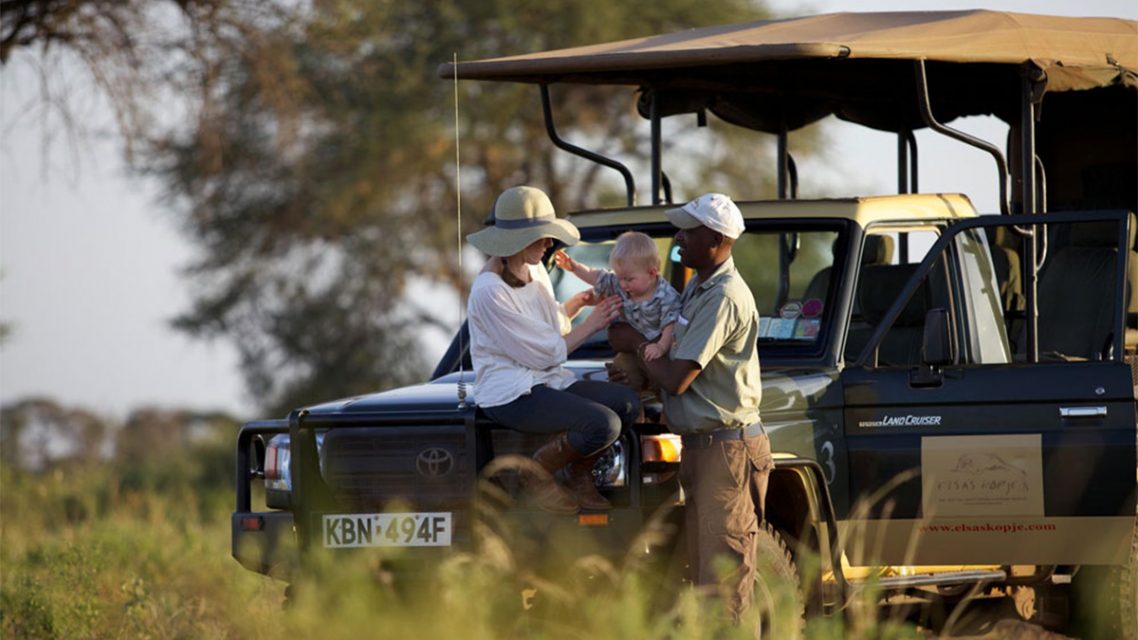
The difference is that no single pace fits everyone. A seven year old and a grandparent in their late seventies want different things from the same day, and the itinerary has to hold both without forcing anyone into someone else’s version of a good holiday. That means fewer bases and longer stays, transport that removes the long tiring transfers, accommodation where the family can actually be together, and enough flexibility that different people can do different things on the same afternoon.
Before we recommend a single camp, we ask five questions, because the answers decide almost everything else:
- How old are the children?
- How mobile are the grandparents?
- How many people are travelling, and in what room combinations?
- Can everyone comfortably share a vehicle, or do you need two?
- How much driving is the family genuinely happy to do?
The routing, the accommodation and the transport all follow from those five answers. A family that answers “very young children, one grandparent with a knee replacement, ten of us, and please keep drives short” needs a completely different trip from a family of active teenagers, and the mistake is to plan both the same way.
What ages work best for a family safari?
There is no wrong age, but there is a right kind of trip for each age.
| Traveller | Usually needs |
|---|---|
| Children 5 to 8 | Shorter drives, frequent wildlife, simple tracking, drawing or journaling, pool and free time |
| Children 9 to 12 | Tracking, photography, junior ranger activities, gentle conservation experiences |
| Teenagers | Photography, walking, night drives where permitted, conservation and cultural experiences, some independence |
| Parents | Simple logistics and a little private space |
| Grandparents | Comfort, manageable walking, sensible driving times and genuine downtime |
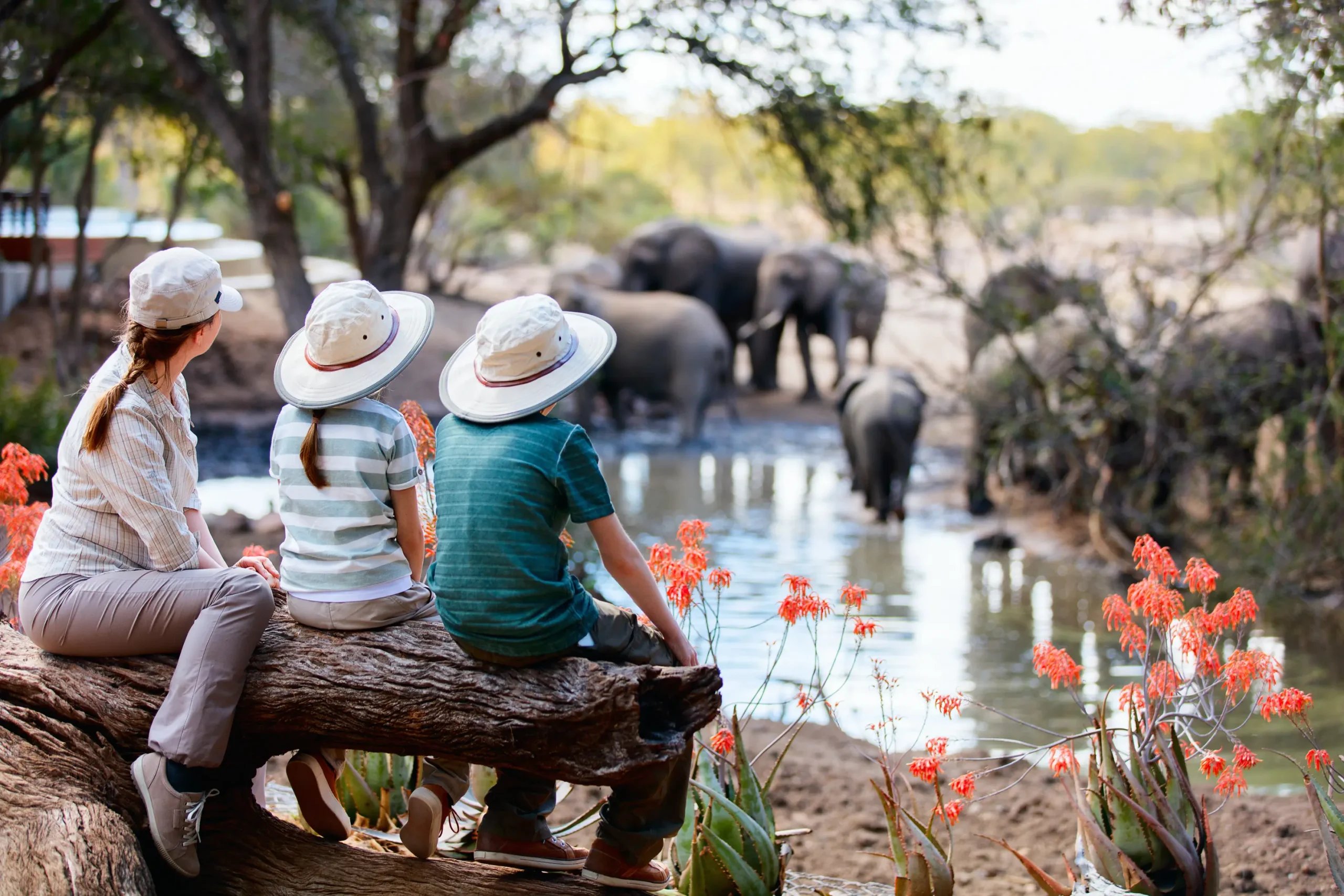
Two points matter here. First, most of these activities depend on the individual camp and its minimum-age rules, so what a nine year old can do at one lodge they may not be able to do at another. Second, the temptation with young children is to over-schedule. Frequent, shorter wildlife encounters beat long drives every time.
How we plan a safari for three generations
Our process is the same whether the group is four people or fifteen.
Step one, we understand the family: ages, mobility, interests and any previous safari experience. Step two, we choose the region to match, rather than defaulting to the most famous parks. Step three, we build the pace, which for three generations almost always means fewer bases and longer stays. Step four, we match the accommodation, checking family rooms, interconnecting rooms, accessibility and child policies rather than choosing on looks alone. Step five, we plan the transport, deciding where a private vehicle, a road transfer or an internal flight makes sense. Step six, we build in flexibility, so downtime and optional activities let different people have different days. Step seven, we support the family on the ground, which is where a locally based operator earns its place.
Best safari destinations for multi-generational families
Maasai Mara
A strong first choice for many first-time families. The Masai Mara is particularly strong for big-cat viewing, the landscape is open and easy to watch from a vehicle, and wildlife viewing is generally good throughout the year, though sightings and conditions vary with season, location and weather. For families we usually lean towards the private conservancies bordering the reserve, where vehicle numbers are capped, off-road and night drives are allowed, and children’s programmes tend to be stronger.
Best for: first-time families who want reliable general game viewing and short, productive drives. Less ideal when the group specifically wants the desert species or the activity range of the northern conservancies.
Amboseli
Amboseli offers open terrain and large elephant herds beneath Kilimanjaro, and the flat, uncluttered landscape makes wildlife easy to spot, which suits younger children and older travellers alike. Drives can be short and still rewarding. The heat builds through the middle of the day, so early starts matter, and Kilimanjaro shows itself on the mountain’s own schedule rather than yours, most reliably early and late. Two or three nights is usually enough, and it pairs well with the Mara for a first Kenyan trip.
Laikipia and Samburu
This is where a multi-generational trip can stretch furthest beyond the standard game drive. The private conservancies and rhino sanctuaries of Laikipia and Samburu allow walking, riding, night drives, conservation work and cultural experiences that most national parks do not, which makes them ideal for families with older children and teenagers.
A recent trip. This January we planned a family journey through Laikipia and Samburu for a group of grandparents, parents and children who wanted far more than game drives. Alongside the wildlife, we arranged helicopter tours into parts of northern Kenya few travellers ever reach, the Suguta Valley, Lake Logipi and the Mathews Ranges, with swimming and fishing in the Suguta, a visit to the Reteti elephant sanctuary, and a community outreach programme with the Samburu that the family had specifically asked to take part in. It suited a family with the energy and curiosity for it, and it shows how much a trip can hold when the whole group is active.
Best for: families with older children or teenagers who want activity and depth. Less ideal when the priority is maximum big-cat viewing with minimal transfers and very short drives.
Serengeti and Ngorongoro
The Serengeti and the Ngorongoro Crater are the heart of northern Tanzania, and the concentrated, reliable game viewing of the crater in particular suits mixed-age groups who want a structured, manageable day. The two pair naturally, and they combine easily with a beach finish in Zanzibar.
A recent trip. A family of fifteen, spanning grandparents, parents, teenagers and young children, came to us wanting a trip built around exclusivity and fewer game drives, with interconnecting luxury rooms in luxury lodges across the Serengeti, Ngorongoro and Zanzibar. We planned exactly that: an eighteen day Tanzania bush and beach safari, with private charter flights linking every destination so nobody faced a long road transfer, and a slow, exclusive pace that let the family set its own rhythm rather than the itinerary setting it for them. It is a good illustration of a principle we come back to often, that for a large family, fewer, longer, more comfortable stays beat a packed route every time.
Diani and Zanzibar
A beach finish is one of the most useful additions we often recommend, because it lets grandparents rest, gives children a change of pace, and sends everyone home relaxed rather than exhausted. Diani on the Kenyan coast and Zanzibar off Tanzania both work well. That said, we would not always add one. On a short trip, for a family focused entirely on wildlife, or with very young children who tire with extra flights, the days and the budget are often better spent on additional safari nights.
Kenya or Tanzania: which is better for a multi-generational safari?
Many families assume they need both. Often they do not, and combining them on a short trip adds border and flight logistics that can cost more in tiredness than they add in wildlife.
Choose Kenya if it is a first safari, the trip is shorter, the Mara is the priority, you want easy routing, or you want to combine safari with the Kenyan coast.
Choose Tanzania if the Serengeti or the Ngorongoro Crater is the priority, you want a longer northern circuit, or migration positioning at a particular time of year matters to you.
Combine both only if the trip is long enough, the family genuinely wants both ecosystems, the budget allows the extra flights, and everyone is comfortable with the additional movement. A combined Kenya and Tanzania safari is a wonderful trip, but it should be a decision, not a default.
Should you book a private safari vehicle?
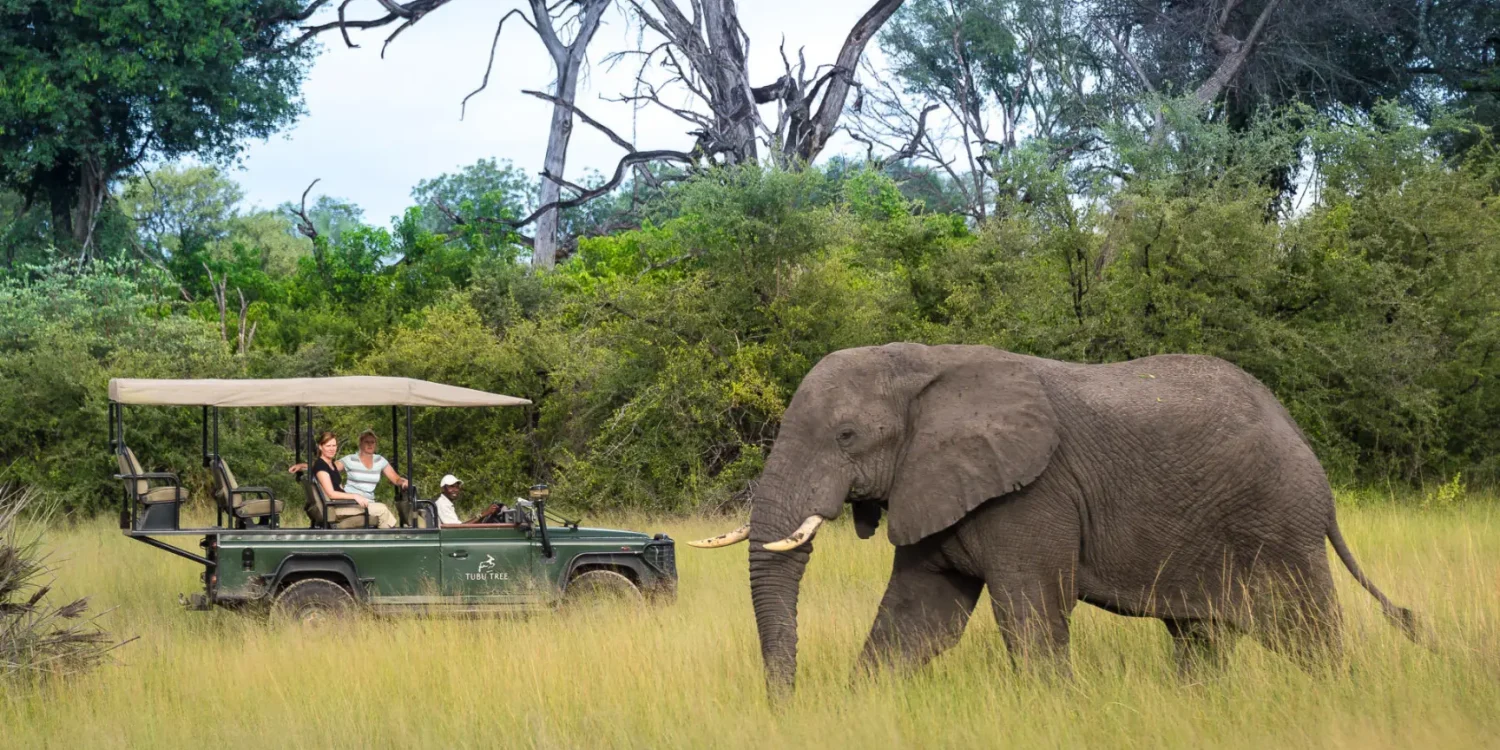
For a multi-generational group, usually yes. A private vehicle lets the family set its own timing, turn back early when the youngest is tired, stay longer at a sighting the photographers love, and travel together as one group. The extra cost buys flexibility, and that flexibility is worth most precisely when a family spans several generations.
A private vehicle is particularly valuable when three generations are travelling, when children are young, when grandparents need flexibility, when photographers want longer at a sighting, or when the group has genuinely different energy levels.
How much driving is too much, and when should you fly?
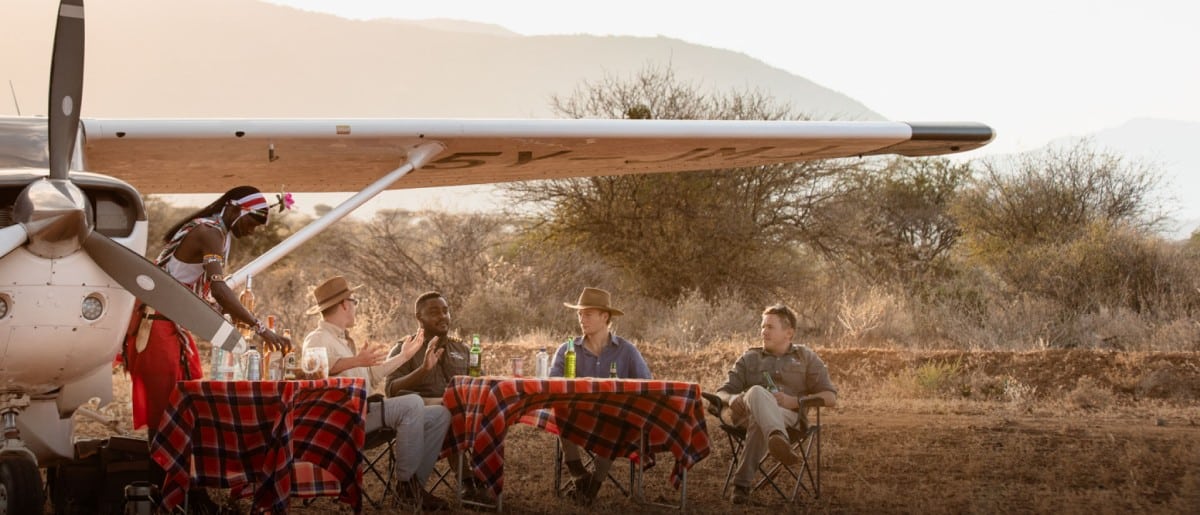
Long road transfers are the most common thing we quietly remove from a family’s first draft. Children lose patience, grandparents lose comfort, and a day spent driving is a day not spent on safari. Where a transfer runs long, we usually replace it with a light-aircraft or charter flight between camps, which turns hours into minutes and keeps the group fresh. On the family of fifteen above, charter flights across every leg were the single decision that made an eighteen day trip feel slow and exclusive rather than long. As a rule of thumb, if a road transfer runs beyond three to four hours and a flight exists, we look hard at flying.
How many nights should you stay?
Fewer bases, longer stays. Two nights in a camp means one full day and a lot of packing. Three nights lets a family settle, find a rhythm and actually rest, which matters more with children and grandparents in the group. For most multi-generational trips we plan two safari areas at three nights each, then an optional beach finish, which lands comfortably in the ten to fourteen day range and stretches to eighteen when the family wants a slower, more exclusive pace.
Choosing family-friendly safari accommodation
A pool can be useful, but it should not be the deciding factor, since several excellent camps do not have one. What matters more, and what we check before confirming any camp for a family, is the practical detail: family rooms or interconnecting rooms, the bathroom layout, how far the room is from the dining area, vehicle and tent access, the minimum child age, whether children’s activities and babysitting are available, meal flexibility, and any age restrictions on walking or night activities.
For larger groups, room configuration can matter as much as the destination itself. The family of fifteen needed genuine interconnecting luxury rooms across three very different properties, and that requirement narrowed the choice of lodges long before wildlife did.
Safari activities for children and teenagers
The right activities depend on age, and on the camp’s own rules.
For children 5 to 8, keep it simple: short drives, animal spotting, gentle tracking, journaling and free time. For 9 to 12, add photography, junior ranger sessions and light conservation experiences. For teenagers, the range opens up to photography, walking safaris, night drives where permitted, conservation work and cultural experiences, along with a little independence. The Laikipia and Samburu trip above is the fullest version of this, where helicopter flights, fishing, an elephant sanctuary visit and community work gave every generation something to remember. As always, what is possible depends on the individual camp and its minimum-age policies, which we confirm before promising anything.
Planning a safari for grandparents
On a good multi-generational trip, the grandparents’ comfort gets planned first, not last, because they are the least flexible link and the trip works when it works for them. Before we confirm a camp for a group with older travellers, we check a short list of practical things:
- How far is the room from the dining area, and is the path level?
- How many hours a day will be spent in the vehicle?
- Are there long road transfers, or can we fly?
- How easy is it to get in and out of the safari vehicle?
- Are bathrooms accessible?
- How much walking is required around the camp?
- How far is the nearest medical facility?
- Would a private vehicle make the days more manageable?
None of these appear on a brochure, and every one of them decides whether a grandparent enjoys the trip or endures it.
Health, mobility and safety considerations
Safari-specific planning matters more than a generic travel checklist. We talk families through malaria planning, comprehensive travel insurance that includes medical evacuation, keeping essential medication in hand luggage, motion sickness for younger children, cold early-morning temperatures on game drives, sun and hydration, and the flight baggage limits that apply on light aircraft. We also flag age restrictions on walking and night activities early, so no one is disappointed on arrival. For detailed medical guidance we point families to our health and safety information rather than giving medical advice here, and we plan remote camps with their distance from facilities in mind.
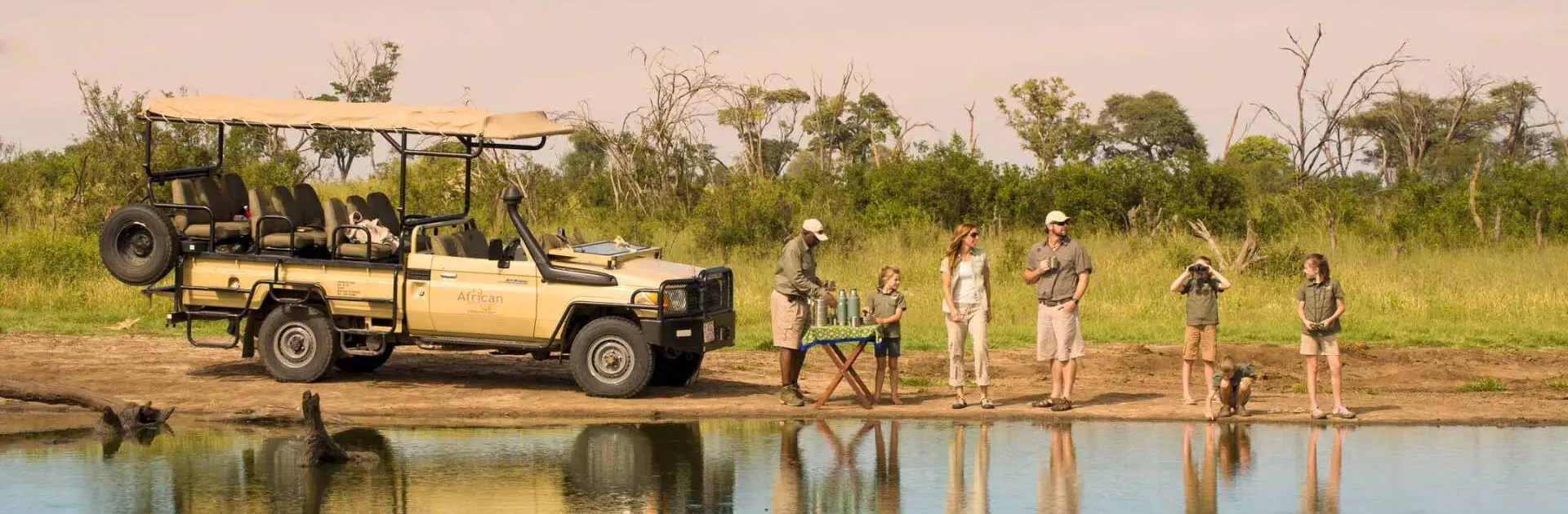
Family Enjoying Bush Meal while on Safari in Zimbabwe
Best time to go with a multi-generational family
For families, the school calendar often matters as much as the wildlife. July and August fall in many school holidays and offer excellent viewing, but they are the busiest and most expensive months, so they need booking well ahead. September and October are often superb for wildlife with slightly easier conditions. January to March suits families looking for warmer, quieter weeks, with calving in parts of the southern Serengeti. April and May are lower season and better value, though wetter conditions can affect roads and some activities. November and December bring the green season and good value, with rain that can affect logistics in places. Kenya and Tanzania do not behave identically, and conditions vary by region, so we match the timing to your dates and your priorities rather than to a single “best season.”
What families most often get wrong
The same avoidable mistakes come up again and again:
- Trying to visit too many parks in too few days.
- Booking shared vehicles to save money, then losing all flexibility.
- Choosing camps by price rather than room configuration.
- Ignoring minimum-age policies until it is too late.
- Assuming grandparents can handle the same pace as everyone else.
- Accepting long road transfers that a short flight would solve.
- Trying to combine Kenya and Tanzania on too short a trip.
- Assuming migration or big-cat sightings are guaranteed.
- Leaving beach days to the very end without checking flight schedules.
- Never discussing expectations about early mornings before the trip.
Almost all of these are easy to avoid with an honest planning conversation at the start.
How much does a multi-generational safari cost?
The honest answer is that it depends, and on more than the destination. The biggest variables are the number of travellers, the children’s ages, whether you take a private vehicle, the standard and number of rooms, the season, internal or charter flights, park and conservation fees, and any beach extension or special activities.
One point is worth understanding, because it surprises many families. A group of six does not cost six times a couple’s safari. The vehicle, the guide and much of the logistics are shared across the family, so the per-person cost usually falls as the group grows, even at the luxury end. For an accurate figure, the only reliable route is a tailored quote against your dates, group and priorities, which we are happy to prepare.
Sample multi-generational safari itineraries
These are examples, not fixed routes. We build each trip around the family, but they show the shape of a trip that works.
Option A, younger children (about 10 days). Masai Mara for three nights, Amboseli for three nights, then Diani Beach for three nights. Short drives, easy wildlife, and a relaxed finish.
Option B, teenagers and active families (about 12 days). Laikipia and Samburu for four nights with walking, riding, and conservation activities, the Masai Mara for three nights, then Diani for three. Activity first, then classic game viewing, then the coast.
Option C, Tanzania bush and beach (about 14 to 18 days). Tarangire, the Ngorongoro Crater and the Serengeti, then Zanzibar, linked by charter flights for a slow, exclusive pace. This is the shape of the family-of-fifteen trip, scaled to the group.
Plan your multi-generational safari with Cheetah Safaris
We are a locally based operator, and multi-generational trips are some of the most rewarding ones we plan, precisely because they take real knowledge to get right. We match the right camps to the right ages, plan the flights and drives so no one is worn out, arrange the interconnecting rooms and private vehicles, and stay with the family from the first enquiry to the journey home.
Karibu. Tell us who is travelling, and we will build the trip around them. You can start planning with our team whenever you are ready.