- Why finding wildlife still matters
- When a sighting becomes a race
- Why precise wildlife locations can be sensitive
- When a sighting becomes a race
- The quiet problem with precise locations
- What makes a good safari guide?
- A real example: our second day in the Masai Mara
- What happens at a migration river crossing?
- What responsible wildlife viewing looks like
- What an off-radio safari is actually like
- How Cheetah Safaris uses radios and wildlife location sharing
Modern safari carries a quiet contradiction. We travel thousands of kilometres to sit inside genuine wilderness, to watch wild animals live on their own terms, and to accept that we cannot know exactly what a morning will bring. Then, more and more, we do everything we can to remove that uncertainty.
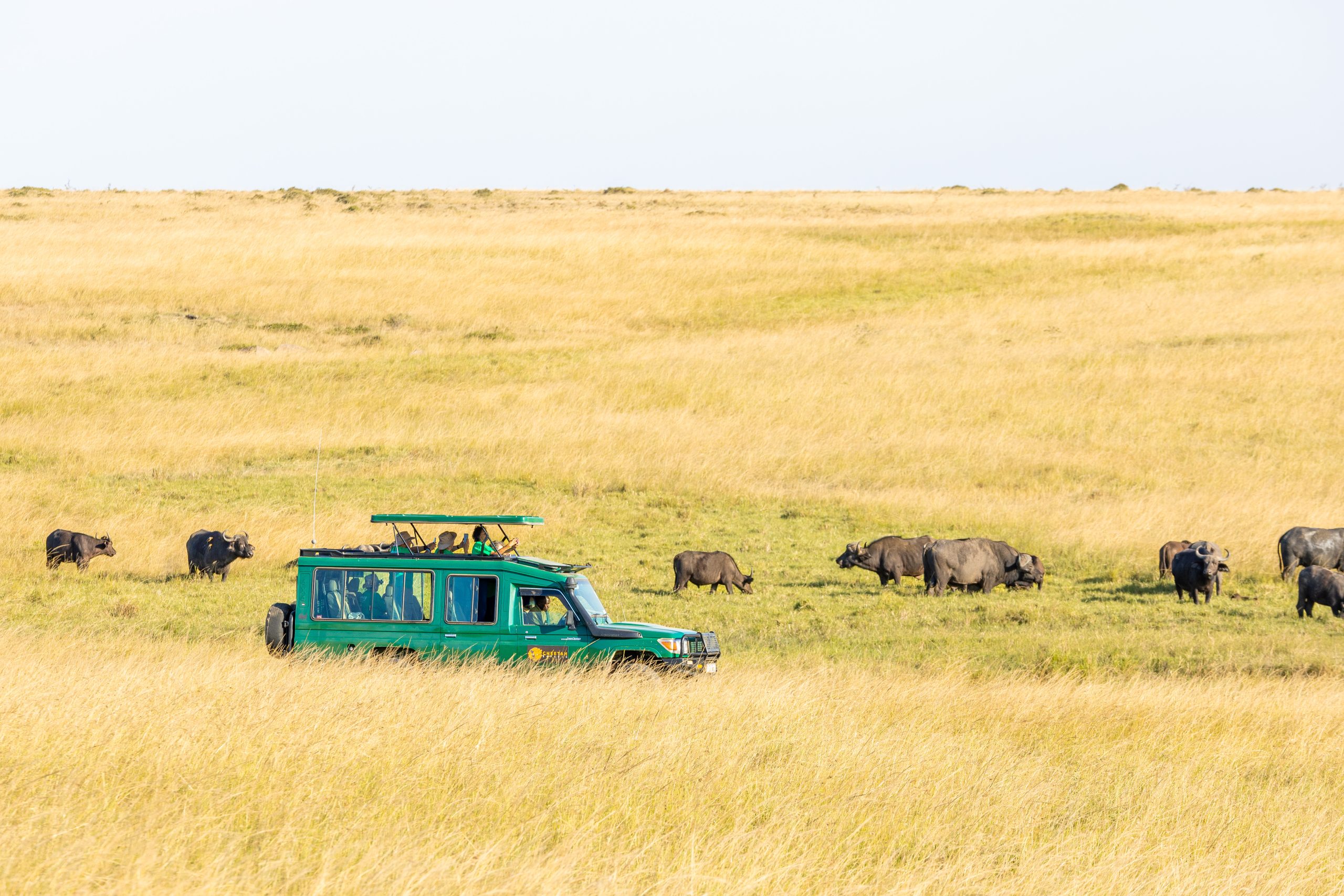
A leopard is spotted. A location is shared. A message goes out. Within minutes, vehicles that were spread across many kilometres begin moving towards the same tree. The question stops being whether we can find the leopard. It becomes how quickly we can get there.
At Cheetah Safaris we have started asking our guides to step away from the group chat in certain situations, and to run more of each drive off the radio. Not always, and not everywhere, but far more often than we used to. This is an argument for using technology well rather than against using it at all, because there is a point where information that makes a safari easier also makes it less wild, and puts needless pressure on the very animals we came to see.
Why finding wildlife still matters
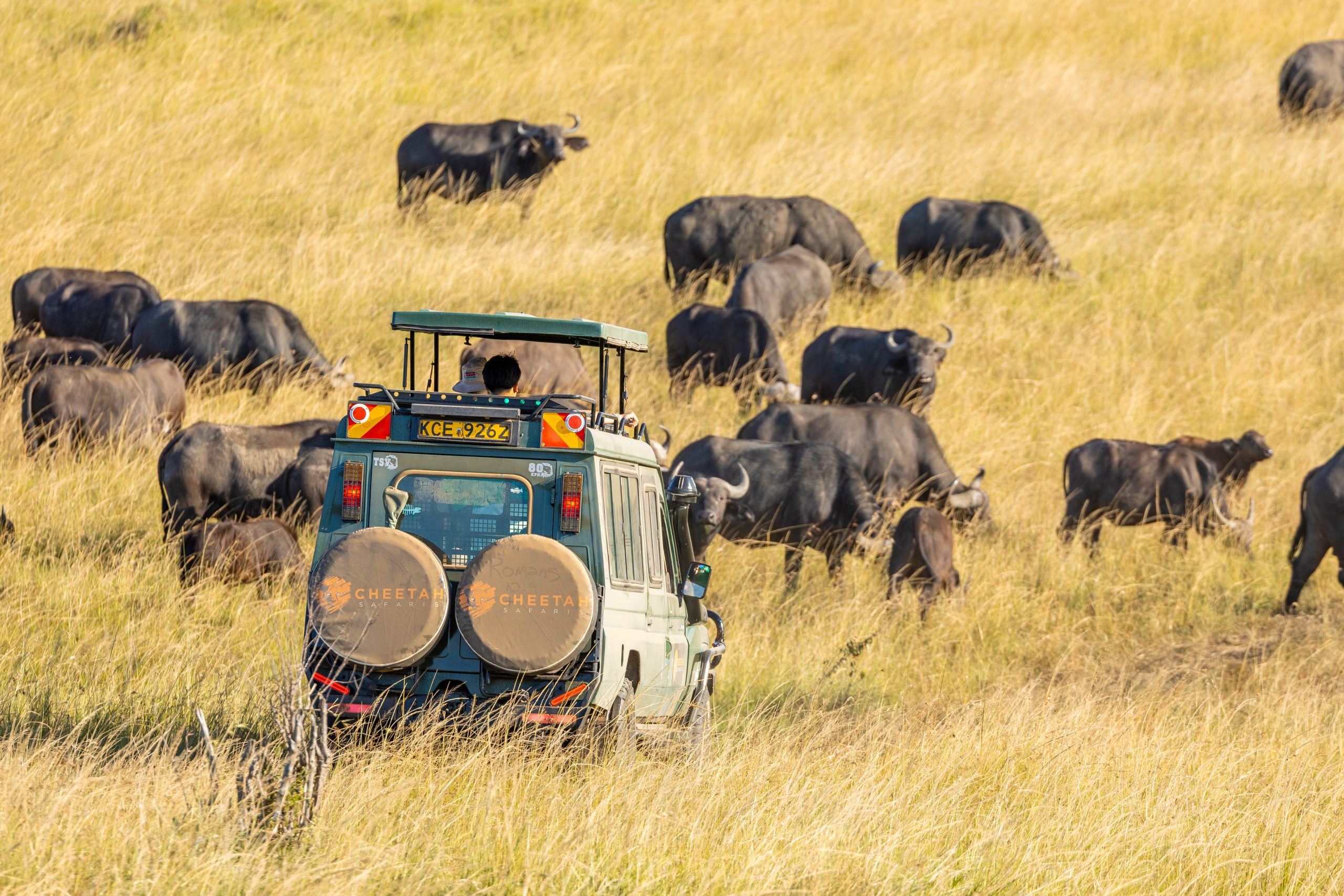
Finding wildlife is a craft, not a lookup. A good guide reads the landscape, notices fresh tracks in the dust, watches how the plains game is behaving, and listens for the alarm calls that give a predator away. They know where water will draw animals at a given hour, and they read a kill in the vultures dropping towards it long before the vehicle arrives.
Watch a good guide work and you see that knowledge in motion. A single baboon alarm call carried on the wind, the sudden stillness of a herd that was grazing a moment ago, a lone jackal trotting somewhere with purpose, each is a thread, and the guide follows one until it leads somewhere or quietly runs out. Wind direction decides the approach. Time of day decides where to look. None of it is promised, which is exactly why it is a skill and not a service you can order.
So uncertainty is built in. You might follow a set of tracks for half an hour and find nothing, or watch a thicket for an hour before a tail finally moves. Sometimes you search all morning and never see the animal you hoped for. That is not a failure of safari. That uncertainty is safari, and a leopard has made no promise to appear because someone flew across the world to see it.
When a sighting becomes a race
It helps to separate three different things a radio does. There is safety communication: a stuck vehicle, a medical issue, a dangerous animal on a road. There is operational communication: timings, road conditions, where a group is meeting for lunch. And there is wildlife-location sharing: the live call that says a leopard is in a particular tree at a particular spot. The first two are unarguable. It is the third that has changed the character of a game drive.
Picture that leopard resting in a tree. One guide shares the spot, another vehicle receives it, then another, and soon several are converging. The leopard that was resting peacefully when the first vehicle arrived may, ten minutes later, be ringed by engines and movement. The encounter has changed completely, and an uncomfortable question sits underneath it: are we still watching wildlife, or are we chasing it? If six vehicles are already at a leopard and another four arrive because someone dropped a pin, we have not built a better safari. We have built a crowd.
Why precise wildlife locations can be sensitive
There is a second reason we have grown careful about real-time locations, and it has nothing to do with crowding. A precise location rarely stays with the people it was meant for. A pin dropped into a group can be forwarded, a screenshot shared, a photograph geotagged. We have watched a single message travel through a chain of groups until no one could say who still held it.
Most of the harmless time. But wildlife location data can become sensitive information, particularly for vulnerable species, breeding sites or young animals that may already face pressure. The responsible assumption is a simple one: once a location leaves your vehicle, you no longer control where it goes. Not every sighting needs a pin, and not every piece of information needs to be shared just because technology allows it.
When a sighting becomes a race
Technology has changed this dynamic. Many guides communicate through radio networks and messaging groups, and that information can be valuable. It helps vehicles coordinate in difficult conditions, share safety updates, and avoid wasting time on an animal that has already moved on. There is a legitimate place for communication.
But there is a difference between communicating responsibly and turning every sighting into breaking news. Picture a leopard resting in a tree. One guide shares the location, another vehicle receives it, then another, and soon several are converging on the same spot. The leopard that was resting peacefully when the first vehicle arrived may, ten minutes later, be ringed by engines and movement. The character of the encounter has changed completely.
This is where an uncomfortable question sits: are we still watching wildlife, or are we chasing it? If six vehicles are already at a leopard and another four arrive because someone dropped a pin, we have not built a better safari experience. We have built a crowd.
The quiet problem with precise locations
There is a second reason we have grown more careful about real-time locations, and it has nothing to do with crowding.
A precise location rarely stays with the people it was meant for. A pin dropped into a WhatsApp group can be forwarded. A screenshot can be shared. A photograph can give away where an animal is. Information intended for a handful of professional guides can travel a long way beyond them. We have watched a single message spread through a chain of groups until no one could say who still held it or what they meant to do with it. Most of the harmless time. But wildlife information is not always harmless in the wrong hands, and the responsible assumption is that once a location leaves your vehicle, you no longer control where it goes.
In a region where conservation and the fight against poaching remain serious concerns, broadcasting the exact whereabouts of certain animals should never be treated casually. Some species are especially vulnerable. Some sites are breeding grounds. Some animals are young. Not every sighting needs a pin, and not every piece of information needs to be shared simply because technology allows it.
What makes a good safari guide?
This is where it matters most to us as an operator. A guide’s value should never be measured by how quickly they can reach an animal someone else found. It should be measured by what they know. Can they anticipate where wildlife will move, explain what is happening rather than simply point at it, and make a sighting meaningful even when it is not a famous animal? Can they give guests an unforgettable hour without disturbing a thing?
Our guides earned their reputation in the bush, not in a group chat. That does not mean refusing to communicate. It means knowing when not to.
A real example: our second day in the Masai Mara
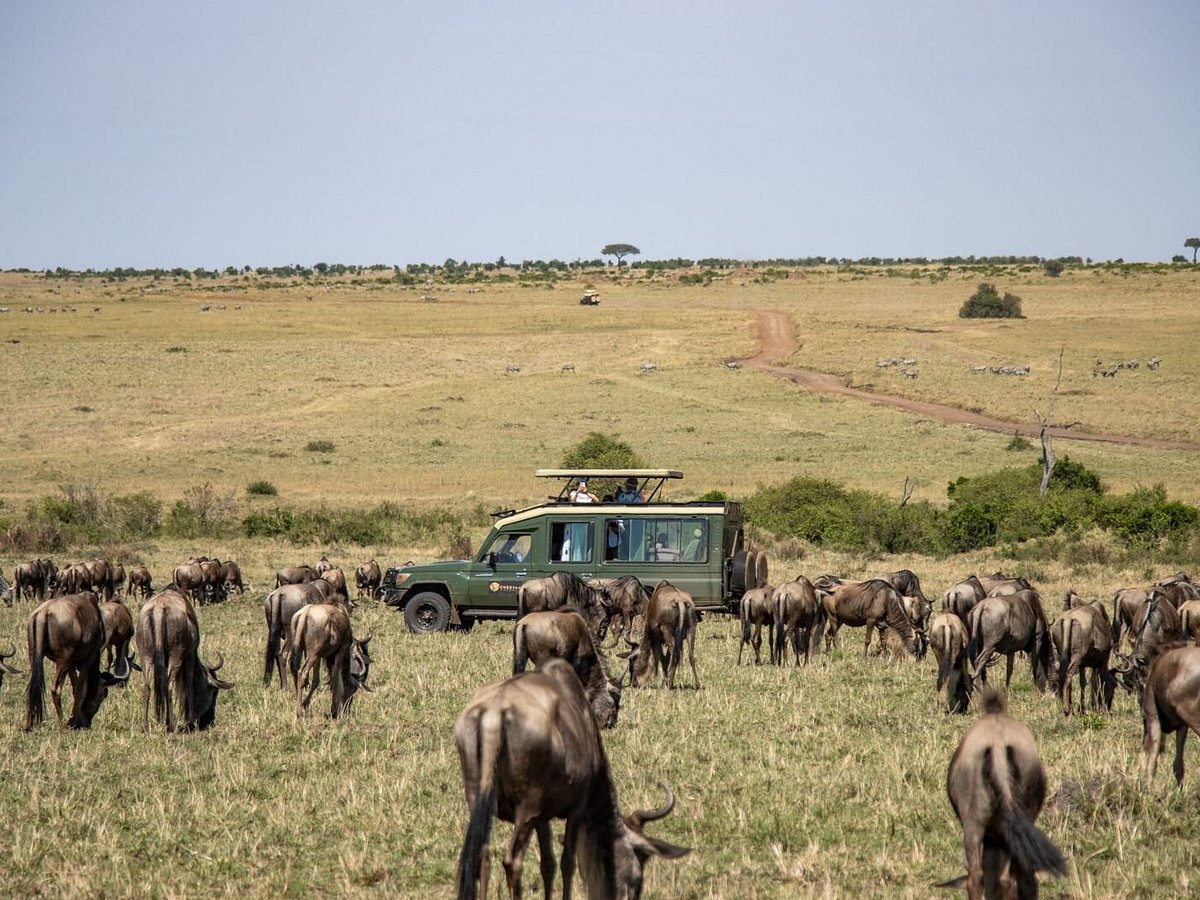
Some of this is easier to feel than to explain, so let us tell you about a recent trip. We were partway through a twelve-day Kenya and Tanzania wildebeest migration safari and had just reached the Masai Mara, where we were due to spend four nights. It was only our second day in the Mara.
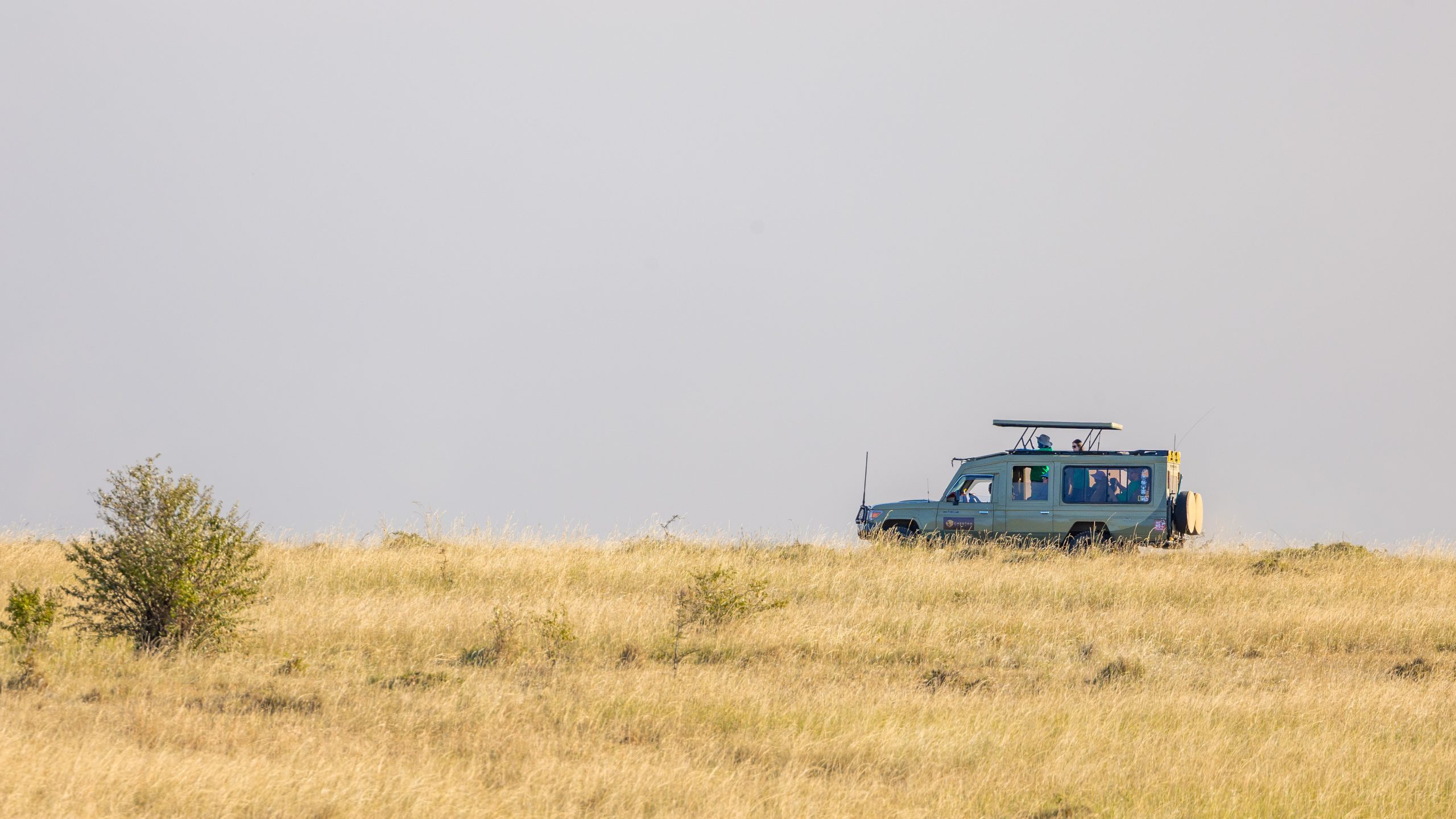
By the time we closed that day, we had seen three cheetahs, fifteen lions and two leopards, along with more elephants than we could count, and we missed a rhino by a whisker. All of it on the second day, and none of it from a pin dropped in a group chat. It came from working the landscape with our guide Gerald, just our guests and one vehicle.
What was Gerald actually reading? Early on it was fresh tracks and the direction they ran, which told him an animal had passed not long before and roughly where it was heading. Mid-morning it was the behaviour of the plains game, a band of impala staring fixedly in one direction, that put us onto a cheetah before we could see it ourselves. Later it was the vultures, and the hour of the day, that told him where a kill was likely to be. He worked with the wind rather than against it, and more than once he chose not to drive towards a distant sighting because the ground and the light told him something closer was worth the patience. Because we ran the drive off the radio, the search stayed ours and the finding felt earned. It was one of the most rewarding safaris I have had.
Then, just before we finished at six in the evening, we came on a different cheetah that had brought down an impala minutes earlier. After a full day driving alone, we were suddenly one of nearly fifteen jeeps, engines running and radios busy, half of them calling in the sighting and the other half asking what everyone else had seen. In a matter of minutes the quiet we had spent all day inside was gone.
We will be honest with you. We do not switch the radio off completely, and we are still building the habit of trusting our own eyes rather than reaching for it. But that evening was a clear reminder of the two very different safaris on offer, sometimes within the same day.
What happens at a migration river crossing?
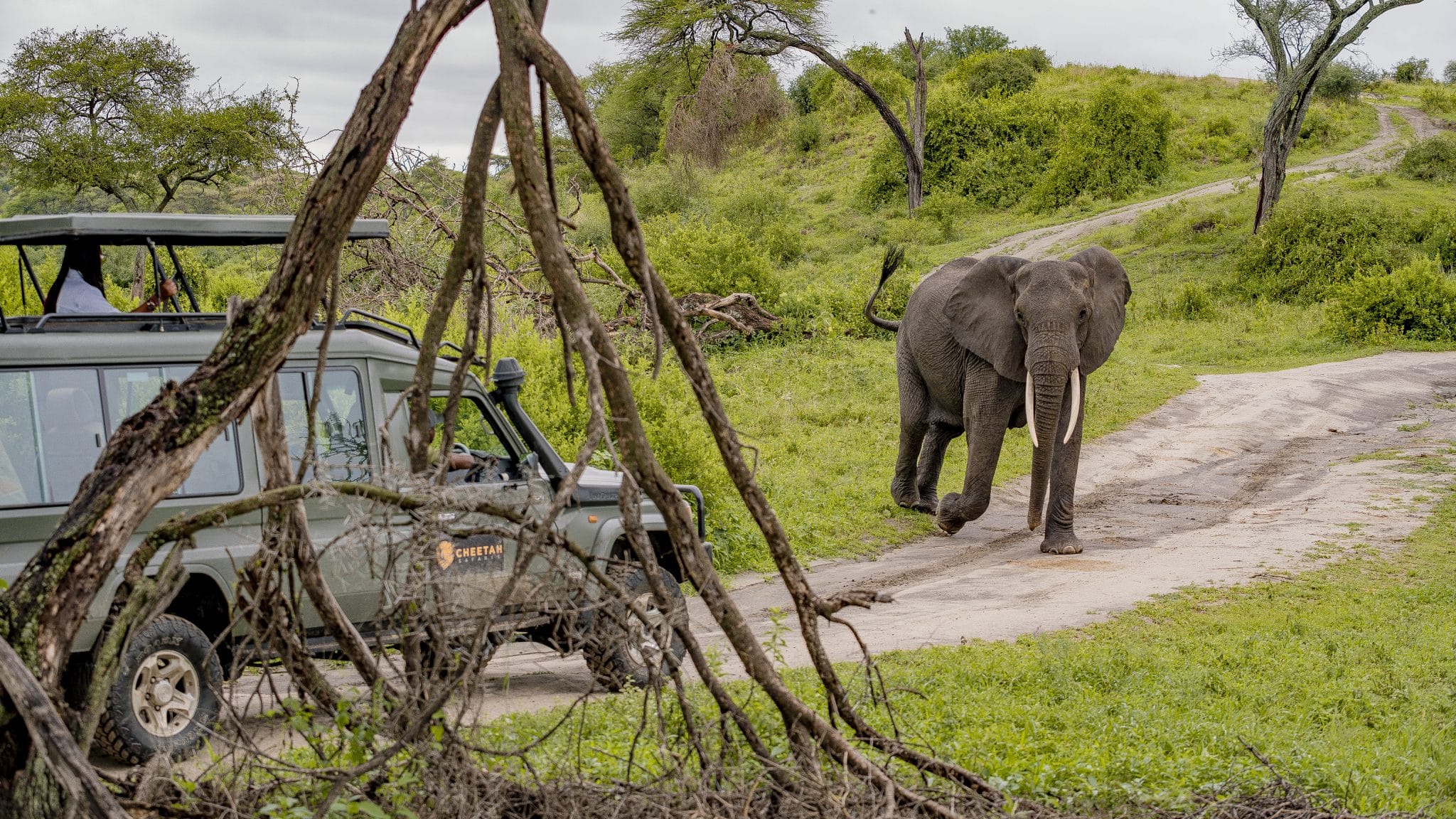
We saw the same pattern in the Serengeti during a major river crossing. A crossing is one of the great spectacles of the migration, thousands of wildebeest massing at the bank, hesitating, then pouring into the water while crocodiles wait below. It is also one of the moments most likely to draw a crowd. Word travels fast, and vehicles arrive from every direction until the banks are lined with jeeps jockeying for the same view. We have watched that jockeying lead to accidents, vehicles reversing into one another or edging too close to the bank.
A herd deciding whether to enter the water is already responding to everything around it. Adding more engines, more vehicles and more movement can make an unpredictable moment more pressured still, for the animals and for the people driving towards them. The spectacle we all came to witness becomes harder to witness well.
What responsible wildlife viewing looks like
Responsible tourism is usually discussed in big terms, and those things matter. But it also lives in the small decisions made inside a single vehicle, and those are the ones a guest actually feels. How close do we get? How long do we stay? Do we switch off the engine? Do we let an animal move away without following it? Do we join a crowded sighting only because the location landed in our chat? Do we notice the moment our wish to see something starts to press on it?
None of these choices appear on an itinerary or in a sustainability report, but each one is responsible wildlife viewing in practice. The question was never whether to use radios, phones and GPS, which keep guests safe and drives running. It is whether we use communication to protect wildlife or to chase it.
What an off-radio safari is actually like
An off-radio safari is a little different from what some travellers expect, and it is worth understanding before you set out. It asks for patience. There will be mornings when the animals come quickly and mornings when they do not, and the reward is bound up in that uncertainty rather than found in spite of it.
Will you miss wildlife this way? Possibly, and we would rather say so plainly. Not chasing every sighting called in across the network means you may not reach every headline animal the moment it appears. What you gain is a guide who spends the day reading the landscape and finding wildlife independently, and encounters that are yours rather than shared with a queue of vehicles. It also asks you to trust that guide. When Gerald turns away from a busy sighting, or spends twenty minutes on a set of tracks that may lead nowhere, he is making a judgement built on years in the bush. Give him the room, and the safari tends to repay you for it.
How Cheetah Safaris uses radios and wildlife location sharing
Stepping back from the group chat during certain sightings is a small decision, and it will not fix everything. It will not empty a crowded sighting or stop anyone photographing a lion. But it reflects the kind of safari we run. In practice, it looks like this:
- We let the guide find it. Where it is reasonable, Gerald and the rest of our team work a sighting from their own tracking rather than following a shared pin.
- We arrive and assess. Before we commit, we read how busy a sighting already is, and we are willing to move on rather than become the fifteenth jeep at the same cheetah.
- We favour private conservancies where we can. In the private conservancies around the Mara, vehicle numbers at a sighting are capped, and off-road access is allowed, so the quiet is protected by the rules and not left to chance.
- We protect the quiet end of the day. The last sighting before dusk is the easiest one to chase. We would rather keep it unhurried than join a scramble as the light goes.
- We guard sensitive locations. Breeding sites, young animals, and vulnerable species are not broadcast, even within trusted groups.
- We keep the radio for what it is good at. Safety, logistics and genuine coordination stay on it. The running commentary does not, and we treat leaving it off as a habit we are still building.
Loving wildlife does not always mean getting closer. Sometimes it means knowing when to leave an animal alone, and sometimes the most rewarding safari moment is the one no one else is watching.
That is the safari we build: clean, authentic and unhurried, led by guides who look for wildlife rather than follow it, whether you join us in the Mara, the Serengeti or on a combined Kenya and Tanzania safari. We cannot promise which animals will appear. We can promise the kind of day it will be.
Karibu. If that is the safari you have been looking for, we would be glad to plan it with you.