The Cheetah’s Spots: Family safaris in Kenya are often the easier choice with younger kids, while Tanzania can be a better fit for older children who are ready for longer travel days and bigger adventures.
- Kenya is generally easier for children under eight because transfers are shorter, game drives can be more flexible, and Laikipia offers higher-elevation safari options with lower malaria risk.
- Tanzania can work especially well for children eight and older who can handle longer transfers and drives and want experiences such as the Great Migration.
- Lodge age rules vary in both countries, so check each camp’s policies for game drives, bush walks, night drives, and other activities before booking.
- A private safari vehicle gives families more control over stops, naps, drive lengths, and daily schedules than a shared vehicle.
- If you visit both Kenya and Tanzania, fly between safari regions instead of driving the 10 to 14-hour overland route.
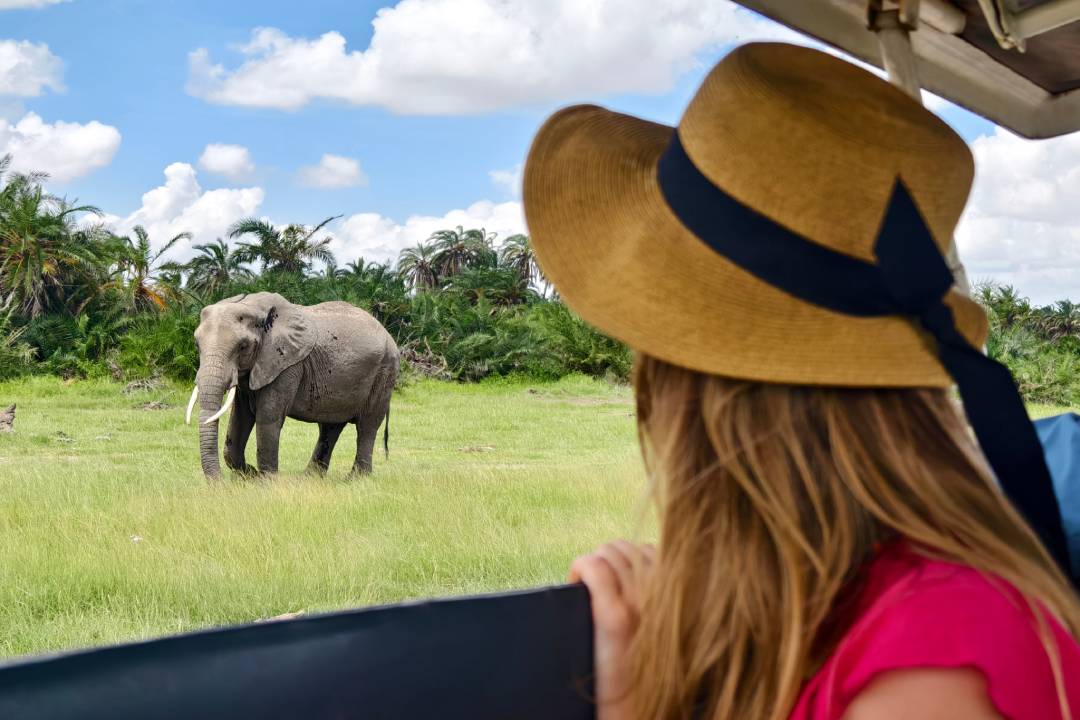
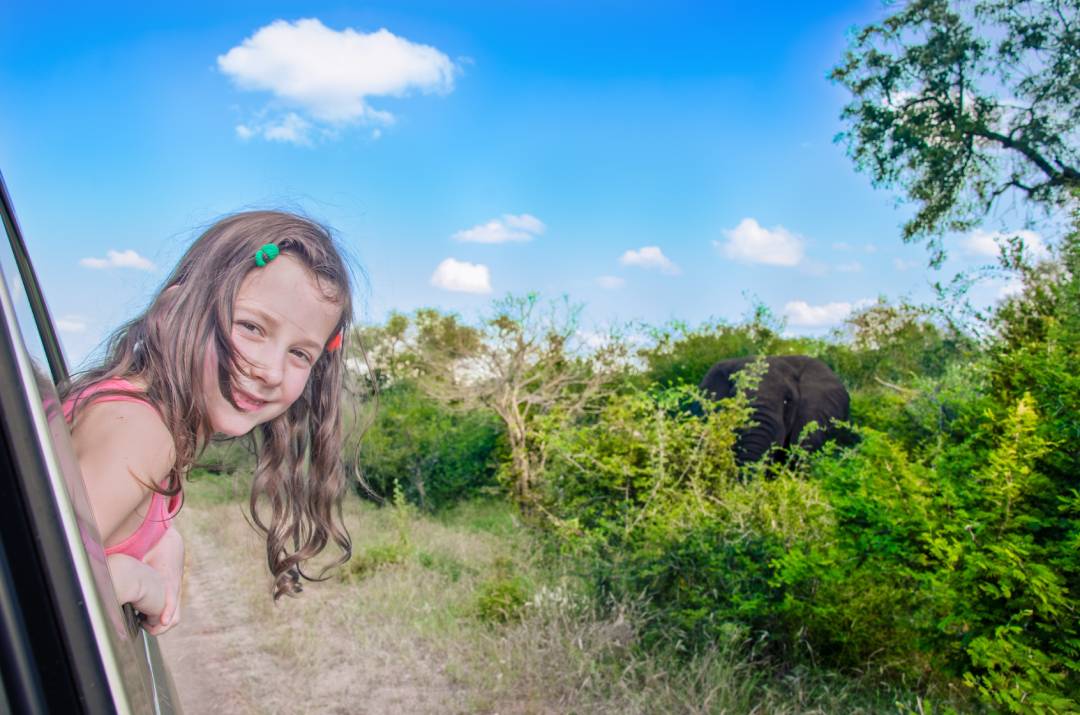
You’ve daydreamed and pictured it repeatedly: the kids hanging out of an enclosed Pop-Top Land Cruiser at a safari, wide-eyed at their first glimpse of an elephant.
Daydreams are all well and good, but then the logistics creep in. Long flights, jet lag, malaria pills, and a toddler who melts down because they didn’t want to go in a car seat.
When weighing family safaris in Kenya against Tanzania, you know both countries deliver extraordinary wildlife. But do they have the same ease when the kids are involved? This is the right question to ask before you commit. Let’s help you find the most fulfilling safari, rather than the full-of-tears safari, that will work for you.
Does the Way You Get There Matter?
For you and your kids? Yes!
Kenya has the shorter path. Land in Nairobi and you can be watching lions in the Masai Mara within two to three hours. Wilson Airport’s light aircraft cover the distance in about 45 minutes, and most camps sit only 10 – 30 minutes from their own airstrip.
For a family safari in Kenya with very young kids, what that means for you is one flight, one short transfer, and a nap schedule that barely gets interrupted.
Family Safaris in Tanzania, on the other hand, take longer—but not by too much once you’re on the ground. You’ll fly into Kilimanjaro International Airport or Arusha first, then connect to a Serengeti airstrip on a flight that runs 1 to 2 hours depending on where you’re headed.
Because the Serengeti covers so much ground, the drive from the airstrip to your camp can add another 20 minutes to an hour. A Tanzania family safari isn’t harder to reach; it just asks for one more travel segment, so build in an extra day if you’re pairing the Serengeti with Ngorongoro Crater or Tarangire.
Skip the overland route between the two countries entirely. Driving from Nairobi to the Serengeti takes 10 to 14 hours and usually forces an overnight stop, which is a rough ask for kids in either direction. If your trip includes both parks, fly between them instead.
How Do Malaria Risks Shape Where You Should Stay?
Malaria transmission occurs across most safari regions in both countries. The question to ask yourself isn’t whether the risk exists, but where it’s the lowest.
Kenya’s Laikipia Plateau sits at roughly 1,700 to 2,000 meters, high enough that mosquitoes struggle to thrive, making it reassuring for families with children under eight. The Masai Mara, Amboseli, and Tsavo carry a higher risk by comparison.
Tanzania follows the same elevation logic. Malaria transmission occurs across most of the country below 1,800 meters, while cooler air around the Ngorongoro Crater rim offers some relief. The Serengeti itself, along with Zanzibar’s coast, sits in higher-risk territory.
Neither country lets you skip this process or conversation. Pediatric antimalarial medication, DEET or picaridin repellent, treated bed nets, and long sleeves after dusk form the standard defense recommended for children in East Africa. Always talk to a travel clinic four to six weeks before departure so timing lines up with your trip.
How Much Do Age Policies Vary?
Kenya’s conservancy camps, particularly in Laikipia and around the Mara, tend to welcome children of any age on standard game drives, reserving bush walks and night drives for kids 12 and older for safety. Some Serengeti luxury camps impose stricter minimums, often 8 to 12 years old, for certain shared activities.
Now, don’t worry. It doesn’t mean Tanzania shuts families out. It means checking each lodge’s policy individually rather than assuming “family-friendly” branding covers your child’s exact age. A private vehicle, your own dedicated 4×4 rather than a shared game-drive vehicle, sidesteps most restrictions, since you’re not sharing the day with guests who tolerate stops or naps differently.
Does Entry Paperwork Make Things More Difficult?
Both countries require children to hold their own travel authorization, and neither lets you fold a child into a parent’s passport. Kenya’s Electronic Travel Authorization applies to every visitor, including infants, and a parent completes the application on the child’s behalf. Tanzania works the same way: every child needs a separate passport, valid for six months beyond your travel dates, plus their own e-visa.
If you’re arriving from a yellow fever endemic country, or transiting through one for more than 12 hours, both nations require proof of vaccination for children and adults alike. Building these steps into your timeline early avoids a scramble the week before departure.
How Do Drive Times Inside Parks Affect Things?
Once you’ve landed, the game changes again. Distances between camps and wildlife hotspots inside the Masai Mara tend to be shorter, keeping young children from getting restless during long stretches in a vehicle. A great advantage when your safari days are built around a toddler’s attention span rather than a photographer’s patience for the perfect shot.
The Serengeti’s scale is part of its appeal for older kids chasing the vast plains and dramatic river crossings, but that size means longer drives between sightings. Families with children under six generally do better with shorter game-drive loops, while a ten-year-old chasing the migration barely notices the extra hour on the road.
Which Country Wins?
If your children are under eight, Kenya family safari planning generally has the edge. Faster transfers from Nairobi, lower-malaria options in Laikipia, and conservancy camps built around flexible, all-ages game drives add up to fewer logistical headaches. Kenya safaris with kids in this age range tend to run more smoothly because the infrastructure was built with this scenario in mind.
If your kids are eight and older, especially with the Great Migration on the bucket list, Tanzania family safari itineraries open up more territory without asking too much of your travelers. The extra flight time and larger distances stop feeling like a burden once children are old enough to enjoy the journey itself.
Many families skip the either-or question and combine both countries in one trip, flying rather than driving between them to protect everyone’s patience. Whichever route you choose, family safaris in Kenya and Tanzania both work beautifully with children. The difference lies in matching your kids’ ages and energy to the right region, lodge, and pace, not in one country being universally better than the other.
That’s exactly the kind of planning Cheetah Safaris does every day. Tell our team your children’s ages, your travel dates, and what excites your family most, and we’ll build an itinerary around low-malaria regions, age-appropriate camps, and travel days that work for young explorers.
Reach out to Cheetah Safaris and start turning your family’s first safari from a list of worries into the trip your kids will talk about for years.