

- Understand the realities of wildlife photography on safari
- Choosing the right camera for safari photography
- Selecting the right lens for wildlife photography
- Essential gear to protect you and your camera
- Camera settings that work best on safari for wildlife in Africa
- Learning animal behavior to anticipate the shot
- Composition tips for more powerful wildlife images
- Patience and mindset in wildlife photography
- Common mistakes to avoid on a Photography safari
- Practice before your African Wildlife Photography Safari
- Making the most of a photography-focused safari
Few travel experiences rival the thrill of photographing wildlife in its natural habitat. An African safari allows you to witness raw, unscripted moments in some of the most stunning landscapes on earth. From lions resting in golden grass to elephants crossing dusty plains at sunset, African wildlife photography can be both challenging and rewarding.
However, taking photos on safari differs greatly from shooting in a controlled environment. Conditions change rapidly. Animals move unexpectedly. You often shoot from a vehicle with limited positioning options. Understanding these aspects before you travel will greatly enhance your results.

Understand the realities of wildlife photography on safari
Before discussing gear or settings, it’s important to set realistic expectations.
Shooting from a Safari vehicle
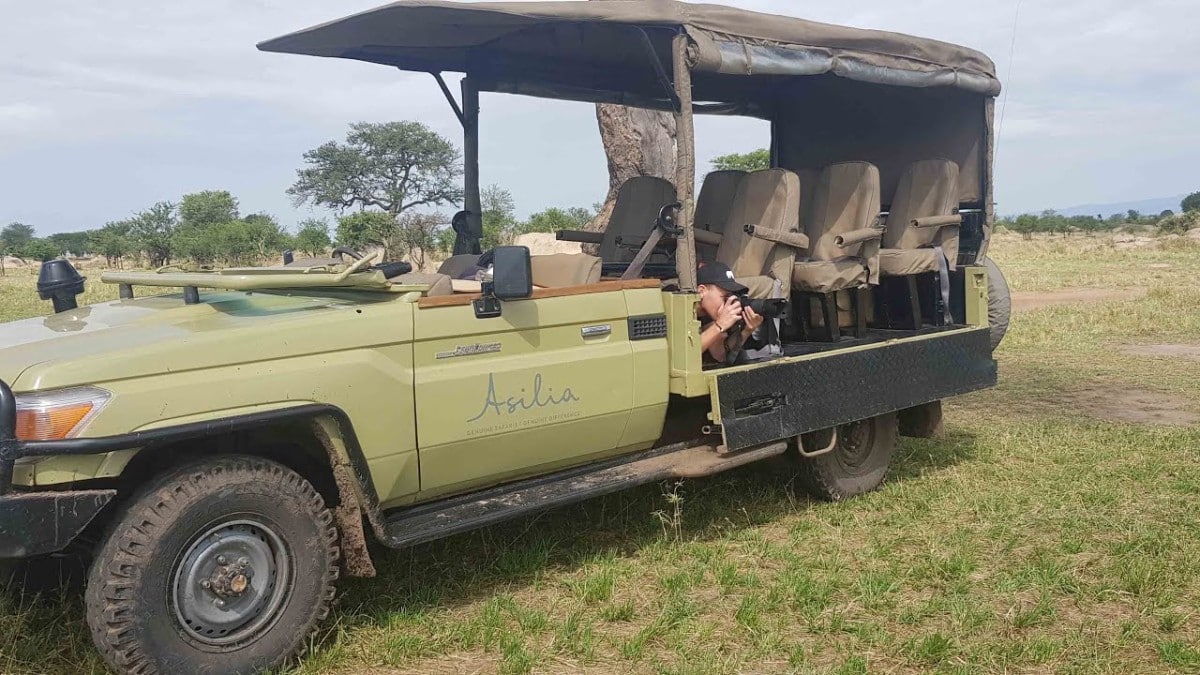
Most safari photography occurs inside a 4×4 Safari vehicle. This means you cannot easily reposition yourself.
- Angles depend on where the vehicle stops.
- Engine vibrations and uneven terrain can affect stability.
- You may have to share space with other guests.
Unlike landscape photography, you cannot approach your subject closely. Respectful wildlife viewing requires distance. This makes lens selection and anticipation more crucial than mobility.
Positioning also relies on wildlife regulations and the guide’s expertise. Understanding this helps reduce frustration and encourages flexibility.
Unpredictable light and weather
Safari light is beautiful but can be unpredictable. Early morning and late afternoon drives provide soft golden light; midday can create harsh shadows.
Dust in dry seasons and dramatic clouds during wet periods add texture but also create exposure challenges. Light shifts quickly, and wildlife may move from open areas to shaded spots in seconds.
Being comfortable adjusting settings rapidly is essential for strong safari photography.
Choosing the right camera for safari photography
Choosing the best safari camera involves considering fast autofocus and a strong burst speed of at least 15 frames per second. Such capabilities are vital for taking clear photos of unpredictable animal movements in the bush.
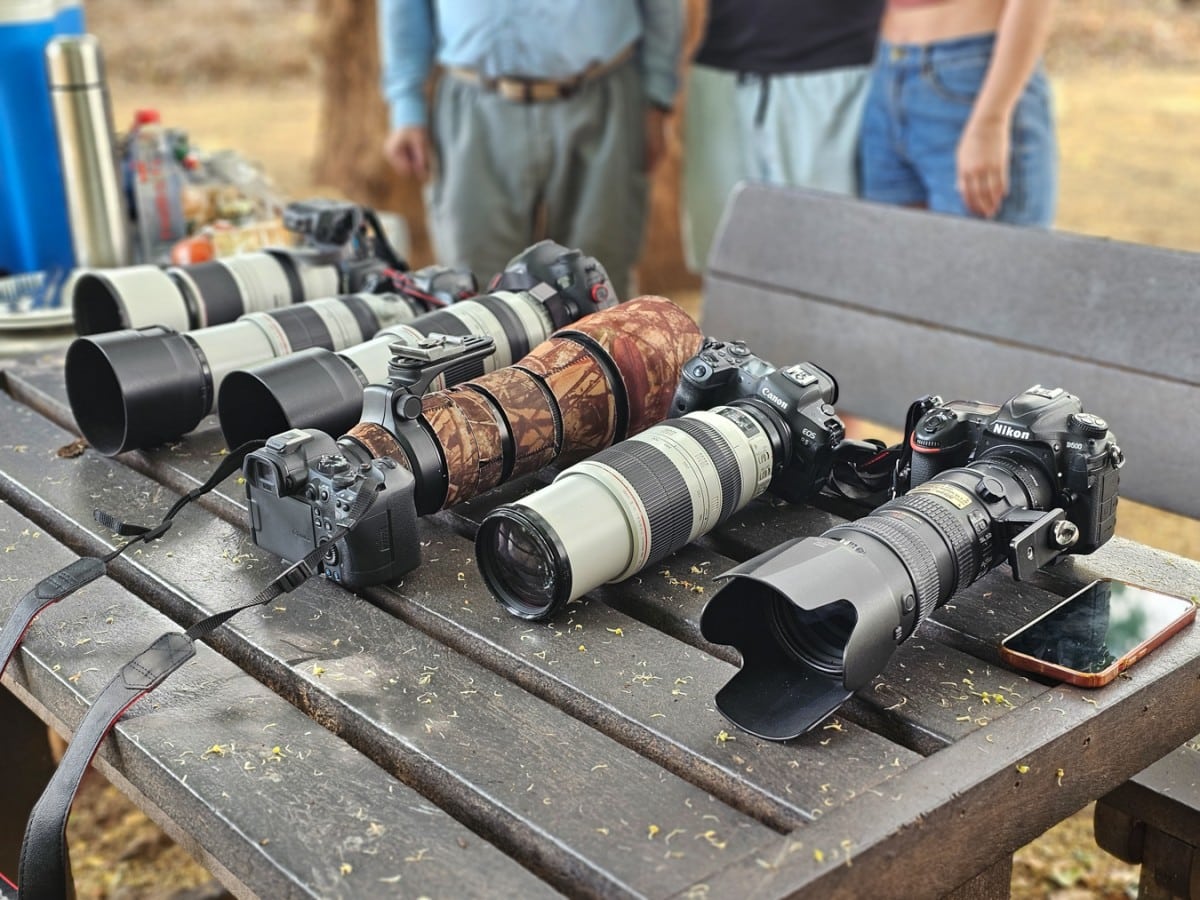
A zoom lens of at least 400mm is vital for taking photos of distant animals without interfering with their natural behavior. The latest mirrorless cameras with AI-driven subject tracking, such as the Canon R7 or Sony A6400, strike the right balance between lightness and professional performance.
For a hassle-free experience, superzoom cameras such as the Sony RX10 IV provide a great all-in-one solution. Whatever the choice, make sure your camera has subject-tracking modes for birds and animals to ensure that every photo is always in focus.
The best camera for wildlife photography is one you know well.
DSLR vs mirrorless cameras
Both DSLR and mirrorless cameras work well for safari photography. Tips often recommend models with:
- Fast and reliable autofocus
- High frame rates for action shots
- Good low-light performance
- Strong build quality
Mirrorless systems are usually lighter and more compact, which can help during long game drives. DSLRs are often better for battery life and rugged design.
The key is familiarity. A camera you’re well-acquainted with will outperform a newer model you haven’t learned to use.
Manual controls and durability
Automatic settings may struggle in mixed lighting. Learning aperture priority or manual mode gives you more control over exposure and depth of field.
Durability is important too. Dust, heat, and vibrations are part of safari conditions. Weather-sealed bodies and lenses provide extra protection.
Selecting the right lens for wildlife photography
When travelers ask about the best lens for safari photography, the answer often highlights reach.
Telephoto lenses explained
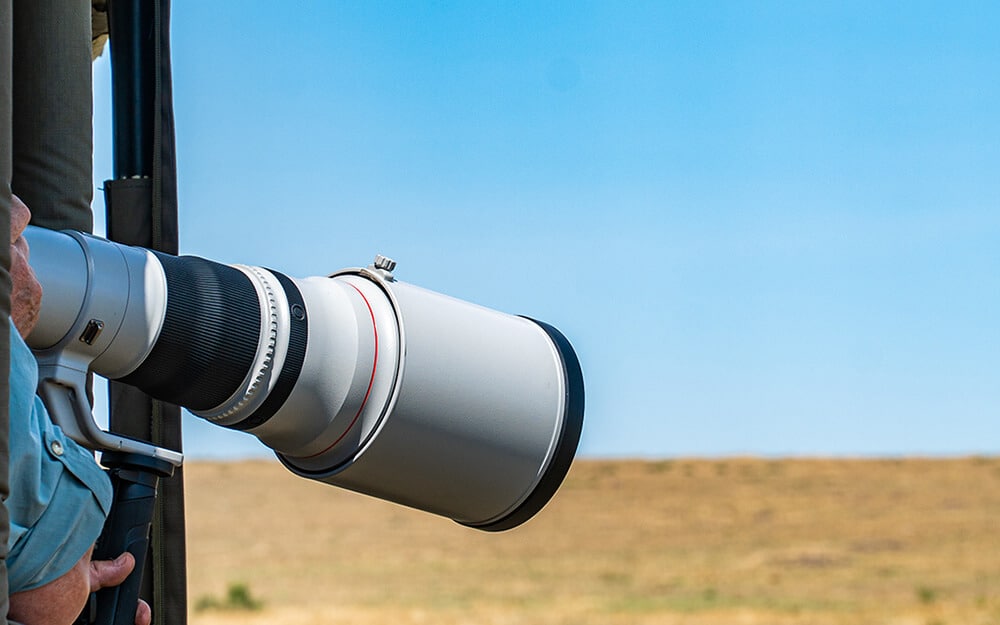
A telephoto lens captures detailed images while keeping a safe distance from wildlife. Focal lengths between 200mm and 600mm are commonly used in African wildlife photography.
- Longer lenses are ideal for:
- Close-up animal portraits
- Capturing predator interactions
- Isolating subjects from busy backgrounds
If possible, a zoom lens offers flexibility when animals move closer or farther away.
Image stabilization and support
Since tripods are rarely practical inside safari vehicles, image stabilization becomes very important.
A beanbag placed on the vehicle’s window or roof edge provides steady support. It absorbs vibrations and helps track moving subjects smoothly. Avoid resting your lens directly on metal surfaces, as this can affect the sharpness.
Essential gear to protect you and your camera
Preparation involves more than just cameras and lenses.
Camera protection in the wild
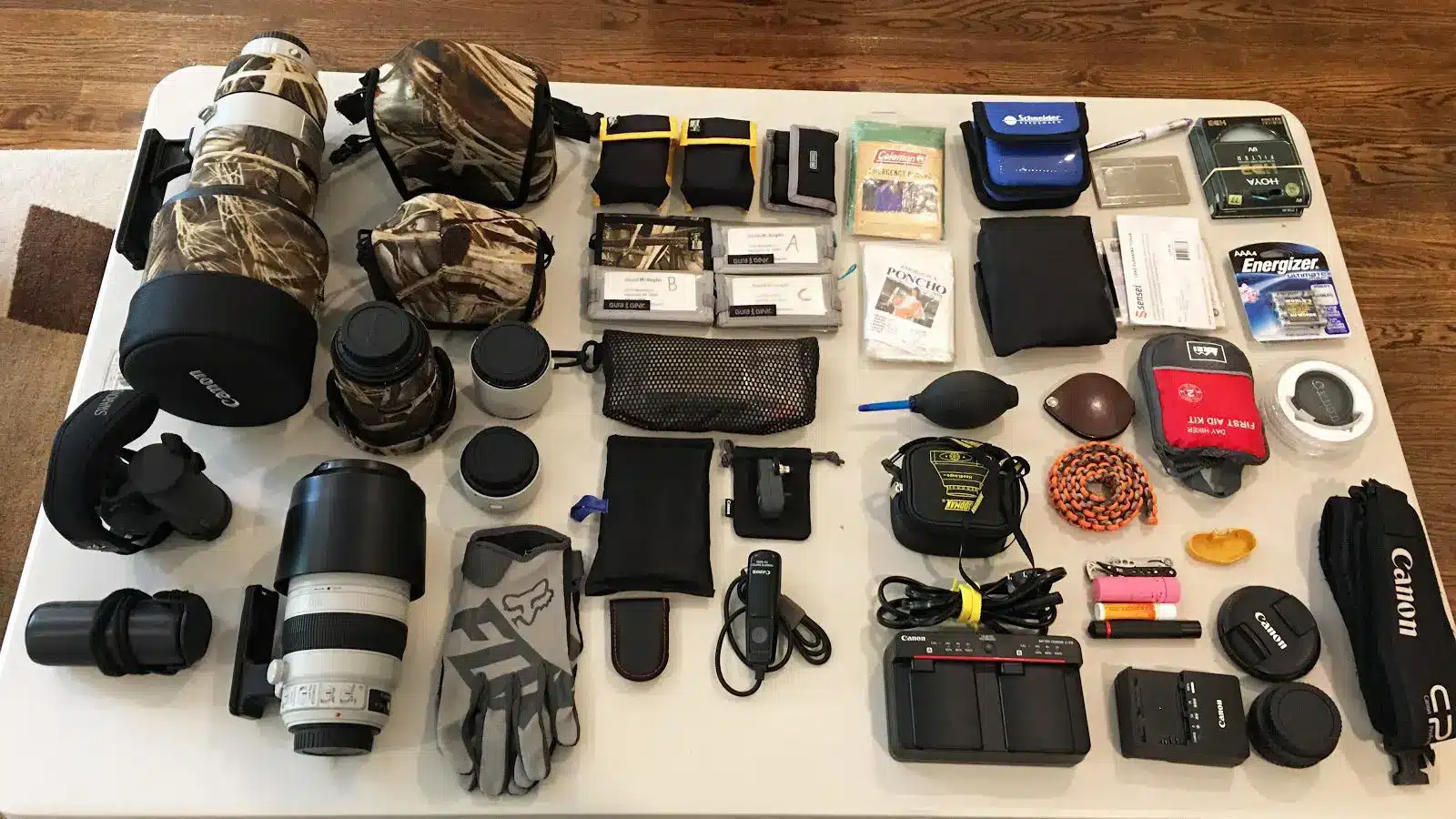
Dust is common during dry seasons, and sudden rain showers can occur in wet months. Essential protection includes:
- Dust-resistant camera bags
- Rain covers
- Lens cleaning cloths
- Extra memory cards and batteries
Avoid frequent lens changes in dusty conditions. If you need to switch lenses, do so quickly and shield your camera from the wind.
Personal comfort and mobility
Comfort affects focus. Wear:
- Neutral-colored clothing
- A wide-brim hat
- Sunglasses
- Light layers for cool morning drives
Staying comfortable allows you to concentrate on composition and timing instead of the discomfort.
Camera settings that work best on safari for wildlife in Africa
Understanding safari camera settings enhances your ability to react swiftly.
Shutter speed and focus
Wildlife moves quickly and unpredictably. To freeze motion:
- Use fast shutter speeds for running animals
- Switch to continuous autofocus for tracking
- Use burst mode during high-action moments
- Sharp focus on the animal’s eyes adds emotional weight.
ISO and light management
Increasing ISO allows faster shutter speeds in low light. Modern cameras manage high ISO settings well, but balancing noise and clarity is vital.
Monitor your histogram and adjust exposure compensation as needed. Backlit animals at sunrise or sunset often require compensation to avoid silhouettes, unless that’s your goal.
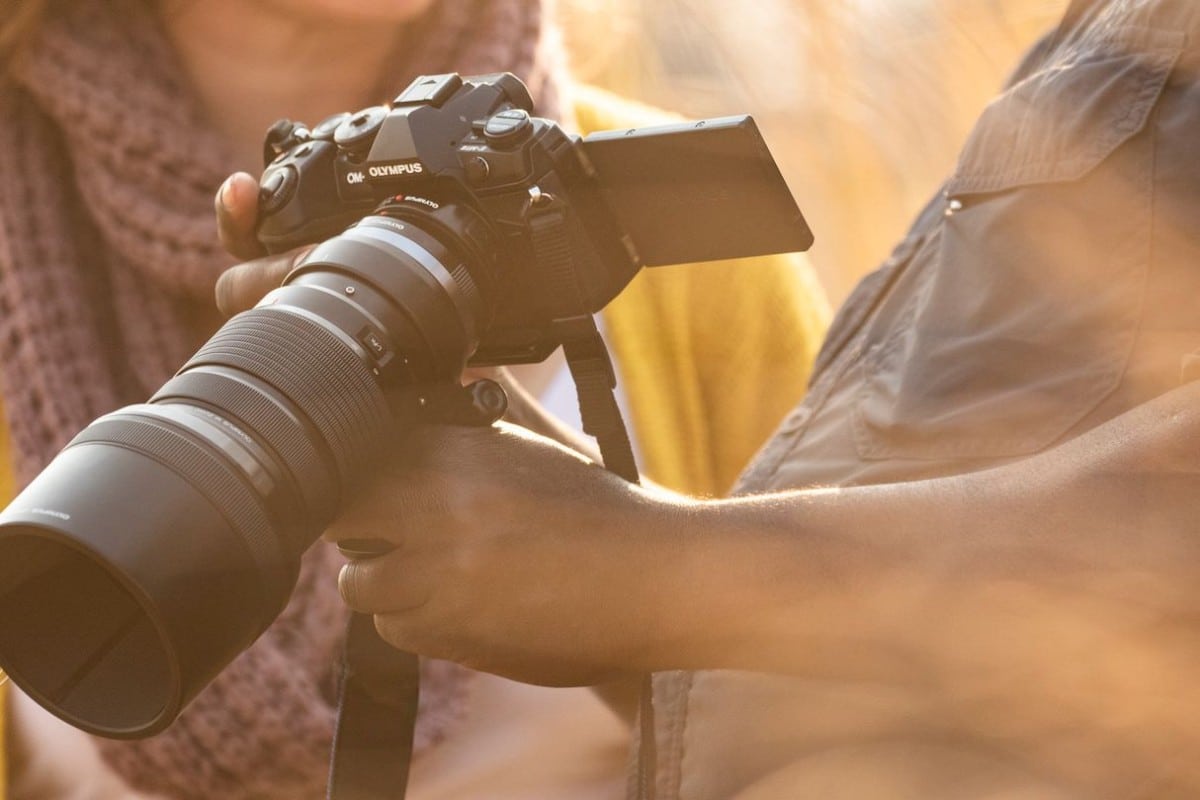
Learning animal behavior to anticipate the shot
Wildlife photography tips often focus on technical settings, but anticipation is just as important.
Reading movement and patterns
Animals show behavioral clues before they act. A lion crouching may signal a hunt. An elephant raising its trunk may indicate alertness.
Noticing these signs helps you prepare for that decisive moment.
Working with your guide
Your safari guide knows animal habits and positioning. Clearly communicate your goals. If you’re interested in bird photography or predator action, mention it early in the drive.
Guides often anticipate wildlife movement and can position the vehicle for better light and clearer backgrounds when possible.
Composition tips for more powerful wildlife images
Technical precision alone won’t make memorable photographs. Composition turns documentation into storytelling.
Framing and backgrounds
Be aware of distractions. Vehicles, branches, and cluttered vegetation can weaken an image.
Positioning slightly left or right in the vehicle can improve framing. Using wide apertures helps blur distracting backgrounds.
Telling a story with your wildlife photos
Not every shot needs to be a close-up. Include environmental shots that show animals in their surroundings.
Capture interactions between animals, not just solitary individuals. Behavior, tension, and stillness all contribute to the story.
Combining close-ups with wide shots creates a more complete wildlife photography portfolio.
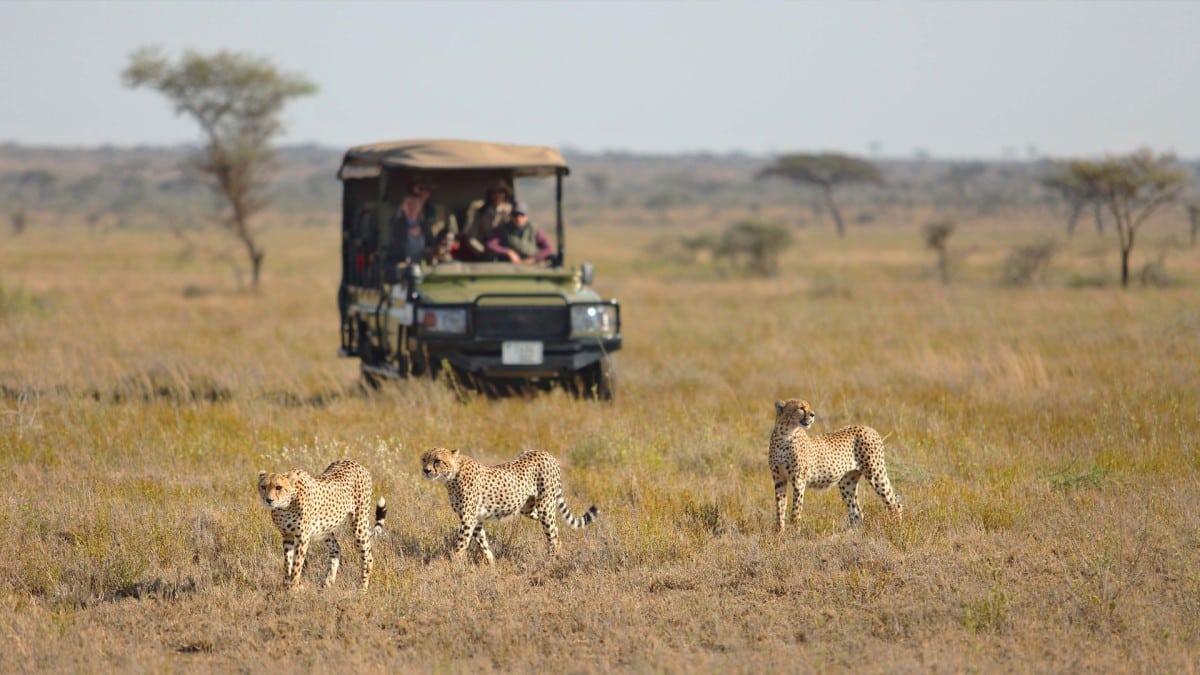
Patience and mindset in wildlife photography
Patience often separates average images from extraordinary ones.
Why waiting matters
Wildlife moments occur naturally. Waiting quietly can lead to yawns, stretches, interactions, or exciting movements.
Rushing to take the first shot might cause you to miss something better moments later.
Managing expectations
Not every safari drive will feature dramatic action. Some of the most meaningful images come from quieter moments: a mother grooming her cub, birds taking flight, or light filtering through grass.
Accepting unpredictability helps reduce frustration and improve focus.
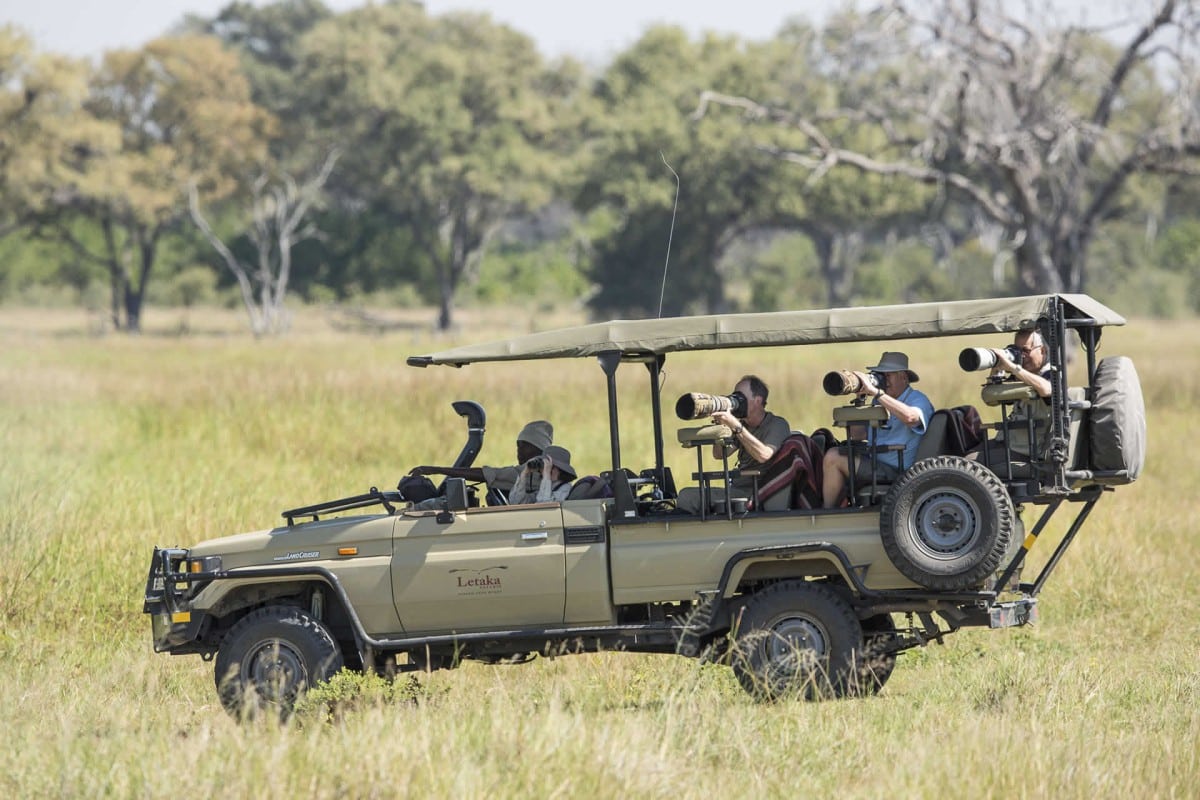
Common mistakes to avoid on a Photography safari
Even experienced photographers make avoidable errors.
- Failing to check settings after conditions change
- Overusing burst mode without reviewing images
- Forgetting to enjoy the experience beyond the viewfinder
Balancing photography with presence enhances both your images and your overall safari.
Proper Framing and Background Awareness
One of the most common mistakes that people make when on a safari is zooming in too close. This usually leads to the photographer chopping off ears, tails, or limbs. It is important to leave breathing room around the subject to ensure that the photographer gets a professional shot. Additionally, it is important to be aware of the background of the image.
Constant Technical Errors: Lighting and Burst Mode
The failure to adjust settings when lighting changes is a major technical error. Lighting in the bush changes very quickly, especially during morning and evening hours. It is important to constantly monitor ISO and shutter speed. It is also important to avoid taking too many photos in burst mode without previewing them. Taking thousands of photos without previewing them results in massive storage and editing problems.
Forgetting to enjoy the experience beyond the viewfinder
The biggest mistake is not to enjoy the experience beyond the lens. It is important to capture the moment, but to be constantly filming can remove you from the experience of the natural beauty of the African bush. It is essential to take the time to experience the sounds and atmosphere of the bush with your own eyes.
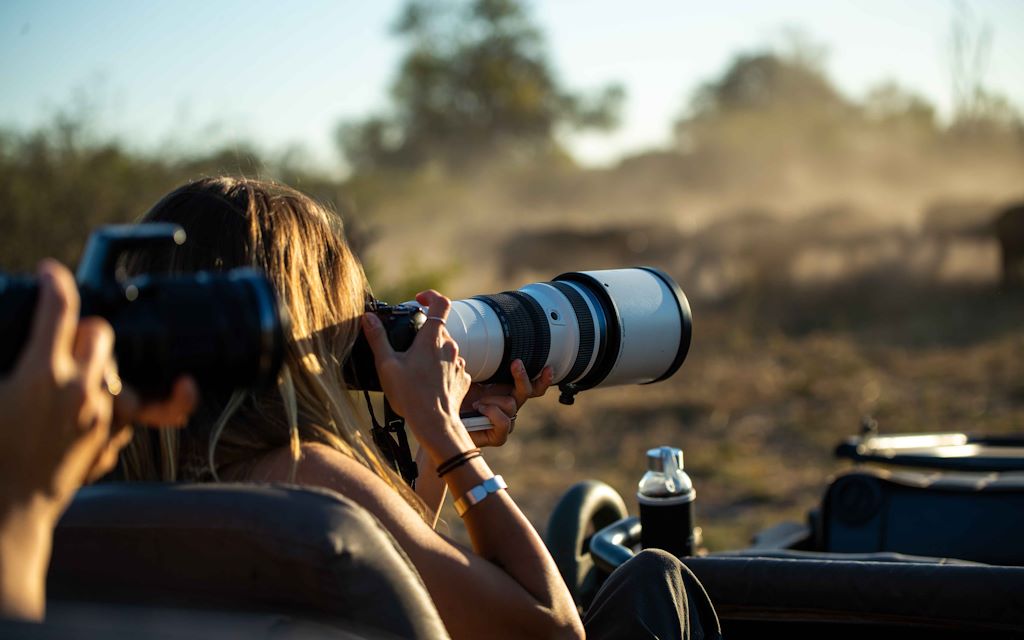
Practice before your African Wildlife Photography Safari
To prepare for an African wildlife photo safari, one needs to familiarize themselves with their equipment, practice photographing moving subjects (pets, birds, cars), and learn to photograph in low-light/early morning or late evening conditions. The emphasis should be on fast shutter speeds, continuous focus, and shooting from a seated or low position, mimicking the safari vehicle.
Master Your Equipment and Exposure
Before your photography safari, you need to be intimately familiar with your equipment. Practice your $ISO$, aperture, and shutter speed changes without looking so that you can react quickly to the animals. In addition, you should be familiar with manual exposure during the morning and evening, which is the sunrise and sunset, to prepare for the rapidly changing light of Africa.
Refine Subject Tracking and Focus Skills
Panning skills can be improved by tracking pets or birds using a telephoto lens. Learn to use the burst mode to get the best action shot, such as a bird taking flight. The focus should be on mastering the use of manual focus to lock the details quickly, such as the eye of an animal, rather than focusing on the nearest subject.
Simulate Real Wildlife Photography Field Conditions
Mimic a safari jeep environment by practicing shots from low, seated, or handheld positions. This will prepare you for the stability challenges of a moving vehicle. By simulating these real-world constraints, you will ensure that your movements are fluid and your equipment is ready for the unpredictable nature of the bush.
Local parks, birds, or even pets offer valuable training opportunities. Familiarity with your camera ensures you respond instinctively in the field.
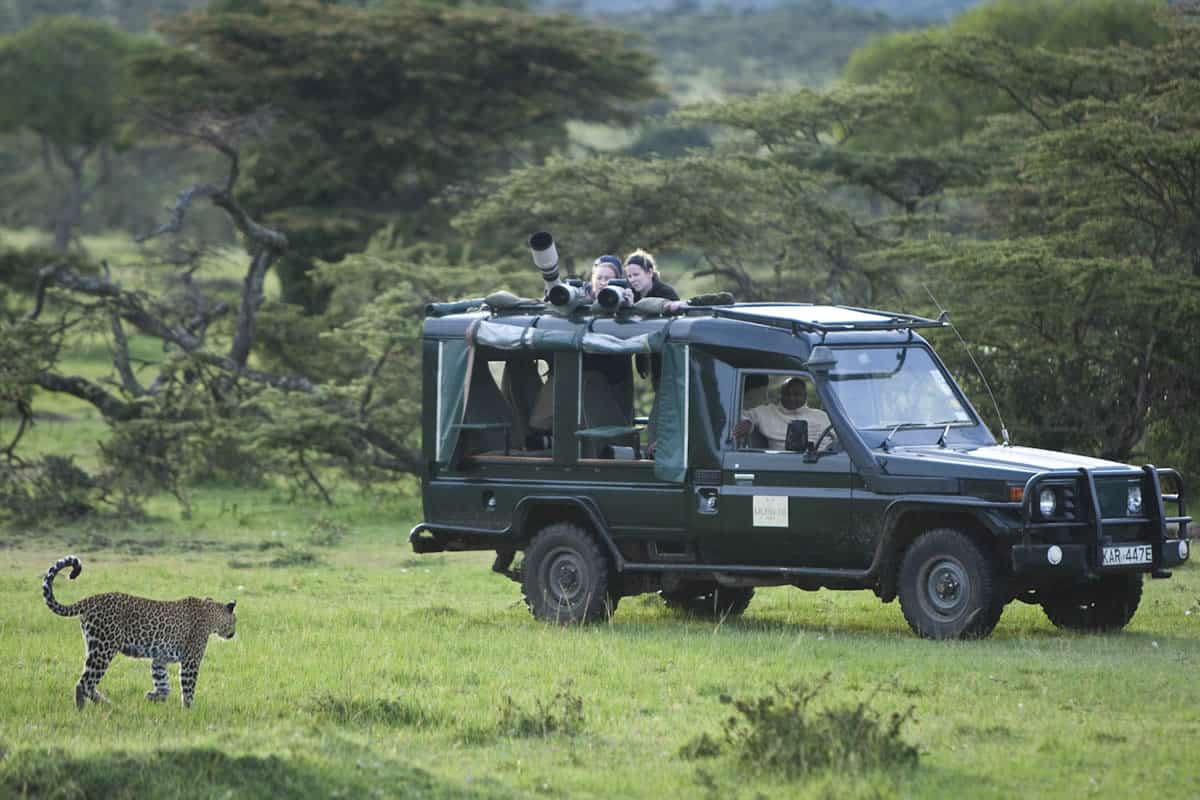
Making the most of a photography-focused safari
If photography is your priority, consider safari itineraries that allow:
- Smaller groups
- Longer game drives
- Flexible timings
- Guides familiar with photography needs
A slower pace increases opportunities for thoughtful composition and better light positioning.
Photography safari tips often highlight patience and flexibility over speed.
Wildlife photography on safari combines preparation, observation, and patience. Equipment matters, but mindset is even more important.
Understanding safari conditions, learning animal behavior, mastering your camera settings, and being adaptable to changing light will significantly enhance your results.
African wildlife photography is not about capturing hundreds of images; it’s about capturing a few moments that reflect the spirit of the wild.
With careful preparation and realistic expectations, your safari can produce photographs that are not just technically successful but also emotionally powerful.