The Great Wildebeest Migration
The Serengeti Wildebeest Migration in Africa
What is the Great Wildebeest Migration?
Understand The Serengeti wildebeest migration and crossings
What is the Great Wildebeest Migration in Africa? The great Serengeti and Masai Mara Wildebeest migration is the movement of vast wildebeests, accompanied by large numbers of zebra, and smaller numbers of Grant’s gazelle, Thomson’s gazelle, eland, and impala. These wildebeests and zebras move in an annual pattern that is fairly predictable. They migrate yearly, constantly seeking fresh grazing lands and better quality clean water.
The Great Migration is the largest herd movement of animals on the planet. In fact, with up to 1,000 animals per km², the great columns of wildebeest can be seen from space.
The numbers are astonishing: over 1.2 million wildebeest and 300,000 zebra, along with topi and other gazelle, move constantly through the South to the North of Serengeti National Park – Maasai Mara National Reserve ecosystem in search of nutritious grass and water.
Guided by survival instinct, each wildebeest will cover 800 to 1,000km on its individual journey along age-old migration routes. Hungry predators, including lions, leopards, cheetahs, hyenas, wild dogs, and crocodiles, make sure only the strongest survive in this natural spectacle also known as ‘the greatest show on Earth.’
The circuit takes the animals from the Ngorongoro Conservation Area (although not into the Crater itself) in the south of the Serengeti in Tanzania, up through the Serengeti and cross into the Masai Mara in Kenya, and back again. The journey is beset with danger: young calves are hunted by predators, the slow and old are brought down by the pride of lions, crocodiles take their share of the stragglers, and the weak and exhausted drown.

Looking For a Safari in Africa?
Explore our collection of over 70 luxury African safaris. You can also contact us to design a bespoke, tailor-made adventure just for you.
Best Places to Witness The Wildebeest Migration
Witness the Great Migration in Serengeti and Masai Mara
The best wildebeest migration safari destinations in Africa are Serengeti National Park in Tanzania and Masai Mara National Reserve in Kenya. They both host millions of wildebeests and antelopes, and zebras migrating from the South of Serengeti to the North and later entering the Masai Mara in Kenya.
The wildebeests spend more than 7 months in Serengeti National Park in Tanzania, as they look for greener pastures, and 5 or 6 months in Kenya Masai Mara National Reserve. The best places for wildebeest migration and crossings are in the Northern Serengeti and Masai Mara, from June to November every year.
For the wildebeest calving sightings, the best place to be is in the Ndutu Conservation Area, south of Serengeti, which borders both Ngorongoro Crater and Serengeti National Park. More than 8000 wildebeest calves are born daily in January to March, but most births are sighted in February.
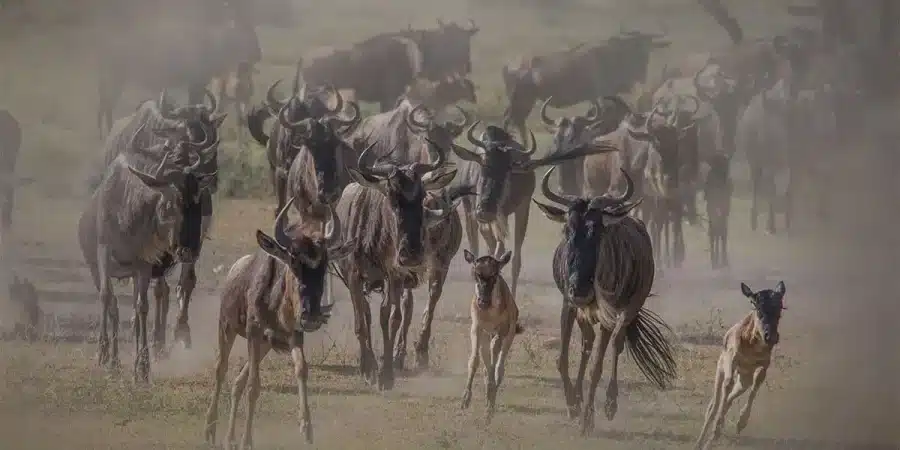
Ndutu Conservation Area is located well within the Ngorongoro Conservation Area but right on the doorstep...

A world wonder destination in Kenya, Africa, the Maasai Mara National Reserve is home to quite...

Serengeti National Park is home to millions of wildlife and bird species. This includes the many...
Wildebeest Migration Map
The Serengeti Wildebeest Migration Map
Understand the Wildebeest Migration Map, and how the great migration moves from South Serengeti to Northern Serengeti, entering Masai Mara, and finally back to Southern Serengeti. The Migration Map below describes the movement of more than 1 million animals.
They migrate to look for food and water, but a more needy reason is to find favorable weather conditions for mating and giving birth to more than 800,000 calves.

wildebeest migration by month
The Serengeti Wildebeest Migration By Month Guide
From our Wildebeest Migration Map, the mass migration begins in January and never ends. The reason is, the wildebeests start life in January in a region called Ndutu in South Serengeti, where when they start moving, they never stop.
Below, we have highlighted when the best time is to see the great wildebeest migration, with the season running from January to December. They move in search of food and water, but another major reason is due to their biological clocks. They mate in the Masai Mara in Kenya and give birth in Ndutu Serengeti South in Tanzania.
Serengeti Wildebeest Migration in January, February, March
Also known as the wildebeest calving season
The Great Wildebeest Migration in January, February, and March
Around January each year, the wildebeest migration will end their trek from the Masai Mara, moving along the eastern edge of the Serengeti and into the Ngorongoro Conservation Area in the Ndutu Conservation Area. Here, the plains are rich in nutritious grass, providing the herds with the best conditions for raising their newborn calves.
Although there is no real beginning or end to this migratory circuit — other than birth and death — it seems reasonable to call the wildebeests’ birthing season the start of the migration. Around late January or February, the herds occupy the short-grass plains that spread over the lower northern parts of the Ngorongoro Crater highlands. Some 8000 calves are born here every day, within a period of two to three weeks, or nearly 500,000 new calves within 1 month.
During the wildebeest Calving Season, it’s easy to spot actions and hunts easily as big cats like lions, leopards, and cheetahs hunt the newly born calves and weak wildebeests that are readily available for them.


Serengeti Wildebeest Migration in April, May and June
Grand Movement starts to the Serengeti South to the Serengeti North
The Great Migration in April, May, and June
Gradually, they spread west across these plains, and then around April, they started their great migration north. Around April, the wildebeest herds begin to drift northwest toward the fresher grass of the central Serengeti, drawing with them thousands of zebra and smaller groups of antelope.
By May, columns of wildebeest stretch for several kilometers as the animals start to congregate by the Moru Kopjes. Mating season begins toward the end of May and male wildebeest battle head-to-head. Throughout ‘the rut,’ the journey continues at leisure with the wildebeest, zebra, and gazelle grazing as they go along.
With all the newborn wildebeest, this is a time when the herd size is especially high. Central, southern Serengeti is the place to be as the herds assemble northwards, getting ready for the big push towards Lobo and the far north.
As the dry season approaches during May and June, the migrating herds begin moving once again, this time towards the Grumeti River, where the crocodiles wait for an easy meal. Seeing the thousands of wildebeest crossing the river is a sight not to be missed, and has to be one of the highlights of a Tanzania safari.
Being located near the Grumeti River is ideal at this time. However, being in the Seronera and Western Serengeti area will also give you fantastic access.


Serengeti Wildebeest Migration in July, August, September, October
The Most eventful season - Wildebeest Crossing in Serengeti and Masai Mara
The Great Migration in June, July, August, September and October
These are the most exciting months of the great migration as the herds move further into the Northern Serengeti and toward the Mara River. At this time of year, you can witness thousands of wildebeests battling their way through the waters and trying to avoid the crocodiles. The best place to be is in the Northern Serengeti or across the river in the western part of the Maasai Mara.
These are the major migration months as the herds are in the middle of their major push north. The first wildebeest herds start crossing the crocodile-infested Mara River – it is a fabulous time to be in this remote part of the park.
September sees the wildebeest herds spread out across the northern Serengeti park, where the Mara River provides the migration with its most serious obstacle, infested with crocodiles. This river meanders through the northern Serengeti from Kenya’s Maasai Mara National Reserve.
Watching the thousands of herds of wildebeest migrating crossing the Mara River can be very spectacular; there are often scenes of great panic and confusion. It’s common to see herds cross the Mara River north on one day, and then back south a few days later.


Serengeti Wildebeest Migration in November and December
The Most eventful season - The herd starts moving back to Serengeti South
The Great Serengeti Migration in November and December
This is a fairly difficult time to predict the movement of the herds as they push south. Some move east to Loliondo, and others move through the heart of the park.
After the East African short rains in late October and early November, the wildebeest move down from Kenya Masai Mara National Reserve and into the eastern limits of the Serengeti National Park past Namiri Plains, an area known for outstanding cheetah sightings. By December, they are spread throughout the eastern and southern regions of the Serengeti.
In the early months of the new year, the grasses in the deep south of the Serengeti are lush with rain. This draws the herds of wildebeest and hundreds of thousands of zebra and other plains animals. The cycle continues as the calving season starts once again.


Best Time For Serengeti Wildebeest Migration
When is the Serengeti wildebeest migration & Crossings
Below is the best time to see the Great Migration by season. We have highlighted them from the Low season, also known as the great season, when rain is in abundance, and the high season, when there is are bit of rain and still hot with fewer crowds, while the peak season is when we have high numbers of tourists, and the climate is hot and dry.
The best time to spot the wildebeest migration and crossings is between mid-July and the end of August. Though you are not guaranteed to see the wildebeest crossings, they might be delayed or come early.
LOW SEASON:
April to May and November to December
During this Season, the herds are in Central & North Serengeti from April, May, and June. The grass is tall, and better time to spend with them. In November, they will have migrated from the Masai Mara back to the Serengeti National Park. The Weather in these periods is wet and warm, and not recommended for a wildebeest migration safari.
HIGH SEASON:
January to March Mid-October to Mid-November
January, February, and March are the best times to witness the calving of wildebeest calves in the Southern Serengeti. Ndutu Conservation Area offers the best ground for calving of more than 8000+ Calves. In April, they start moving up to Northern Serengeti, and in November, they start moving down to Serengeti from Masai Mara.
These seasons, the weather and climate conditions are warm, and less rain in between. In November, the short rains start and end in early December.
peak SEASON:
June, July, August, September, and up to Mid-October
These are the best months to witness the dramatic migration and crossings in Serengeti and Masai Mara, with over 1.5 million wildebeests crossing the Mara River. It’s easier to spot them in the Masai Mara, Kenya, and the Northern Serengeti in Tanzania. It’s not possible to predict exactly when, but the highest probability of spotting the wildebeest migration is between mid-July and mid-August. From the many wildebeest crossings we have witnessed, the peak of it is between this period.
The Weather in June all the way to mid-October is Hot and dry, best for a wildebeest migration safari, and an extension of a beach safari holiday. It’s a perfect time to visit East Africa for a wildlife safari. We have listed some guides for what to pack for a safari in Africa.
Looking For a Wildebeest Migration Safari?
We have some of the best great wildebeest migration safari packages
We have more than 20 listed wildebeest safari packages, both to Kenya and Tanzania. These safari packages are well curated and designed to ensure you have the best wildebeest migration safari experiences in Serengeti and Masai Mara. Explore them and pick the best that fits you, and our safari experts will customise them for you instantly.
Browse the perfect safari by visiting our great wildebeest migration Safaris listings.

Cost: 6980 PPS
No. of Nights 7
Destinations :-


Cost: 7,130 PPS
No. of Nights 10
Destinations :-
- Amboseli ,
- Lake Naivasha ,
- Lake Nakuru ,
- Masai Mara ,
- Samburu ,
Pack For a Purpose
Cheetah Safaris is a serious advocate of sustainable safari practices in Africa. As part of our efforts and initiative, we engage and support schools and children who need knowledge to better their lives. The best gift a child can be given is education, skills, and creativity.
In this case, we request our guests booking with us, to bring an extra back of supplies. This can be in terms of books, sports materials, and any other items that would change the lives of these kids.
- Education
- Sustainable Travel
- Wildlife Conservation
Let us help you customize your trip
Like all of our holidays on this site, this is just an idea. All of our trips are tailor-made, so we’ll always adapt them to suit you.
Talk to an Expert
Browse our Cheetah Safaris Website. We’ll match you with a Specialist in our team who is best suited to help you plan your next safari adventure. To start, submit your Safari Inquiries.
Prepare for your trip
Our Safari experts will be of help in planning your safari from start to end. They will advise you on all that you need to pack and travel documents, too. They will be ready to answer any queries you have.
When you return
We would love to hear from you about your trip with us. Your feedback will help us always work better and try to be the best. You can leave your review on our Reviews Page or TripAdvisor Page.
Partners / Memberships
People who always support and endorse our good work