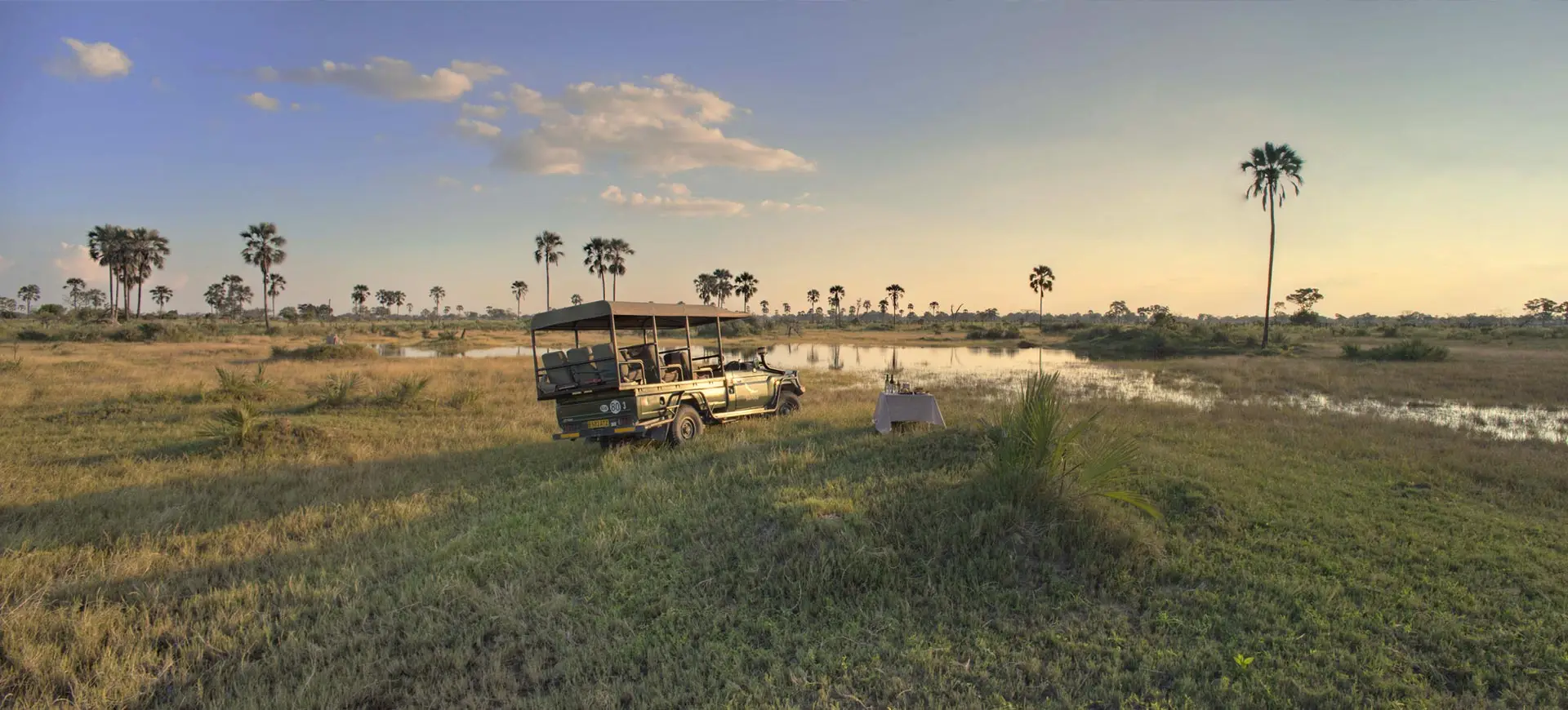


The Okavango Delta is one of Africa’s most distinctive safari destinations because its annual flood arrives during Botswana’s dry season. Water flowing down from the Angolan highlands fills seasonal channels, lagoons and islands across northern Botswana, shaping where wildlife gathers and which activities are possible at any given time of year.
Where you stay, when you travel, and whether you lean toward game drives, mokoro excursions, boating, or walking all make a real difference to your trip. This guide walks you through the essentials, and when you are ready, we will build the itinerary around you.
| Question | Quick answer |
|---|---|
| Where is it? | Northern Botswana |
| Main gateway | Maun |
| Best overall months | June to October, depending on your priorities |
| Flood season | Floodwaters arrive during Botswana’s dry season |
| Recommended stay | Around 3 to 5 nights for a first visit |
| Main activities | Game drives, mokoro, boating and walking where permitted |
| Safari style | From mobile camps to luxury fly-in lodges |
| Main consideration | Different areas offer different mixes of land and water activities |
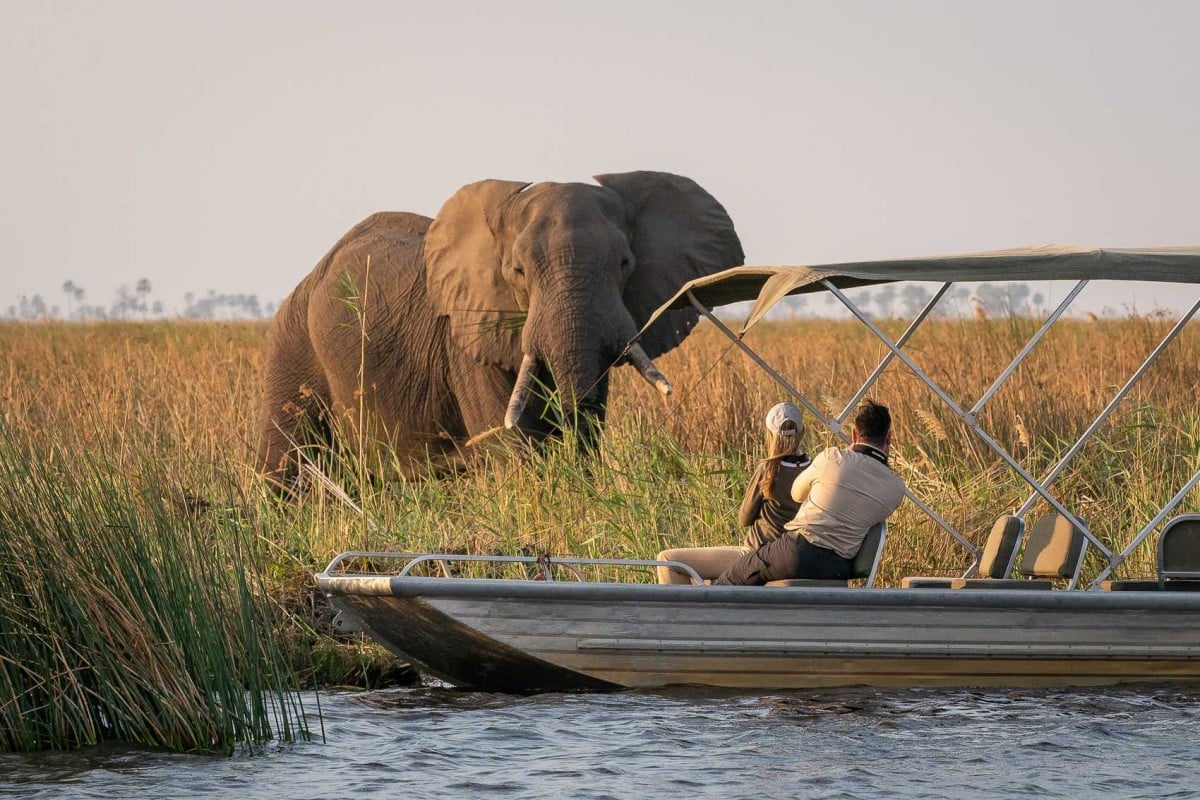
Why visit the Okavango Delta?
The Okavango is a living ecosystem, fed each year by floodwaters that travel hundreds of kilometres from Angola. As the water spreads, it forms the channels, islands and lagoons that draw in wildlife and birds, and it does so while much of the surrounding region is dry. At full flood the Delta swells from around 6,000 square kilometres to as much as 15,000, and in strong years considerably more.
That water concentrates life. Hundreds of bird species, along with elephant, lion, hippo and a long list of antelope and predators, gather within a compact area. Drifting through a shallow channel by mokoro while wildlife moves quietly around you, then watching the light fade from a remote sandbank, is the kind of moment guests remember for years.
It is also uncrowded. Even in the main areas, you often have a channel or waterhole almost to yourself, which is a large part of why so many travellers come back. For more on what sets it apart from a classic savannah park, see our companion guide on why the Okavango Delta is different.
The best time to visit the Okavango Delta
The season you choose shapes everything, because conditions in March look nothing like July. Here is how the year breaks down by month on when it is the best time for a Botswana Safari.
January to March, the green season, is lush and quiet. Birdwatching is at its best, newborn animals appear, and lodge rates are lower. Some roads turn muddy, and a few camps are harder to reach.
April to May, the early dry season, is a strong all-round window. Floodwaters are building; both land and water activities tend to be available, wildlife is plentiful, and crowds are moderate.
June to October is the classic peak. The flood is high, water-based activities are at their best, and wildlife concentrates around the channels. Days are warm and nights are cool, and it is the prime window for game drives and photography. July and August are the high point of the flood.
October into November is the hot shoulder. It thins out on visitors and rewards keen game viewers, though rising heat and dropping water can limit some water-based activities in places.
If birds are your priority, aim for the green season. For the classic flooded Delta with mokoro front and centre, and the most reliable big-game viewing, target June to October.
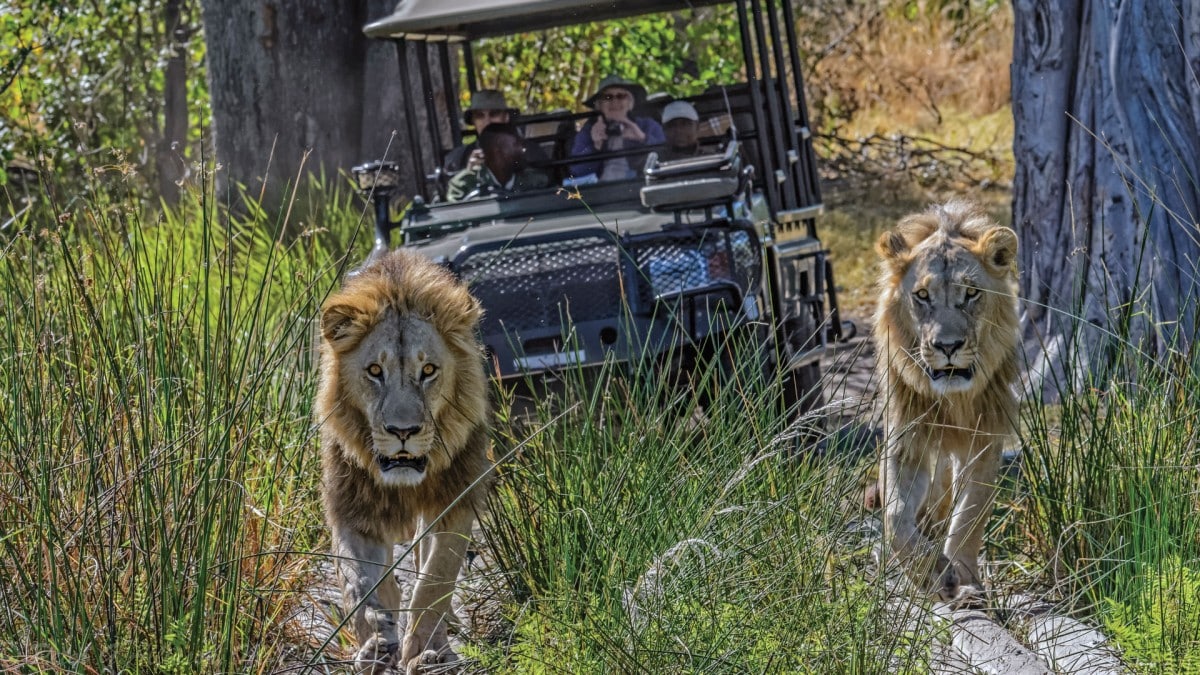
How to get to the Okavango Delta
The Delta sits in northern Botswana, and almost every trip begins in Maun, the region’s safari gateway. Flights from Johannesburg to Maun take about 1 hour 45 minutes, which makes it the easiest international connection, and Cape Town also links to Maun by air. From there, you have a few ways in.
Light aircraft transfers are how most guests reach the inner Delta, since many camps have no road access. The short flight is an experience in itself, with aerial views over the flooded channels and islands. Boat and mokoro transfers take over for the final stretch at some water camps, gliding you into camp through the reeds. Self-drive and road access work for areas nearer the Panhandle and Moremi Game Reserve, reachable by 4×4 if you are happy planning fuel stops and handling rough gravel. Many itineraries use a hybrid of flying, driving and water transfers to take in more than one area without long days on the road.
One practical note: always confirm access with your camp in advance. Seasonal flooding affects road conditions and transfer schedules, so the Okavango rewards planning across every leg. We handle all of this for the trips we arrange.
Where to stay: camps and lodges
The Delta offers everything from intimate luxury lodges to lean mobile camps, and the right choice depends on your budget and the style of trip you want.
Lodges and tented camps are the mainstay. Most include game drives, mokoro excursions and meals, and packages often cover your transfers from Maun. Mobile camps move with the seasons and put you closer to the wilderness at a lower cost than permanent lodges, which suits travellers after a more immersive, back-to-basics feel. Staying near Maun and joining daily excursions is the most flexible budget route, and works well if you want to keep costs down or build your own pace.
Whichever way you go, the concession and location matter as much as the camp itself, because they decide which activities you can actually do once you arrive. That is exactly the kind of match we help you get right.
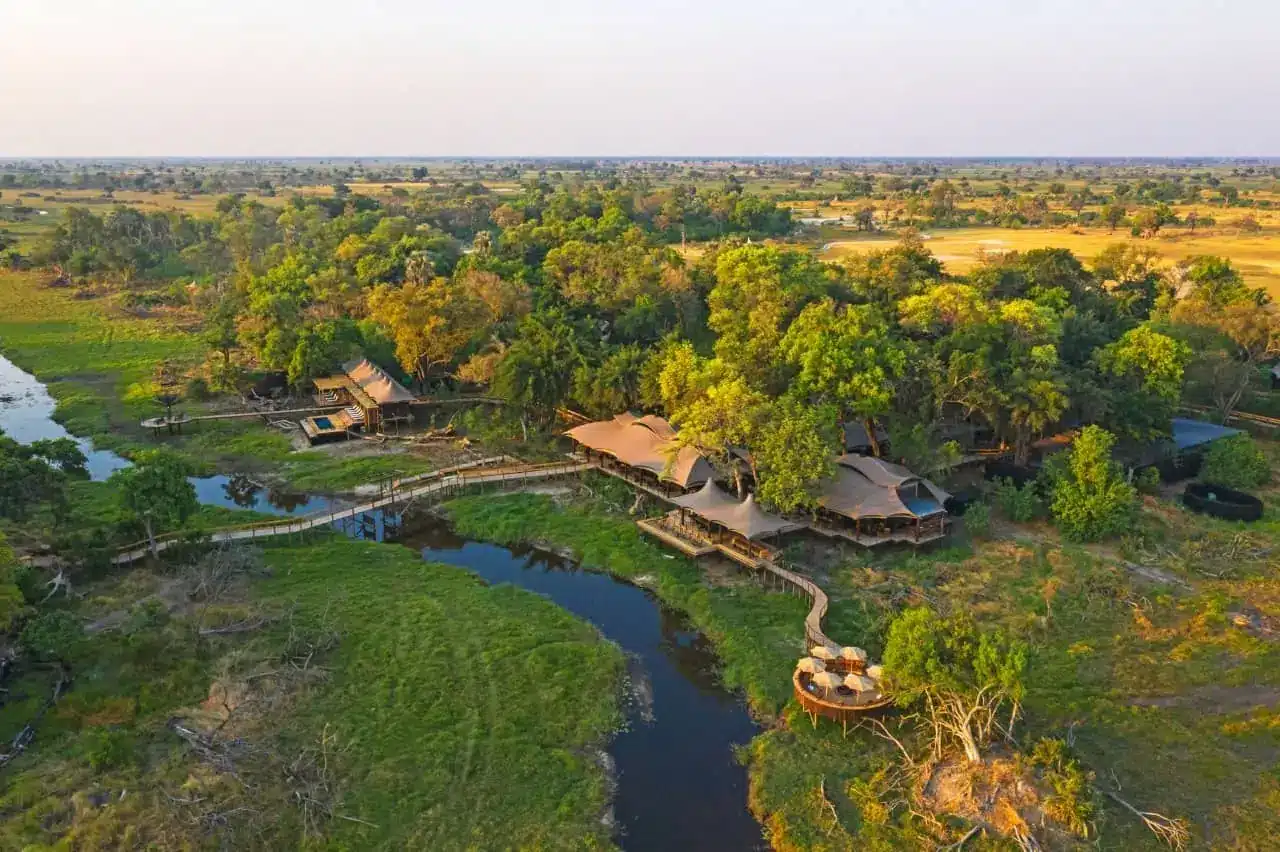
What an Okavango Delta safari costs
The Okavango sits at the premium end of African safari travel, largely because of fly-in access, remote logistics, conservation fees and deliberately low visitor numbers. That said, there is more range than most people expect. The figures below are indicative 2026 rates, quoted per person sharing, and they shift with season and availability, so treat them as a guide and ask us for a firm quote.
Budget and participation camps start from roughly USD 150 to 350 per person per night. A mokoro camping trip out of Maun is one of the best-value ways in, and self-drive camping in Moremi is cheaper again on fees alone. Mid-range and mobile tented camps run from about USD 400 to 1,200 per person per night. Premium fly-in lodges typically fall between USD 1,000 and 2,500 per person per night, with the most exclusive design-led flagships higher again, reaching around USD 5,000 at the very top of the 2026 published rates.
On top of the nightly rate, bush flights between camps usually add USD 350 to 700 per person per leg, and international flights to Maun are separate. Most camp rates include meals and activities, and often park or concession fees, but always check what a given rate covers before comparing.
A few ways to keep costs sensible: travel in the shoulder months for lower rates, join a small-group safari to share costs, or pair one road-accessible camp with a single fly-in or mokoro-transfer camp rather than flying between several. If you would rather spend up, private charters, exclusive-use camps and the most intimate luxury lodges buy you more space, more attention and a closer relationship with your guiding team.

Unique experiences you might not expect
A few things tend to surprise first-time visitors. A mokoro feels quiet and personal, close to the water, while a motorboat covers more ground and is often better for photography, so it is worth doing both if you can. The Delta’s remoteness means almost no light pollution, and the night skies are extraordinary, with the Milky Way clearly visible. Wildlife turns up where you least expect it, with elephants, hippos, and birdlife often close to the channels. Because the flood shifts a little every year, the scenery and access points can feel completely different from one visit to the next, which is a good reason to return. And staying in a small mobile or tented camp, away from the larger lodges, gives you a stripped-back kind of immersion that the bigger properties cannot match.
How many days do you need, and what to pack
For a first visit, we usually suggest 3 to 5 nights. That gives you time for wildlife, water-based activities, and the travel legs to and from Maun without feeling rushed.
Pack light clothing for warm days and warm layers for early mornings and evening drives, as it gets genuinely cold before dawn. Bring waterproof shoes for mokoro excursions, insect repellent and strong sun protection. Confirm every flight, boat, and road transfer ahead of time, since seasonal flooding can affect schedules. And plan for transfers to take longer than you expect. Game drives start early, and mokoro rides are best at sunrise or sunset, when the water is calm and wildlife is most active.