The Great Wildebeest Migration
The Serengeti Wildebeest Migration in Africa
What is the Great Wildebeest Migration?
Understand The Serengeti wildebeest migration and crossings
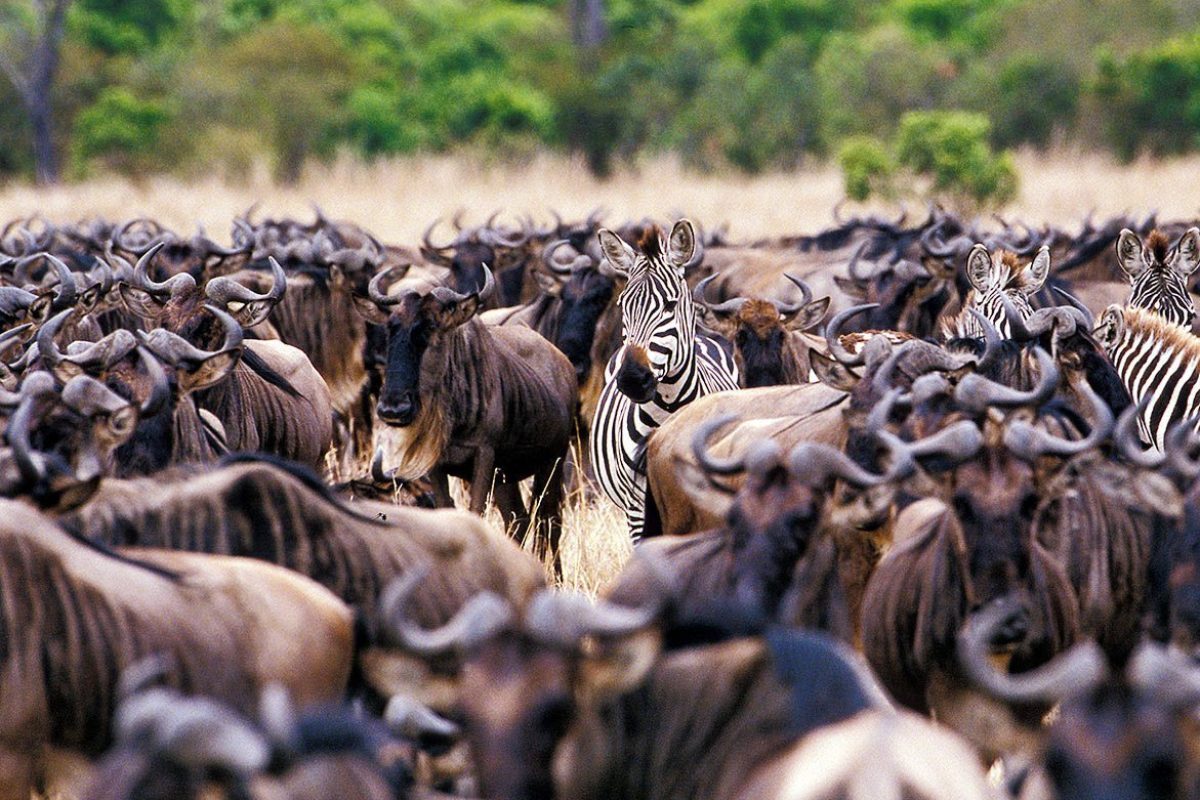
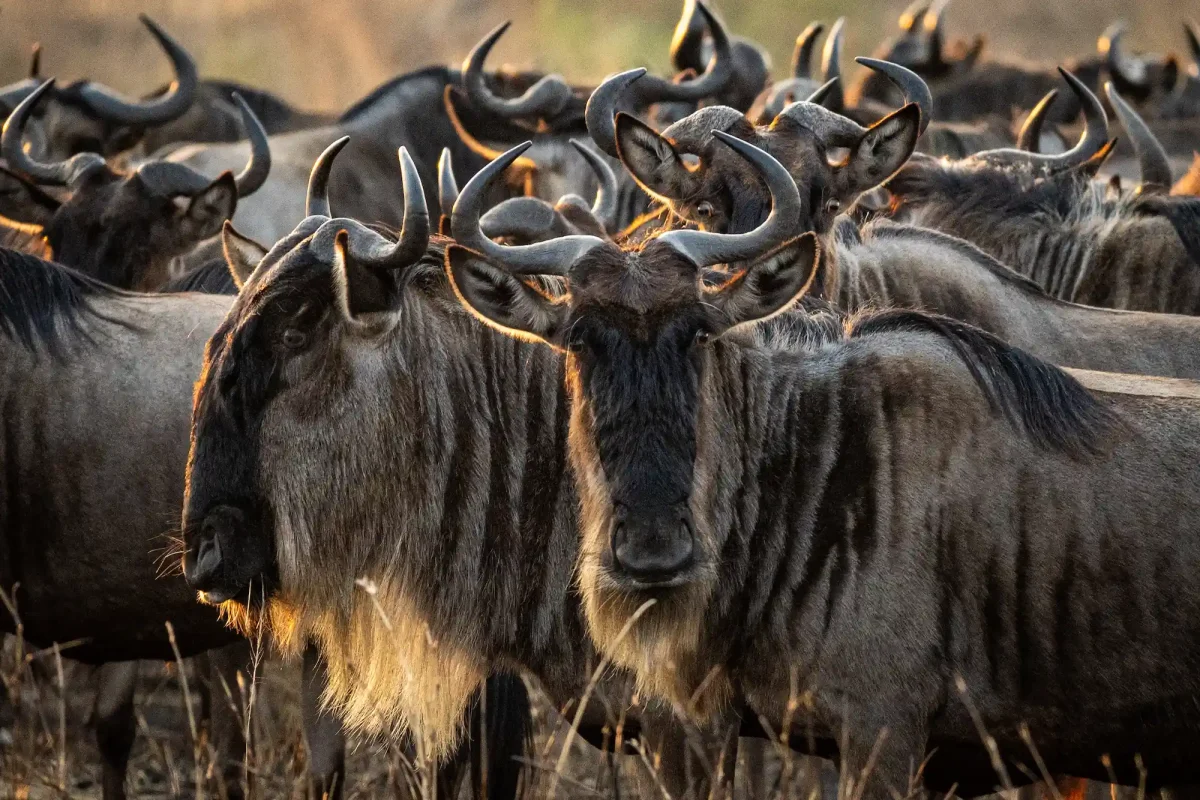
The Great Wildebeest Migration is the continuous, predictable annual movement of over 1.2 million wildebeest and hundreds of thousands of zebras, gazelles, and elands across the East African ecosystem.
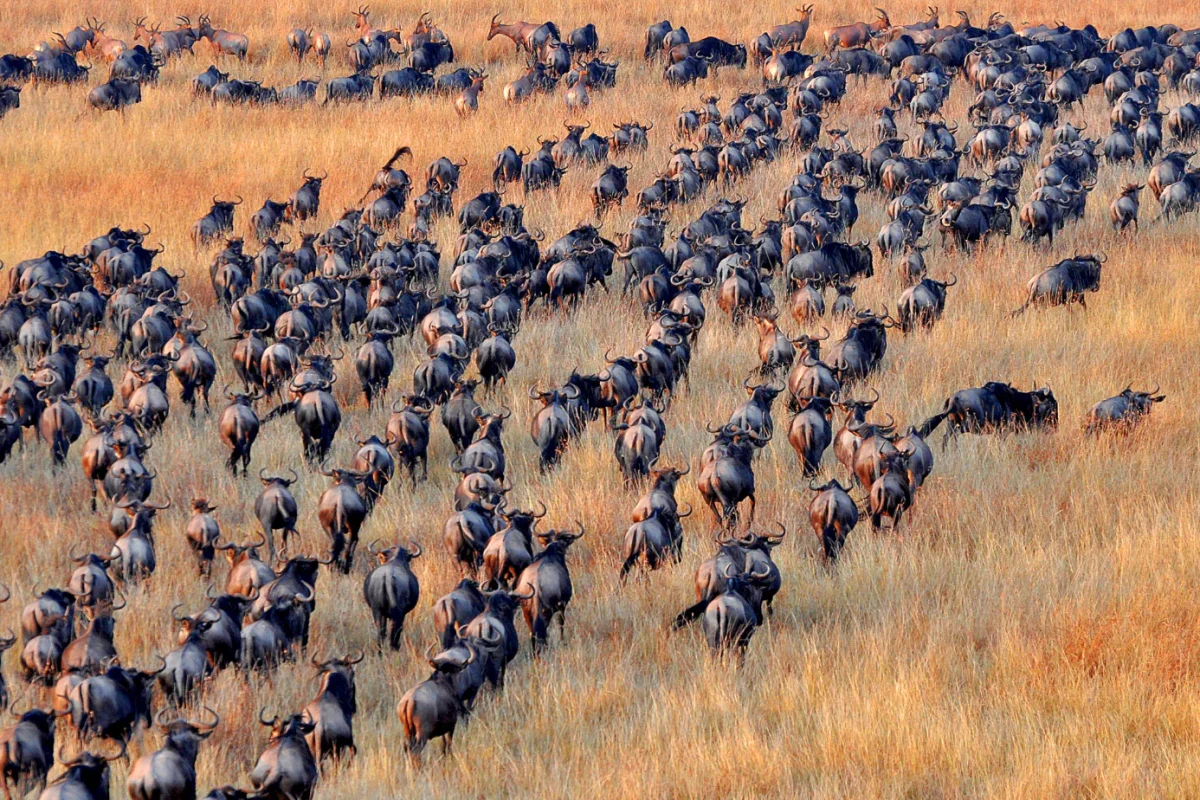
As the largest herd movement on the planet, these massive columns of animals are so dense that they can even be seen from space.
The herds follow an 800 to 1,000 km circuit through the Serengeti in Tanzania and the Maasai Mara in Kenya, driven by the instinct to find fresh grazing lands and clean water.
This “greatest show on Earth” is a perilous journey where the weak, young, and old must evade constant threats from lions, leopards, hyenas, and crocodiles.
The cycle begins in the south near the Ngorongoro Conservation Area, moves north through the Serengeti, and eventually loops back again in a relentless search for survival.
The Great Wildebeest Migration in brief
This endless annual struggle for survival sees millions of wildebeests, zebras, and gazelles journey through the Serengeti-Mara ecosystem seeking fertile lands.
This is the world’s largest land-based migration, fueled by rain and nicknamed the “Eighth Wonder of the World.”
- The Birthing Period (January-March): The herds converge in the southern areas of the Serengeti and Ngorongoro in Tanzania for the calving season.
- Migration Northwards (April-June): The herds leave their birthing grounds as soon as the rains end and trek towards the north.
- The Great River Crossing (July-October): They arrive at the Masai Mara region and cross the dangerous Mara River filled with crocodiles to find fresh pastures.
- Return Journey (November-December): The herds make their way back south to the Serengeti region to coincide with the arrival of rain showers.
- Main Motivating Factors: Rain fluctuations, mineral-filled pastures, and the search for water.
Looking For a Safari in Africa?
Explore our collection of over 70 luxury African safaris. You can also contact us to design a bespoke, tailor-made adventure just for you.
Best Places to Witness The Wildebeest Migration
Witness the Great Migration in Serengeti and Masai Mara
Best Places to See the Wildebeest Migration in Africa?
- Masai Mara in Kenya
- Serengeti in Tanzania
The best wildebeest migration safari destinations in Africa are Serengeti National Park in Tanzania and Masai Mara National Reserve in Kenya.
They both host millions of wildebeests and antelopes, and zebras migrating from the South of Serengeti to the North and later entering the Masai Mara in Kenya.
The wildebeests spend more than 7 months in Serengeti National Park in Tanzania, as they look for greener pastures, and 5 or 6 months in the Masai Mara National Reserve.
The best places for wildebeest migration and crossings are in the Northern Serengeti and Masai Mara, from June to November every year.
For the wildebeest calving sightings, the best place to be is in the Ndutu Conservation Area, south of Serengeti, which borders both Ngorongoro Crater and Serengeti National Park.
More than 8000 wildebeest calves are born daily in January to March, but most births are sighted in February.
Ndutu Conservation Area is located well within the Ngorongoro Conservation Area but right on the doorstep...

A world wonder destination in Kenya, Africa, the Maasai Mara National Reserve is home to quite...

Serengeti National Park is home to millions of wildlife and bird species. This includes the many...
Wildebeest Migration Map & Overview
The Serengeti and Masai Mara Wildebeest Migration Map
Understand the Wildebeest Migration Map, and how the great migration moves from South Serengeti to Northern Serengeti, entering Masai Mara, and finally back to Southern Serengeti.
The Migration Map below describes the movement of more than 1 million animals.
They migrate to look for food and water, but a more needy reason is to find favorable weather conditions for mating and giving birth to more than 800,000 calves.
Facts about Wildebeest Migration Map
The Great Migration is a dynamic phenomenon driven by rains that move about 1,200 miles in a year.
Rather than viewing the process as a “migration,” it is more appropriate to see it as an endless chase for greener pastures and water.
Main Elements of the Great Migration Cycle
- Perpetual Journey: This type of migration cannot be seen as one that has a beginning and an end. Although the herds migrate temporarily to the Masai Mara in Kenya, most of their time in the year is spent in Tanzania’s Serengeti National Park.
- Rain-Dependent Journey: The timing of the great migration is not determined by any calendar but rather by the rains. Thus, the location of the herd can vary from year to year depending on the timing of rainfall.
Seasonal Migration Pattern – Calving Time
- January-March – Herds gather in the Southern Serengeti and the Ngorongoro Conservation Area (Ndutu). During February, nutritious grass ensures the birth of about 8,000 calves daily.
Western Corridor Migration – Grumeti and Ikoma
- April-June – Due to the drying out in the south, the herds migrate northward and westward. It is characterized by the crossing of the Grumeti River, where the first water obstacles and encounters with crocodiles take place.
Crossing the Mara River Events
- July-October – The most spectacular and perilous stage. Herds migrate to the Northern Serengeti and cross the Mara River into Kenya. Here, they overcome steep slopes and enormous Nile crocodiles to reach fresh grasslands in the Masai Mara.
Eastern Return Journey
- November-December – In response to the onset of the “short rains” in the south, the migration commences an urgent return journey along the eastern border of the Serengeti to its southern plains.
The Mega Herd Numbers
- The term “Mega-herd” is made up of about 1.5 million wildebeests, 200,000 zebras, and 350,000 Thomson’s gazelles, all following the same path for survival.

Month-by-Month Wildebeest Migration Guide
The Serengeti and Masai Mara Wildebeest Migration By Month Guide
From our Wildebeest Migration Map, the mass migration begins in January and never ends.
The reason is that the wildebeests start life in January in a region called Ndutu in South Serengeti, where when they start moving, they never stop.
Below, we have highlighted when the best time is to see the great wildebeest migration, with the season running from January to December.
They move in search of food and water, but another major reason is due to their biological clocks.
They mate in the Masai Mara in Kenya and give birth in Ndutu Serengeti South in Tanzania.
Serengeti Wildebeest Migration in January, February, March
Also known as the wildebeest calving season
The Great Wildebeest Migration in January, February, and March
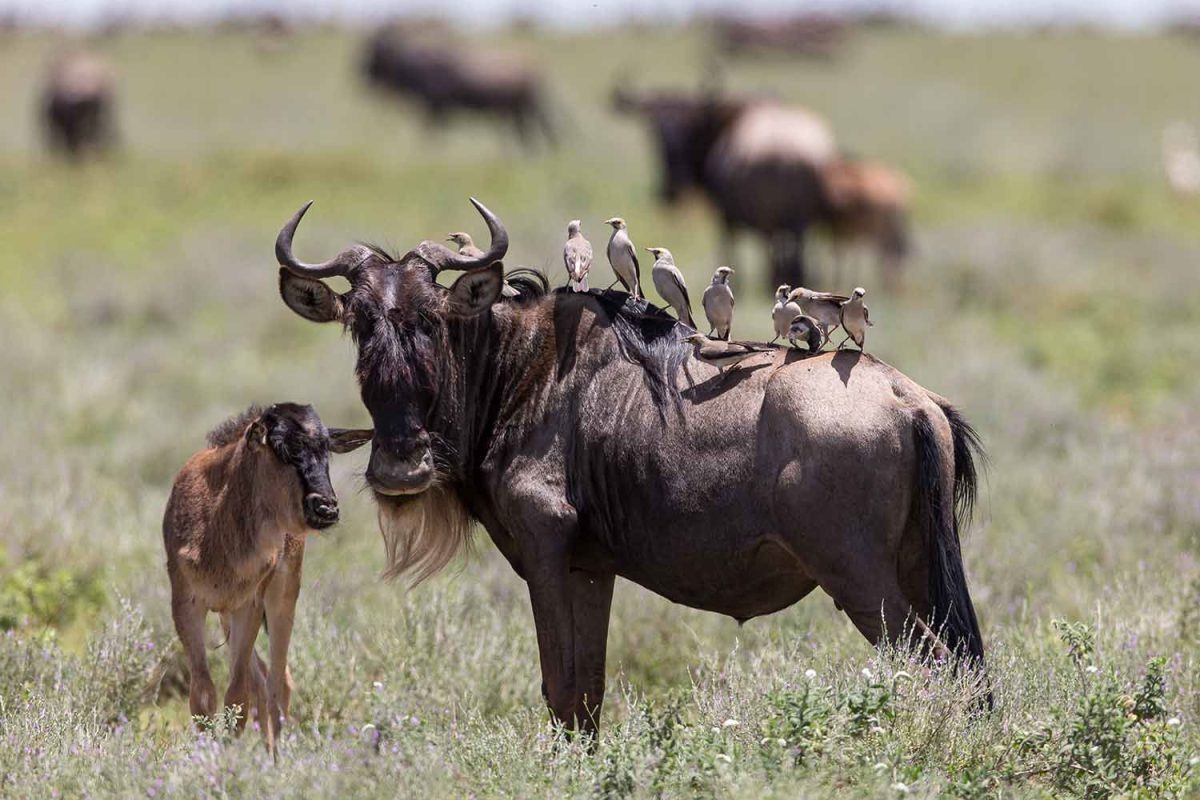
Around January each year, the wildebeest migration will end their trek from the Masai Mara, moving along the eastern edge of the Serengeti and into the Ngorongoro Conservation Area in the Ndutu Conservation Area. Here, the plains are rich in nutritious grass, providing the herds with the best conditions for raising their newborn calves.
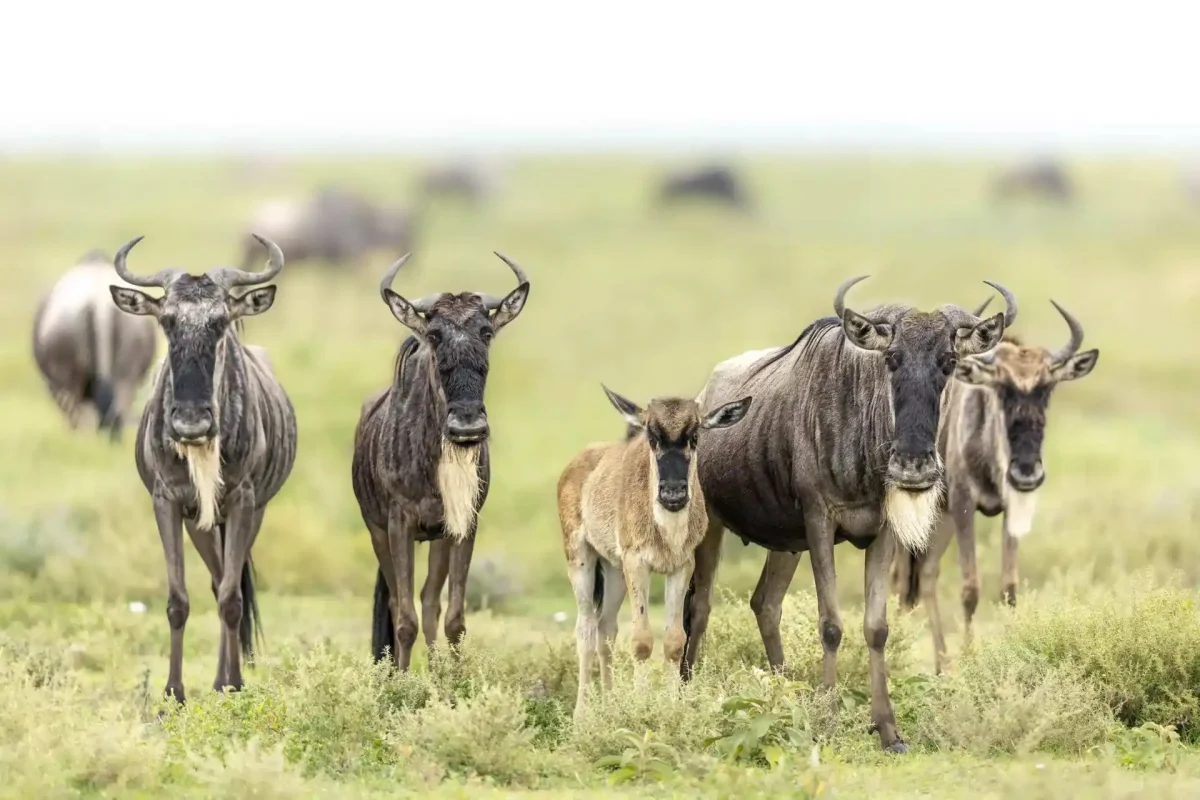
Although there is no real beginning or end to this migratory circuit — other than birth and death — it seems reasonable to call the wildebeests’ birthing season the start of the migration. Around late January or February, the herds occupy the short-grass plains that spread over the lower northern parts of the Ngorongoro Crater highlands. Some 8000 calves are born here every day, within a period of two to three weeks, or nearly 500,000 new calves within 1 month.
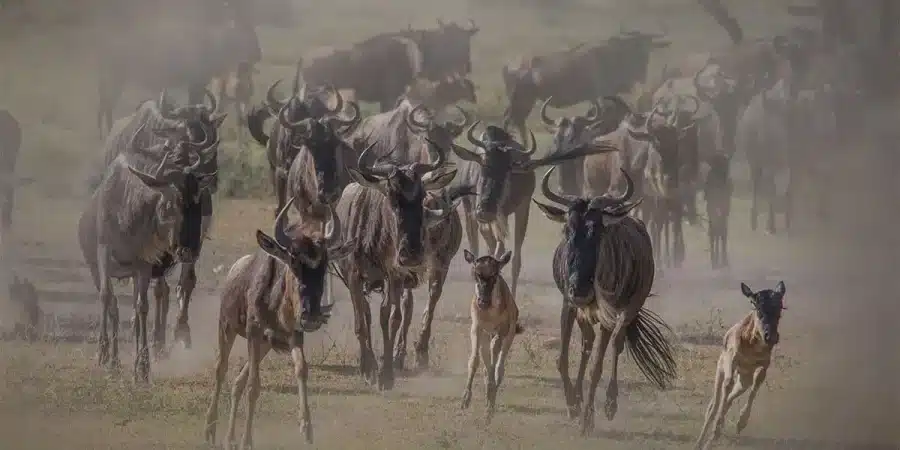
During the wildebeest Calving Season, it’s easy to spot actions and hunts easily as big cats like lions, leopards, and cheetahs hunt the newly born calves and weak wildebeests that are readily available for them.

Serengeti Wildebeest Migration in April, May and June
Grand Movement starts to the Serengeti South to the Serengeti North
The Great Migration in April, May, and June
Gradually, they spread west across these plains, and then around April, they started their great migration north. Around April, the wildebeest herds begin to drift northwest toward the fresher grass of the central Serengeti, drawing with them thousands of zebra and smaller groups of antelope.
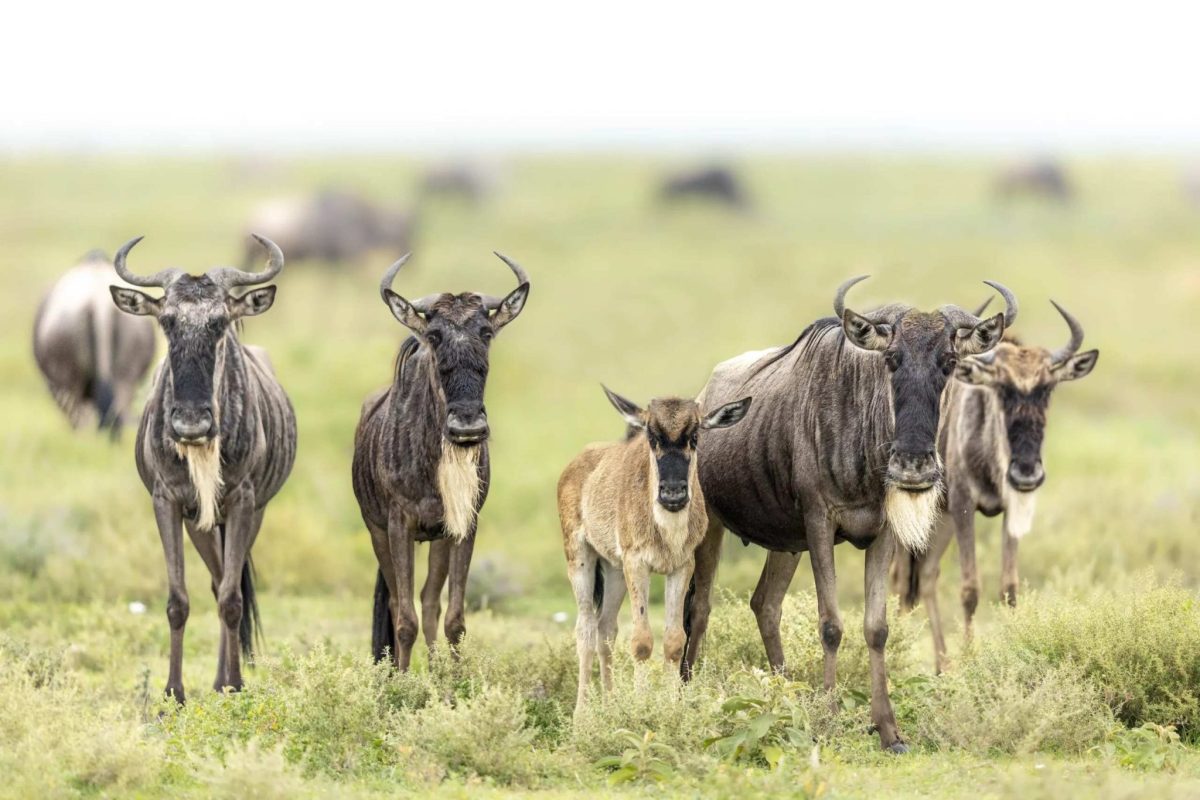
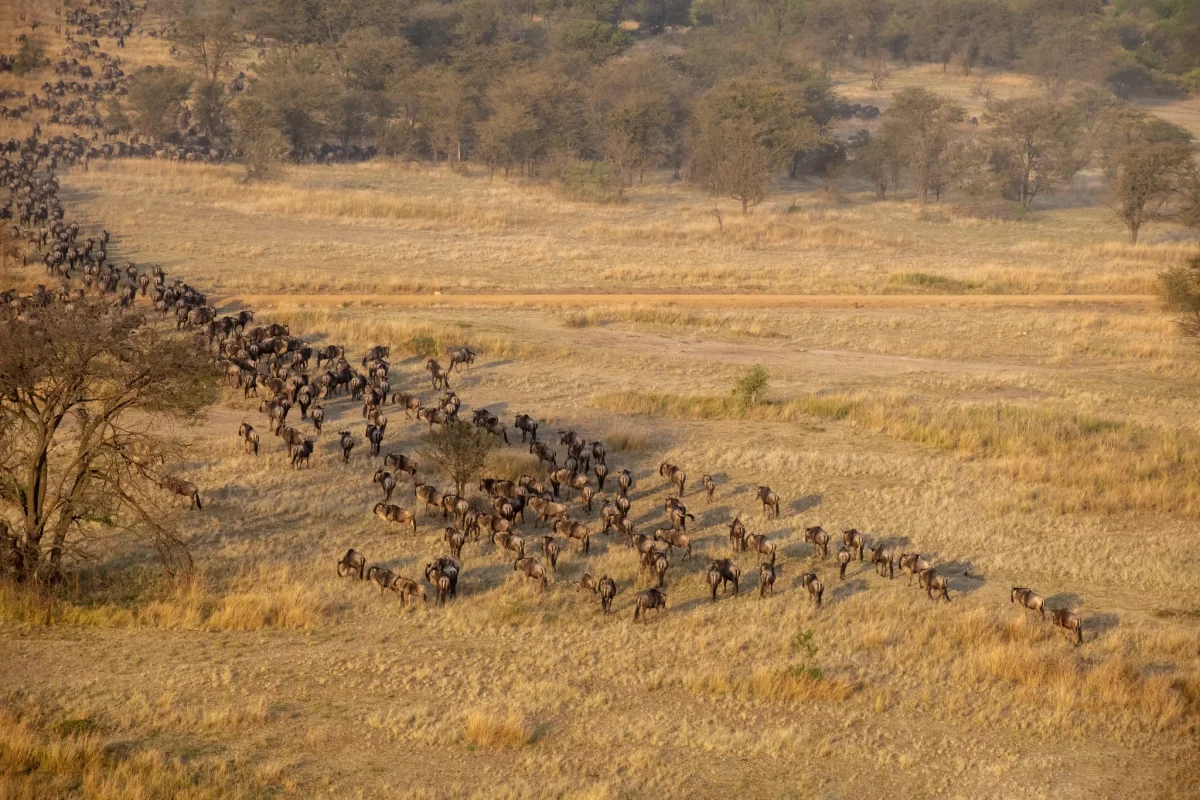
By May, columns of wildebeest stretch for several kilometers as the animals start to congregate by the Moru Kopjes. Mating season begins toward the end of May and male wildebeest battle head-to-head. Throughout ‘the rut,’ the journey continues at leisure with the wildebeest, zebra, and gazelle grazing as they go along.
With all the newborn wildebeest, this is a time when the herd size is especially high. Central, southern Serengeti is the place to be as the herds assemble northwards, getting ready for the big push towards Lobo and the far north.
As the dry season approaches during May and June, the migrating herds begin moving once again, this time towards the Grumeti River, where the crocodiles wait for an easy meal. Seeing the thousands of wildebeest crossing the river is a sight not to be missed, and has to be one of the highlights of a Tanzania safari.
Being located near the Grumeti River is ideal at this time. However, being in the Seronera and Western Serengeti area will also give you fantastic access.
Serengeti Wildebeest Migration in July, August, September, October
The Most eventful season - Wildebeest Crossing in Serengeti and Masai Mara
The Great Migration in June, July, August, September and October
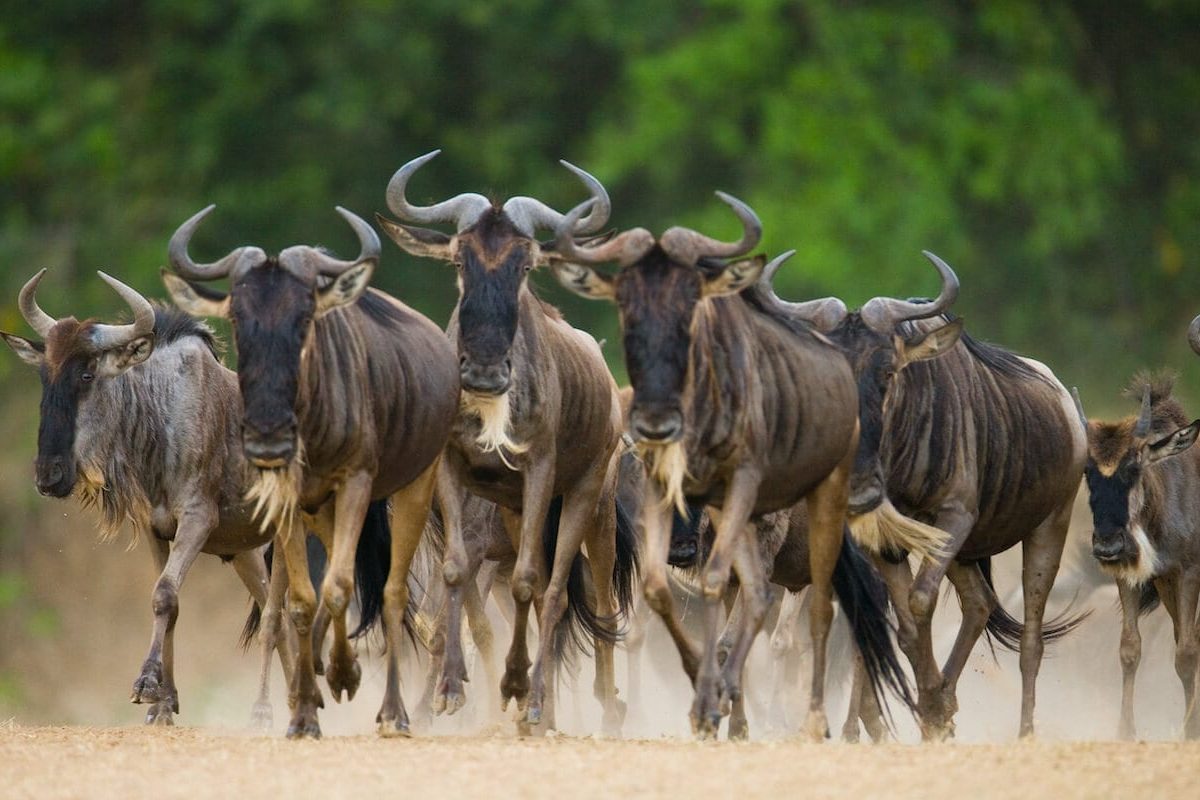
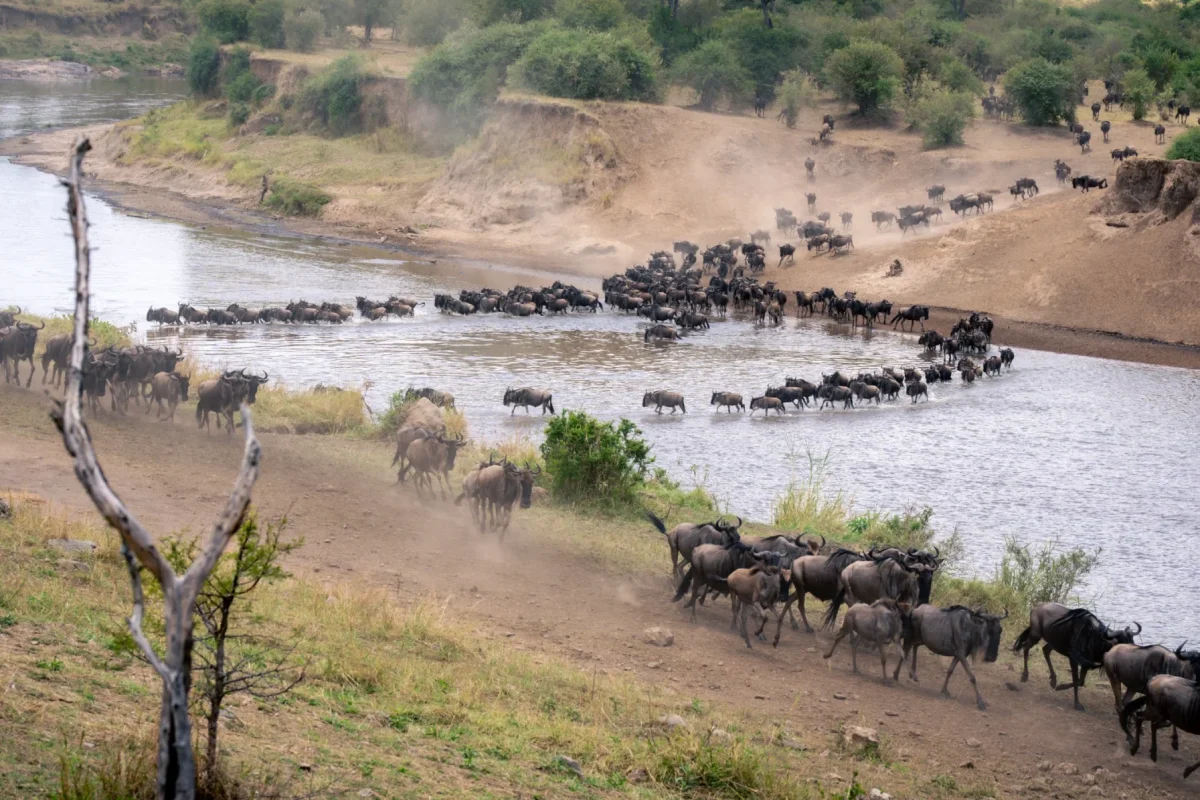
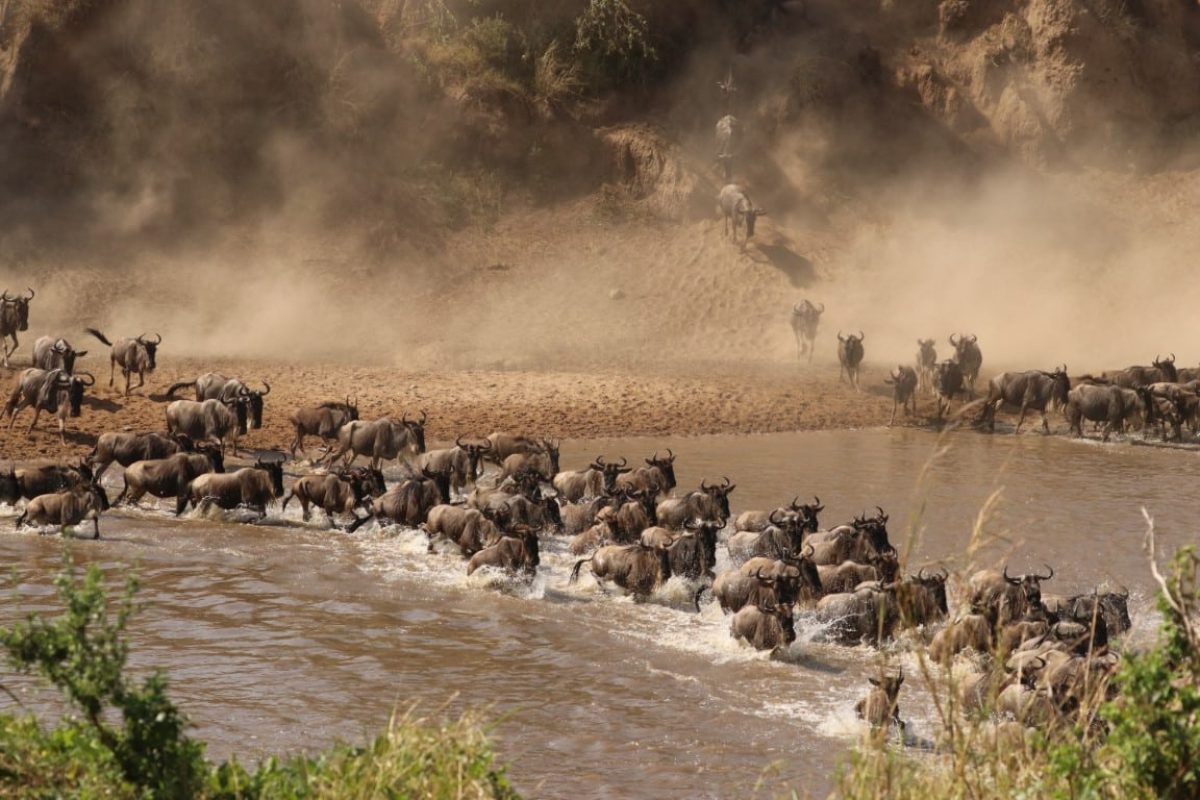
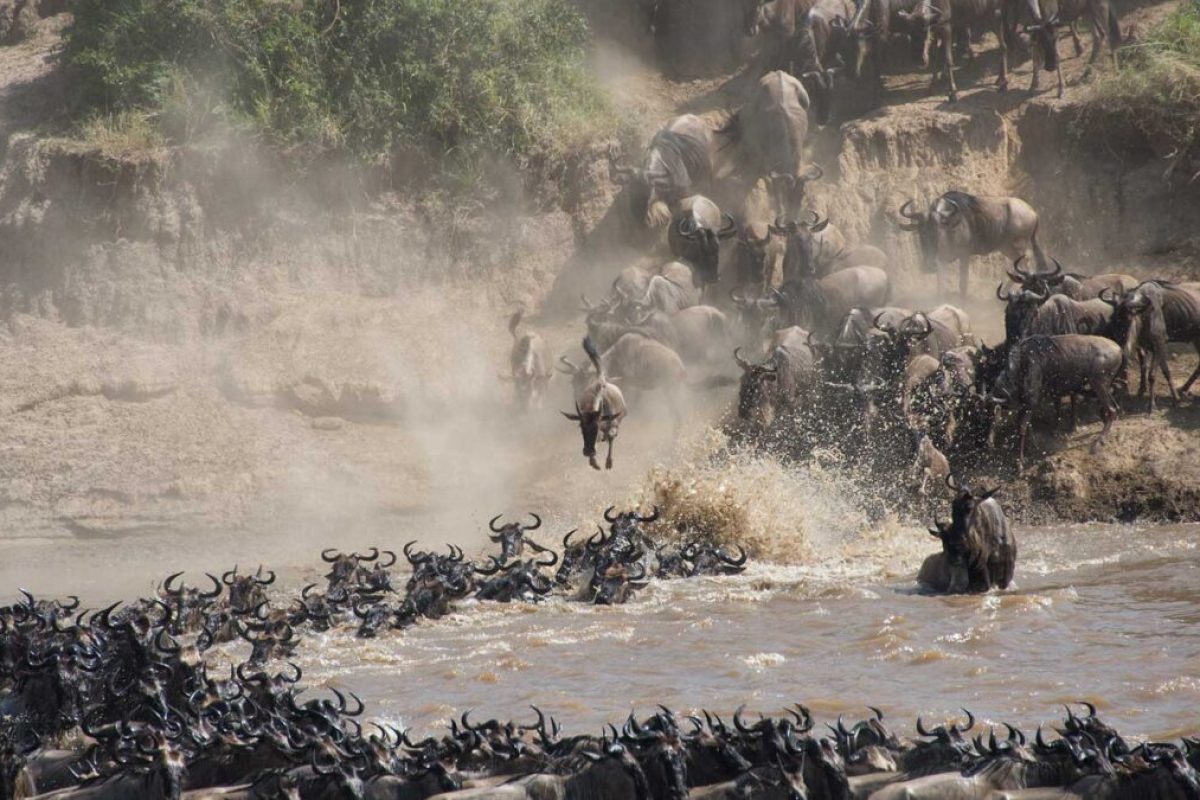
These are the most exciting months of the great migration as the herds move further into the Northern Serengeti and toward the Mara River. At this time of year, you can witness thousands of wildebeests battling their way through the waters and trying to avoid the crocodiles. The best place to be is in the Northern Serengeti or across the river in the western part of the Maasai Mara.
These are the major migration months as the herds are in the middle of their major push north. The first wildebeest herds start crossing the crocodile-infested Mara River – it is a fabulous time to be in this remote part of the park.
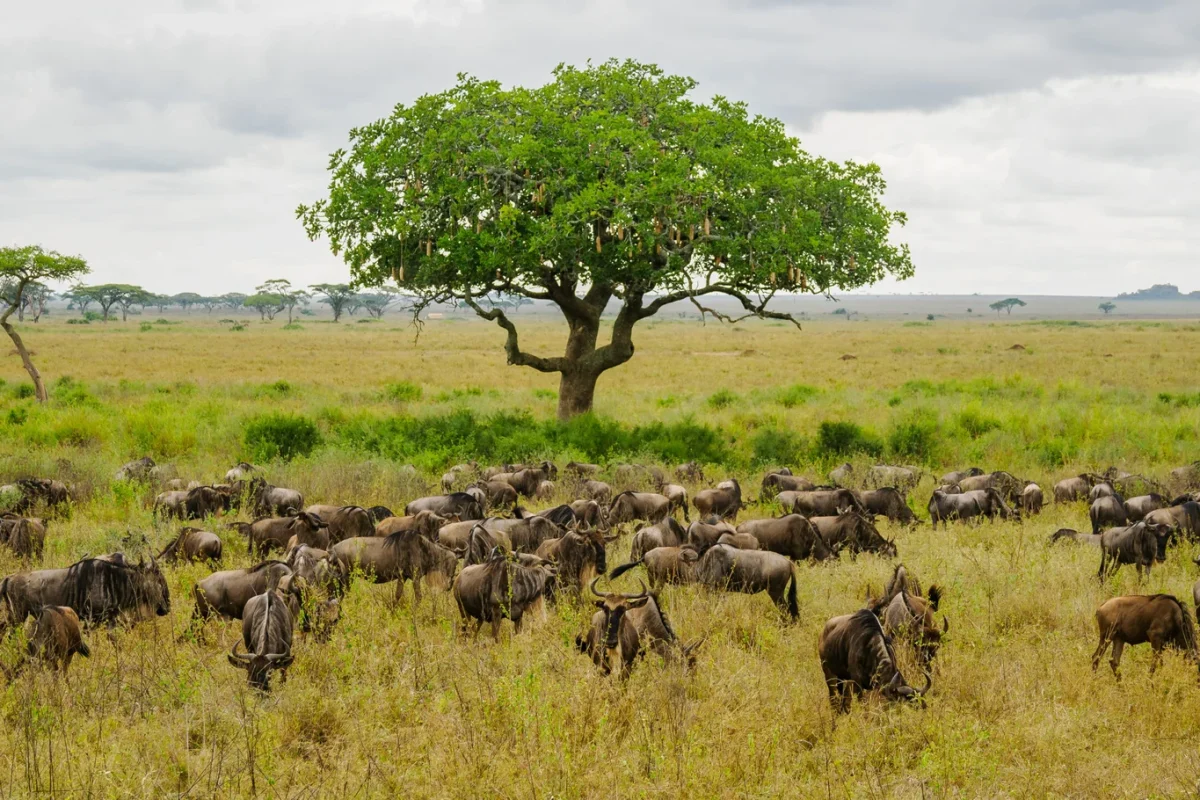
September sees the wildebeest herds spread out across the northern Serengeti park, where the Mara River provides the migration with its most serious obstacle, infested with crocodiles. This river meanders through the northern Serengeti from Kenya’s Maasai Mara National Reserve.
Watching the thousands of herds of wildebeest migrating crossing the Mara River can be very spectacular; there are often scenes of great panic and confusion. It’s common to see herds cross the Mara River north on one day, and then back south a few days later.


Serengeti Wildebeest Migration in November and December
The Most eventful season - The herd starts moving back to Serengeti South
The Great Serengeti Migration in November and December
This is a fairly difficult time to predict the movement of the herds as they push south. Some move east to Loliondo, and others move through the heart of the park.
After the East African short rains in late October and early November, the wildebeest move down from Kenya Masai Mara National Reserve and into the eastern limits of the Serengeti National Park past Namiri Plains, an area known for outstanding cheetah sightings. By December, they are spread throughout the eastern and southern regions of the Serengeti.
In the early months of the new year, the grasses in the deep south of the Serengeti are lush with rain. This draws the herds of wildebeest and hundreds of thousands of zebra and other plains animals. The cycle continues as the calving season starts once again.

What is the Best Time For Wildebeest Migration in Africa?
When is the Serengeti wildebeest migration & Crossings
The perfect time to watch the Great Wildebeest Migration is from July to October, when the herd migrates to the Masai Mara in Kenya and engages in their river crossings.
Those who would like to watch the birth of calves should visit the southern part of the Serengeti in Tanzania during the months of January to March.
This explains the right time and locations where the Great Wildebeest Migration occurs, from the birth of calves to the dangerous river crossings in the north.
- Peak Time (July – October): The herd migrates to the Masai Mara, engaging in crossing the Mara and Talek rivers.
- Best Viewing Period (August – September): This time offers the best opportunities to see large numbers engage in spectacular river crossings.
- Calving Period (January – March): Approximately 400,000 calves are born in the Ndutu plains, attracting many predators.
- Transit Period (April – June): The migration travels through the Western Corridor of the Serengeti, crossing the Grumeti River.
LOW SEASON:
April to May and November to December
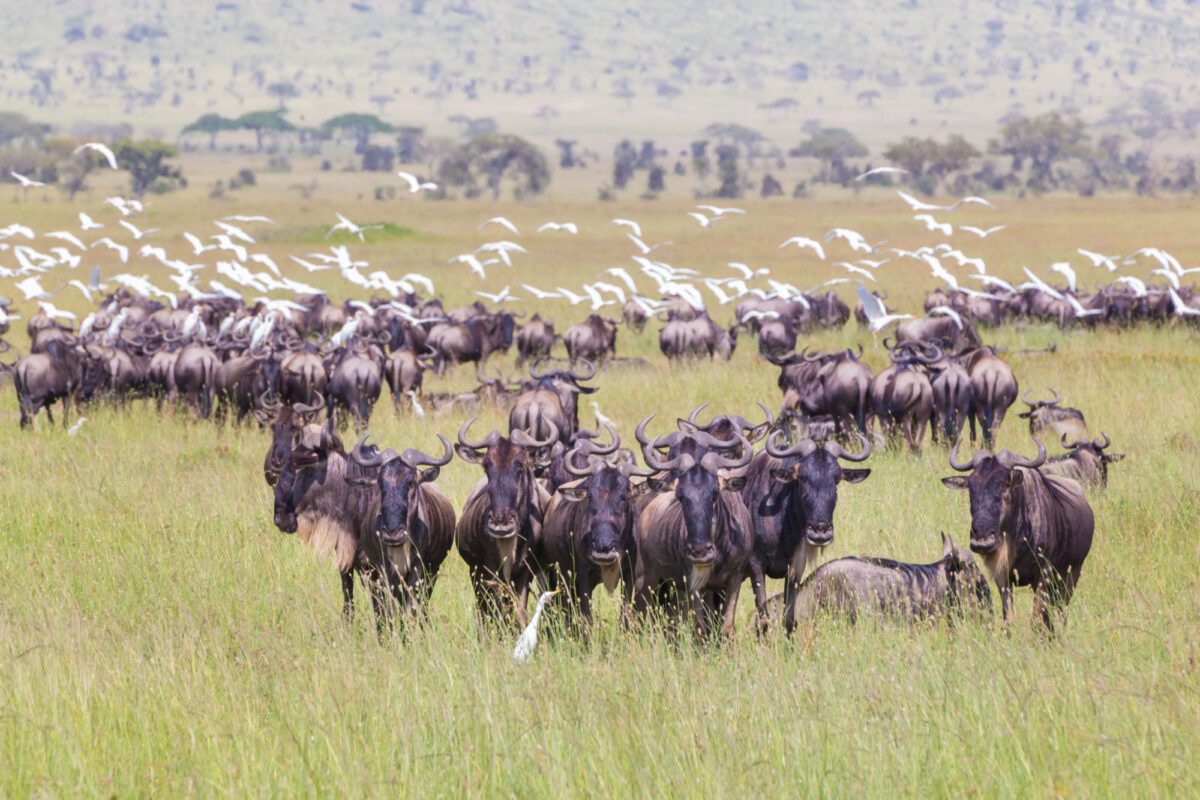
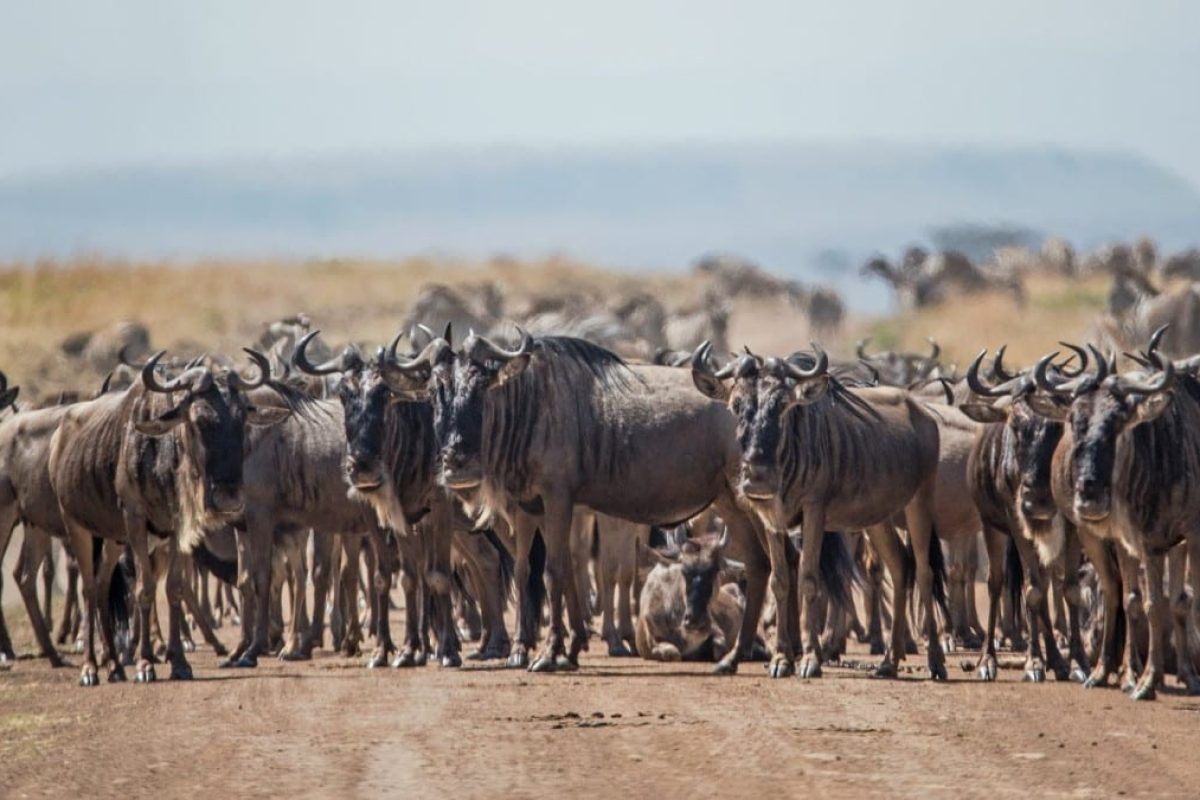
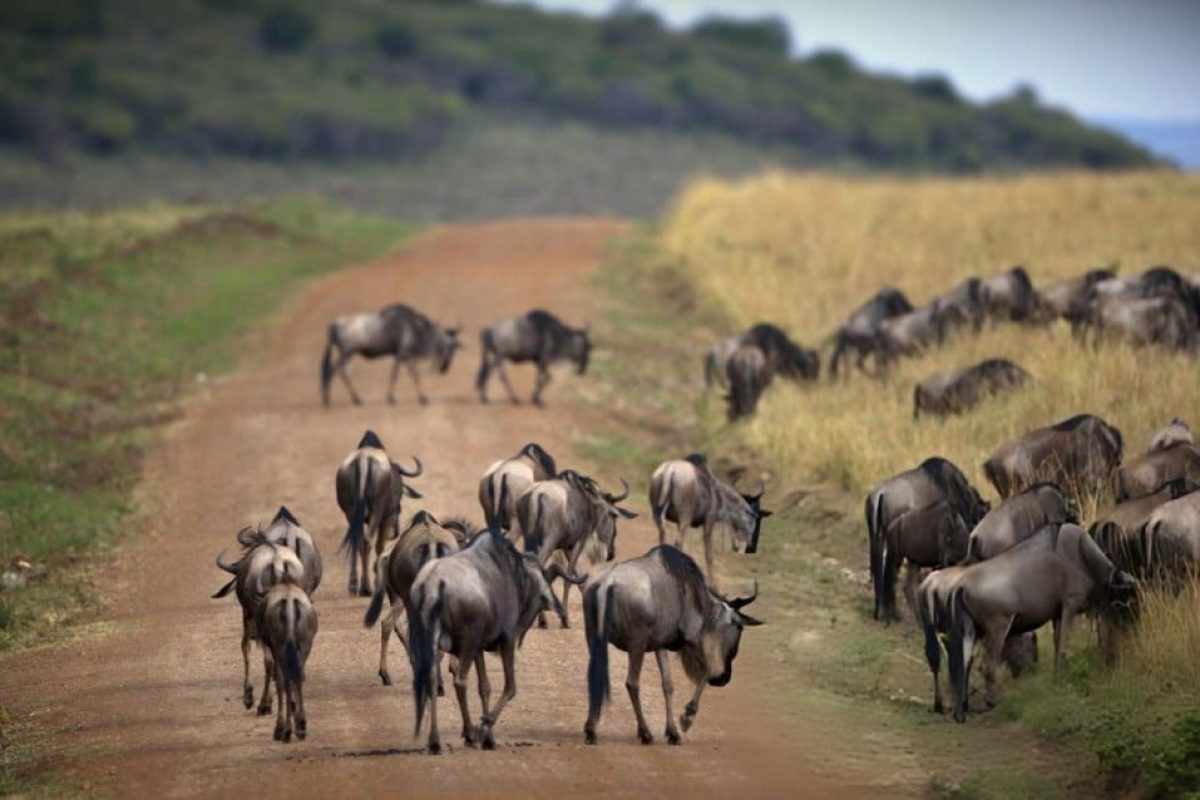
During this Season, the herds are in Central & North Serengeti from April, May, and June.
The grass is tall, and better time to spend with them.
In November, they will have migrated from the Masai Mara back to the Serengeti National Park.
The Weather in these periods is wet and warm, and not recommended for a wildebeest migration safari.
HIGH SEASON:
January to March Mid-October to Mid-November
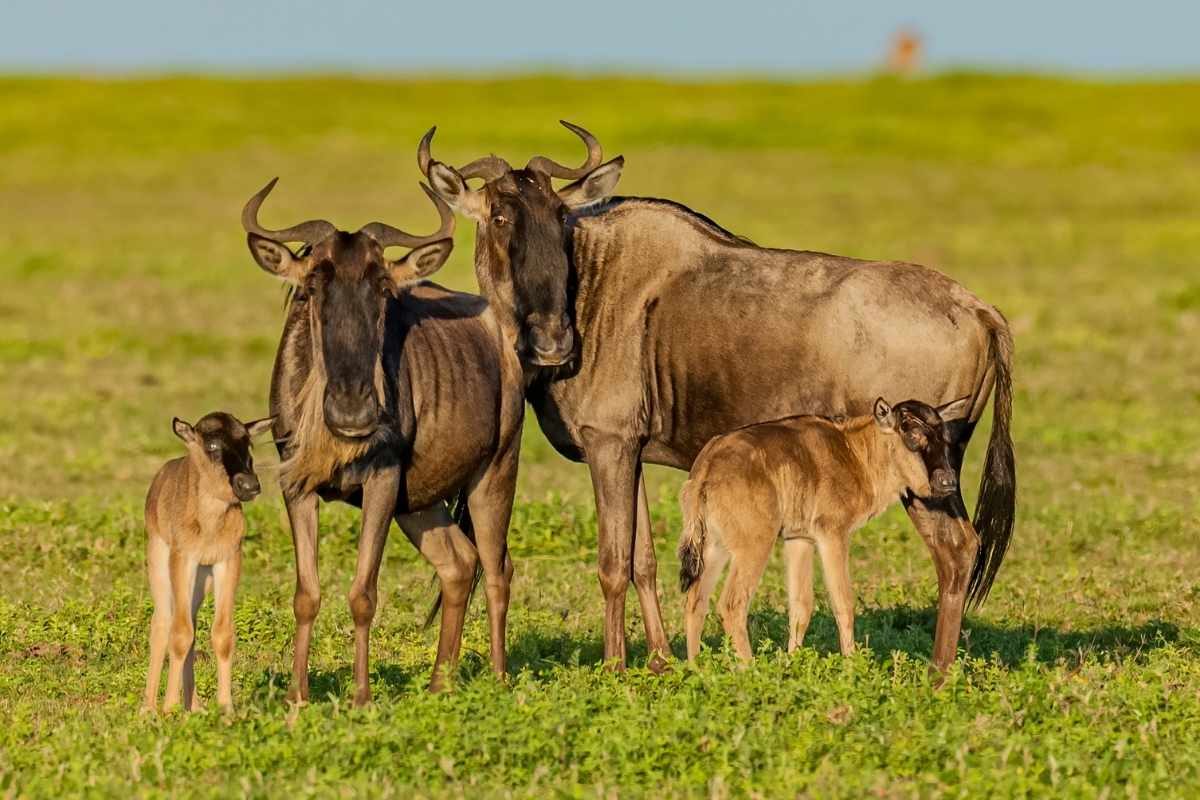
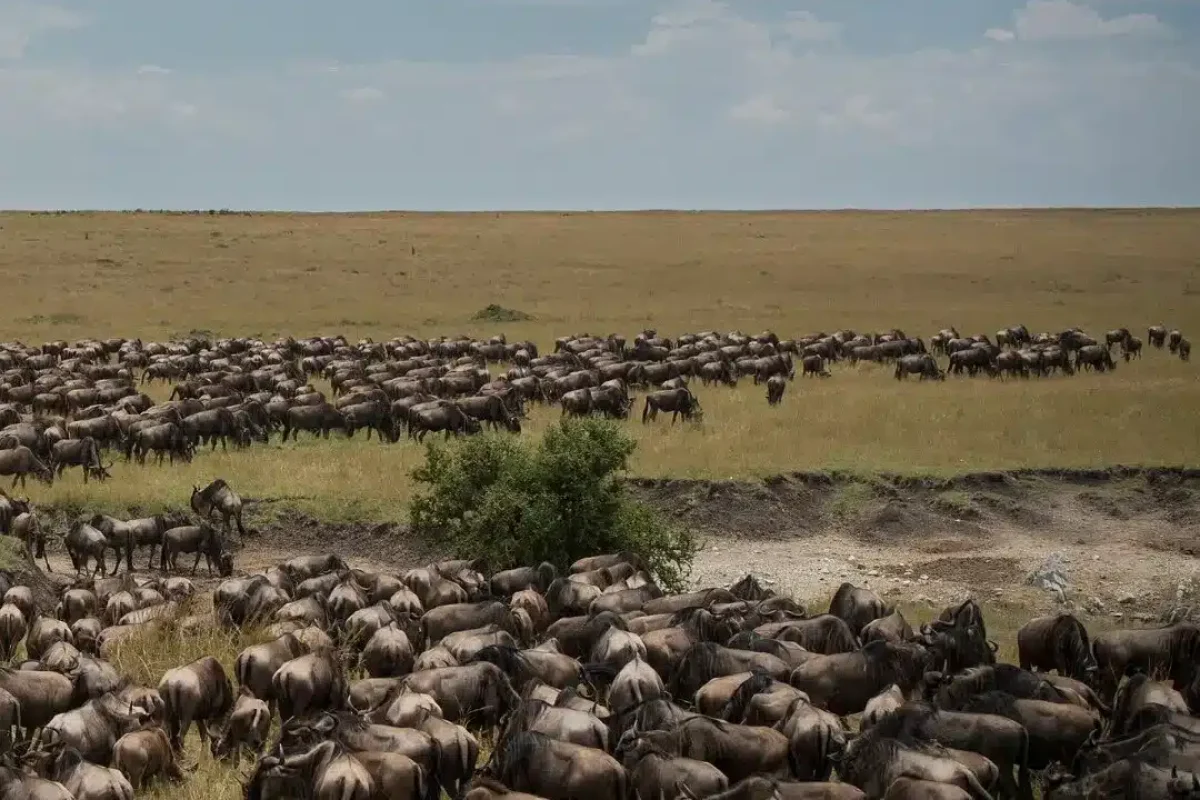
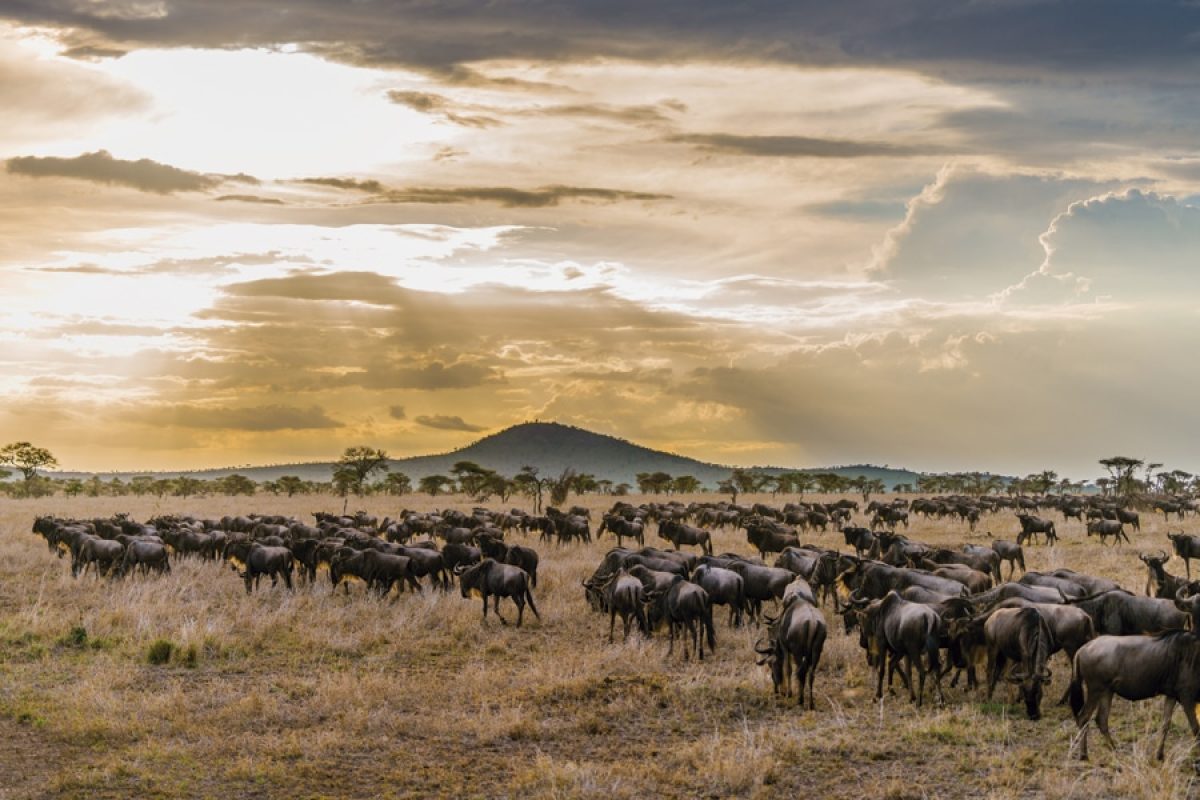
January, February, and March are the best times to witness the calving of wildebeest calves in the Southern Serengeti.
Ndutu Conservation Area offers the best ground for calving of more than 8000+ Calves.
In April, they start moving up to Northern Serengeti, and in November, they start moving down to Serengeti from Masai Mara.
These seasons, the weather and climate conditions are warm, and less rain in between.
In November, the short rains start and end in early December.
peak SEASON:
June, July, August, September, and up to Mid-October
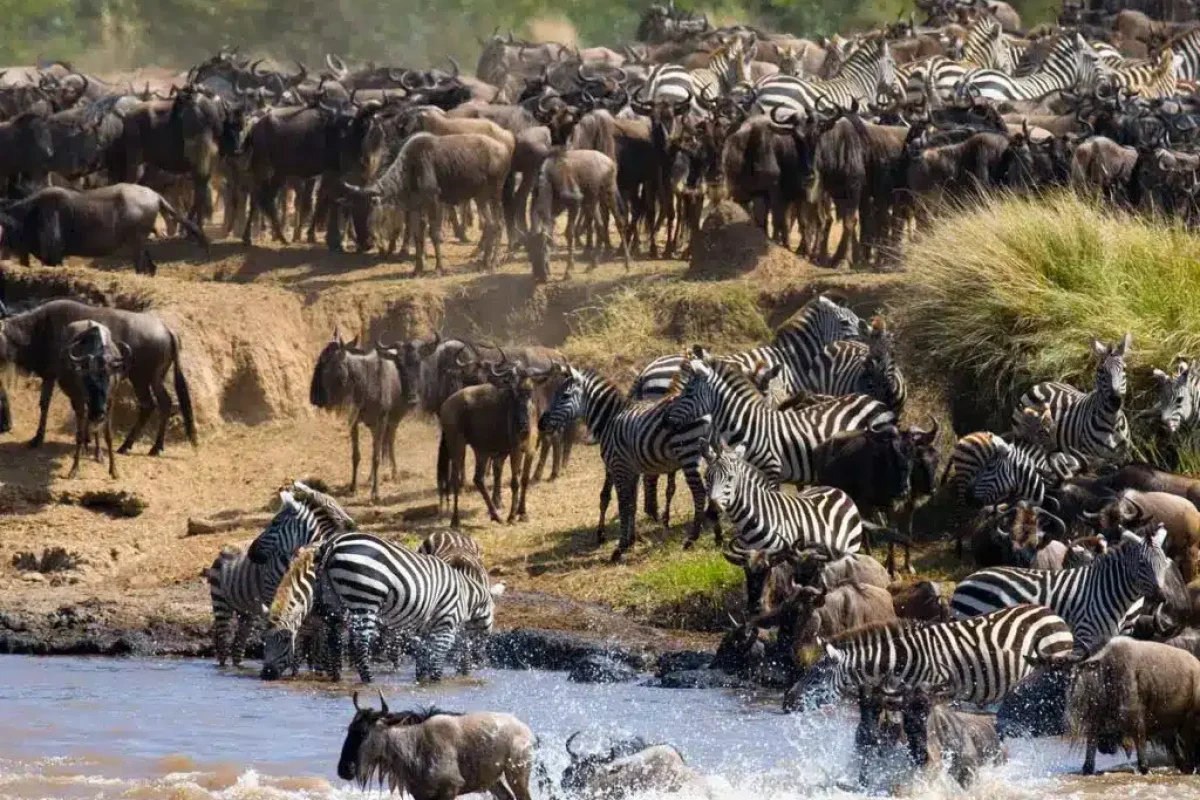
These are the best months to witness the dramatic migration and crossings in Serengeti and Masai Mara, with over 1.5 million wildebeests crossing the Mara River.
It’s easier to spot them in the Masai Mara, Kenya, and the Northern Serengeti in Tanzania.
It’s not possible to predict exactly when, but the highest probability of spotting the wildebeest migration is between mid-July and mid-August.
From the many wildebeest crossings we have witnessed, the peak of it is between this period.
The Weather in June all the way to mid-October is Hot and dry, best for a wildebeest migration safari, and an extension of a beach safari holiday.
It’s a perfect time to visit East Africa for a wildlife safari.
We have listed some guides for what to pack for a wildebeest migration safari in Africa.

Wildebeest Migration: Which is Better between Kenya vs Tanzania?
Which is best for Wildebeest Migration Sightings?
The Great Wildebeest Migration represents a singular, continuous loop of survival where Tanzania’s Serengeti serves as the expansive breeding ground and Kenya’s Masai Mara acts as a critical dry-season sanctuary for mating.
While the Serengeti hosts the herds for the majority of the year, the Masai Mara provides the most intense, dramatic, and concentrated wildlife spectacle during the dramatic river crossings.
The short answer is that neither outperforms the other because the two ecosystems play complementary roles in sustaining the life cycle of the two million animals migrating annually.
- Serengeti (Tanzania): This expansive ecosystem forms the arena for the annual migration for 9-10 months, with the great calving period when up to 8,000 calves are born per day from January to March.
- Masai Mara (Kenya): This small 3-4 month ecosystem is known for its high density of wildlife and exciting Mara River crossings.
- Comparison: The Serengeti ecosystem has more viewing time but is not as intense compared to the Masai Mara ecosystem, which provides a theater of predators in a relatively small space.
- Ecological Function: While the Serengeti acts as the growth and reproductive ecosystem, the Masai Mara functions as the survival zone during the peak of the dry season.
- Experience: Neither region outperforms the other because the two ecosystems play complementary roles in sustaining the life cycle of the two million animals migrating annually.
What types of Safari Accommodations are available during the migration?
Best Camps to Stay During Wildebeest Migration in Kenya and Tanzania
There is a wide variety of safari accommodation available during the Great Migration. These include mobile tents, which move according to the herds’ movements, and fixed luxurious lodges.
The places where these accommodations can be found have been chosen for their proximity to the migration paths.
What types of Safari Accommodation options are available during the migration?
- Mobile Tented Camps: Seasonal camps moving around with the animals, providing guests with an experience that’s eco-friendly and true to nature.
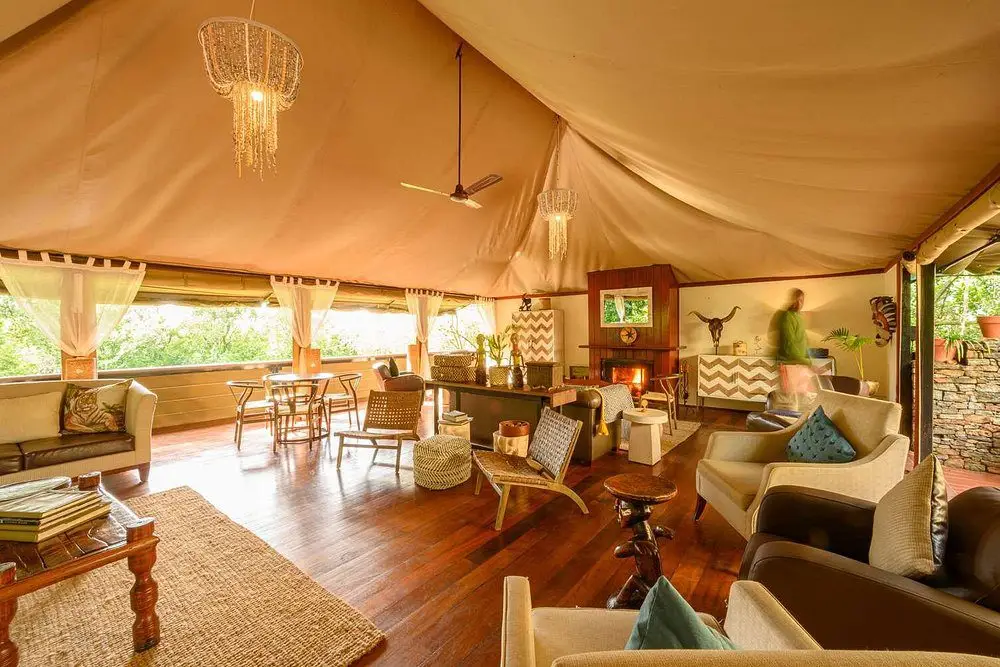
- Luxury Tented Camps: Fixed or semi-fixed canvas rooms elevated off the ground, combining the romance of the wild with luxury features.
- Safari Lodges: Permanent structures offering hotel-style services such as pools and spas, along with a variety of amenities for guests.
- Private Houses/Villas: Exclusively rented houses or villas with a personal chef and guide, perfect for families looking for their own itinerary.
- Bush Camps: Small-sized and intimate camps that provide a rustic setting while not compromising on quality services.
- Booking Tip: Choosing the best camp for the particular month in question is essential since all top-notch camps can fill up several months prior.
Tips for Choosing Wildebeest Migration Safari Accommodation
- Book as soon as you know you want to go – don’t procrastinate! Lodges and camps are small and fill up very quickly.
- The wildebeest river-crossing season is the most popular, so start planning at least 24-18 months before.
- For family rooms, it’s hard to get availability at the last minute; it’s recommended to book them early, as they are limited
- If you’re travelling with very young children, consider fenced accommodation, babysitting services, and your own private game-drive vehicle.
- If you have mobility challenges, ask for rooms as close to the mess areas as possible to avoid long walks, often on soft sand, and in case of support or assistance, it’s easy.
- If you are on a budget, choose good-value accommodation so that you have extra time on safari. This increases your chances of seeing births, hunts, or crossings.

4.7
- Ndutu Area ,
- Tanzania
Ndutu Mobile Camp, operated by Tanzania Bush Camps, offers a unique and immersive safari experience in the heart of the southern Serengeti ecosystem. The camp

- Serengeti ,
- Tanzania
Lemala Mara Camp is a seasonal luxury tented camp located in the remote Northern Serengeti, perfectly positioned near the Mara River between June and October.

5
- Kenya ,
- Tsavo West
Taita Hills Safari Resort & Spa is a unique safari destination located in the heart of Taita Hills Wildlife Sanctuary, offering a blend of luxury,
4.9
- Kenya ,
- Masai Mara
Olare Mara Kempinski Masai Mara is a luxurious tented camp located in the heart of the Olare Motorogi Conservancy, adjacent to the famous Maasai Mara

5
- Ndutu Area ,
- Serengeti ,
- Tanzania
Alex Walker’s Serian is a collection of intimate and exclusive safari camps. Being mobile means they move seasonally. This is a unique bush camping experience

4
- Ndutu Area ,
- Serengeti ,
- Tanzania
Asilia Ubuntu Migration camp follows herds of wildebeest as they move around the Serengeti from the fertile south grassland that have wildebeest give birth to
Looking For a Wildebeest Migration Safari?
We have some of the best great wildebeest migration safari packages
These Wildebeest Migration safaris will be planned to coincide with two important stages in the herd’s migration: the exciting river crossings and the mass birthing period.
Safari Package Overview
- Masai Mara Fly-In/Drive-In: Simplified itineraries that take you to the Mara only, making it easier to reach river crossing sites.
- Kenya Migration Loop: Extended itineraries that frequently combine the Masai Mara and Lake Nakuru for rhinos or Lake Naivasha for bird watching and boat tours.
- Combined Kenya and Tanzania Tours: Cross-country tours involving both the Masai Mara and Serengeti to follow the herd throughout their migration trail.
- Tanzania Mass Birthing Season Itineraries: Customized itineraries concentrating on the southern part of the Serengeti and Ngorongoro Conservation Area.
Important Seasonal Aspects to Consider When Planning Your Migration Safari
- River Crossing Season: To see the herd cross the Mara River, plan your visit to the Masai Mara region between July and October.
- Calving Season: If you want to see thousands of young calves born, visit the Southern Serengeti during January-March.


Cost: 7,130 PPS
No. of Nights 10
Destinations :-
- Amboseli ,
- Lake Naivasha ,
- Lake Nakuru ,
- Masai Mara ,
- Samburu ,

Cost: 6980 PPS
No. of Nights 7
Destinations :-

Cost: USD 6222 PPS
No. of Nights 6
Destinations :-
- Karatu ,
- Lake Manyara ,
- Ndutu ,
- Ngorongoro ,
- Serengeti ,
- Tarangire ,

Cost: USD 3,228 PPS
No. of Nights 3
Destinations :-

Cost: USD 7,050 PPS
No. of Nights 11
Destinations :-
- Aberdares ,
- Lake Nakuru ,
- Masai Mara ,
- Nairobi ,
- Samburu ,
Why Book a Wildebeest Migration Safari with Cheetah Safaris
Lets customise your wildebeest migration Safari Holiday in Kenya and Tanzania
Cheetah Safaris makes the dream of experiencing the Great Wildebeest Migration a smooth journey by offering guided tours of the best locations in Kenya and Tanzania.
Our commitment to leveraging local knowledge and optimal transportation ensures that our clients spend less time traveling and more time enjoying one of the world’s most awe-inspiring natural spectacles.
Why Choose and Travel With us?
- Position of Experts: With accurate tracking of the herds, you will be able to see everything important, from river crossings to the calving season.
- Local Expertise: Guides highly trained use their understanding of the ecosystem to forecast herd movement and get the best views.
- Efficient Management: Over 15 years of experience provide us with expertise in managing all regional documentation.
- Eco-Friendly Tours: Each tour will provide funding to support schools and essential nature conservation efforts in the region.
Financial Protection
You are guranteed of a safe, and peace of mind booking process, and as well safari payments. We ensure that your payments are secure and safe.
Sustainable Practices
Keeping in mind our efforts in wildlife, environment and natural resources protections, we are sustainable travel conscious and aware.
Ground Safari Expert
We Know Africa more than any one. We love taking our guests to the less explored destinations. Experiencing the magical touch of African Wild.
Positive Impact
Our Safaris are not only sustainable, but create very positive impacts to so many. We engage in school programmes, that inspires our future leaders.
15 Years of Experience
Cheetah Safaris has a combined of 69 years of safari expertise and practice in Africa. We will take care of your safari from arrival till departure.
Proffessional Guides
We have the best safari guides in East Africa. All our guides are Silver and Gold Guides. Hence you will learn so much with them while on safari.
Looking For a Safari in Africa?
Explore our collection of over 70 luxury African safaris. You can also contact us to design a bespoke, tailor-made adventure just for you.
Wildebeest Migration FAQs
Frequently Asked Questions
Explore these common questions to help you plan your Wildebeest Migration safari Kenya and Tanzania. Understanding the timing and locations will ensure you experience the best of this year-round journey.
When does the wildebeest migration start?
The wildebeest migration is a year-round, circular journey from the Serengeti to the Masai Mara and back to the Serengeti. However, it is often considered to “start” with the calving season in the southern Serengeti (Ndutu area) of Tanzania between January and March.
Is the wildebeest migration guaranteed?
No, the Wildebeest Migration and specific events like river crossings are not guaranteed. While the migration is a natural, year-round event, it is highly unpredictable because it is driven by rainfall and follows no fixed schedule. The herds may arrive at a river, linger for days without crossing, or even turn back entirely.
Which country is better for river crossings?
Both countries offer amazing wildebeest migration views. Tanzania’s Serengeti provides longer viewing windows and quieter crossings, while Kenya’s Maasai Mara offers more intense, high-density river crossings from July to October.
Are migration safaris suitable for families?
Migration safaris are perfect for families, especially children over eight years old. While many lodges are family-friendly, some have age limits. We recommend private, flexible itineraries to keep kids comfortable during long drives.
How many days are needed for wildebeest migration?
A wildebeest migration safari requires a minimum of 5 to 7 days for a focused trip, though 12 to 17 days or longer is recommended to see dramatic events like wildebeest mara river crossings.
What should I pack for wildebeest migration safari?
Pack lightweight, neutral-colored clothing (khaki, beige, or olive) for daytime wear and warm layers for cool mornings. For a birding trip, high-quality binoculars are essential; an 8×42 pair is a great choice. You will also need a camera with a 200–400mm telephoto zoom lens to capture bird images. Don’t forget a solar-powered charger, high-SPF sunscreen, and a hat. Check our recommended Safari Packing List.
Best time for wildebeest migration photography?
For the best migration photography, visit Kenya’s Maasai Mara between July and October. August and September are peak months for dramatic river crossings and predator action. The dry, sunny weather provides perfect lighting for capturing these high-energy moments as the herds brave the Mara River.
Are migration safaris expensive?
Migration safaris generally range from $450 to over $1,200 per person per day. Costs depend on luxury levels, peak timing (July–October), and location. High park fees and specialized guiding drive these prices, though budget options exist. Expect higher rates in Tanzania due to its vast size and premium concession fees.
Pack For a Purpose
Cheetah Safaris is a serious advocate of sustainable safari practices in Africa. As part of our efforts and initiative, we engage and support schools and children who need knowledge to better their lives. The best gift a child can be given is education, skills, and creativity.
In this case, we request our guests booking with us, to bring an extra back of supplies. This can be in terms of books, sports materials, and any other items that would change the lives of these kids.
- Education
- Sustainable Travel
- Wildlife Conservation
Let us help you customize your trip
Like all of our holidays on this site, this is just an idea. All of our trips are tailor-made, so we’ll always adapt them to suit you.
Talk to an Expert
Browse our Cheetah Safaris Website. We’ll match you with a Specialist in our team who is best suited to help you plan your next safari adventure. To start, submit your Safari Inquiries.
Prepare for your trip
Our Safari experts will be of help in planning your safari from start to end. They will advise you on all that you need to pack and travel documents, too. They will be ready to answer any queries you have.
When you return
We would love to hear from you about your trip with us. Your feedback will help us always work better and try to be the best. You can leave your review on our Reviews Page or TripAdvisor Page.
Partners / Memberships
People who always support and endorse our good work