


- What to Know Before Booking a Safari? – Safari FAQs
- Safari Planning & Itinerary Questions
- Wildebeest Migration Questions
- African Safari Budget, Costs & Pricing Questions
- Safari Accommodation Questions
- Transport & Logistics Questions
- Safari Period Timing & Safari Planning
- Border Crossing & Visa Logistics
- Health, Safety & Convenience
What to Know Before Booking a Safari? – Safari FAQs
To help you prepare for an unforgettable Luxury African Safari, we’ve compiled a list of our most frequently asked questions about our African Safaris and Tours.
Drawing from our previous safari inquiries of past travelers, these insights are designed to ensure your safari experiences are seamless, comfortable, and completely worry-free from start to finish.
Safari Planning & Itinerary Questions
What is the best safari itinerary for first-time visitors to Kenya or Tanzania?
The first-ever safari includes those locations that are famous for their wildlife, delivering the best experience of East Africa.
A combination 10 to 14-day tour of Kenya and Tanzania safari ensures that you can visit the best areas without missing out on anything.
The ideal introduction is the Maasai Mara in Kenya, with wide open spaces and predators in abundance during migrations.
The adjoining Serengeti offers unmatched scope due to its gigantic proportions and wildebeest migration herds all year round.
The Ngorongoro Crater provides an excellent opportunity to observe the densest wildlife collection, including the rare black rhinos.
The Amboseli National Park features impressive sights of herds of elephants and majestic Mount Kilimanjaro in the background.
The Tarangire National Park adds value with impressive baobab trees and abundant wildlife along the rivers.
Regional flights from one park to another in East Africa save valuable travel time, which you can use on game drive experiences.
Can Kenya and Tanzania be combined in one itinerary?
Definitely yes, visiting Kenya and Tanzania together makes for the best ever East African safari, because you will get to visit two of the top wildlife hot spots in the world!
It is possible to take part in a safari that allows you to enjoy the wildebeest migration from one ecosystem, the Serengeti, to the Maasai Mara.
The logistics are very easy; regular flights are available from regional cities such as Nairobi and Arusha to bush airstrips, and flying from the Masai Mara direct to Serengeti.
Crossing the borders between the countries using customs posts, such as Isebania or Namanga, is easy and organized by credible safari professionals.
Which parks should be included in a classic East Africa safari?
A true East Africa safari must include a hand-picked selection of the best national parks and reserves in East Africa.The
Maasai Mara National Reserve must absolutely not be missed, known worldwide for its incredible feline populations and the spectacular crossings during the Great Migration through the Mara River.
The next park one must visit is Serengeti National Park, where the Great Migration continues, with the classic “Out of Africa” views of open savannahs.
Another park, which cannot be missed, is Ngorongoro Crater because of its breathtaking and enclosed volcanic environment that boasts an incredibly dense wildlife population in a single caldera.
Amboseli National Park should definitely be included in the tour itinerary because of its majestic tusker elephant herds roaming around the foot of Kilimanjaro Mountain.
In addition to the above, Tarangire National Park provides a completely unique environment in terms of ancient baobab trees and enormous elephant gatherings at the riverbanks.
One of the two lakes (Nakuru or Manyara) may be visited to see colorful birds and flocks of flamingoes, as well as the rift valley landscapes.
- Masai Mara National Reserve
- Serengeti National Park
- Ngorongoro Crater
- Tarangire National Park
- Amboseli National Park
- Samburu National Park
- Lake Nakuru National Park
- Lake Manyara National Park

Wildebeest Migration Questions
Where is the wildebeest migration during specific months?
The Great Migration is a continuous, year-round loop driven by rainfall and the search for fresh grazing grass across the Serengeti-Mara ecosystem.
From January to March, the wildebeest herds settle on the southern Serengeti plains in Tanzania for the vital calving season, where thousands of calves are born daily.
During April and May, the heavy rains prompt the herds to begin moving northwest toward the central and western corridors of the Serengeti.
In June and July, the migration moves through the Western Corridor, facing perilous crossings at the Grumeti River as they push further north.
From August to October, the herds arrive in the northern Serengeti and Kenya’s Maasai Mara, triggering the iconic, high-stakes crossings of the Mara River.
By November and December, the short rains signal the herds to turn south again, journeying back down through the eastern Serengeti to repeat the cycle.
Understanding this seasonal movement is essential for choosing the right safari camps and lodges, and parks to ensure you are in the heart of the action.
- January to March – Calving Season.
- April to June – Grand Migration to the North Serengeti and Masai Mara.
- July to September – River Crossings and big cat actions.
- October to December – Grand Migration to the South Serengeti and Ndutu Conservation Area.
What are the best camps for migration safaris?
Selecting the right wildebeest migration accommodation is essential to position yourself perfectly for the dramatic movements of the Great Migration.
Choosing a permanent riverfront property allows you to witness high-stakes water crossings directly from the camp decks.
Opting for a mobile tented camp ensures you stay in the heart of the action as the seasonal herds move throughout the year.
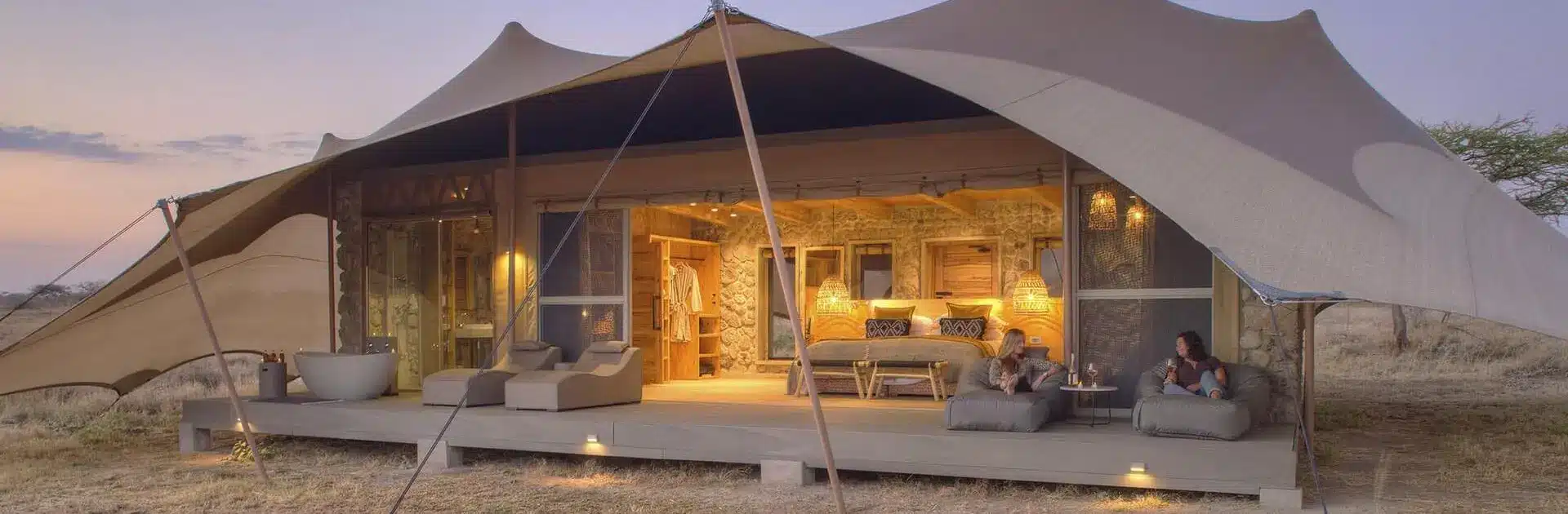
Luxury tented camps blend old-world canvas romance with premium modern comforts, often overlooking exclusive wildlife concessions or vast plains from elevated escarpments.
Spacious family tents offer interconnected layouts and private amenities, providing safety and shared comfort for multi-generational travelers.
Booking properties with direct fly-in access maximizes your time on game drives by eliminating long, exhausting overland road transfers.
Is the wildebeest migration guaranteed?
Driven by unpredictable weather patterns, the exact timing of the Great Migration is never guaranteed.
While the massive herds move year-round, their presence in specific areas depends entirely on seasonal rainfall.
Unexpected weather shifts can alter the herds’ expected locations by several weeks.
Seeing the mega-herds is highly likely with good planning, but witnessing a live river crossing requires patience and luck.
To handle this unpredictability, expert operators use mobile camps that actively track the herds’ movements.
Aligning your travel dates with historic seasonal movements maximizes your chances of being in the heart of the action.

African Safari Budget, Costs & Pricing Questions
What is the average safari cost per person?
Safari costs vary significantly based on luxury level, seasonality, and travel logistics.
Mid-range driving safaris typically average between $700 and $1,200 per person, per night.
These standard options include comfortable permanent camps, private vehicles, and park fees.
Bespoke, high-end fly-in safaris range from $1,200 to over $3,500 per person, per night.
Premium rates cover exclusive luxury lodges, private vehicles, fine dining, and charter flights.
Peak Great Migration months from July to October command the highest pricing of the year.
Traveling during the April to May low season can reduce accommodation rates by 30% to 50%.
What is included in safari pricing?
Comprehensive packages bundle core expenses to prevent unexpected on-the-ground costs.
Daily national park and conservation fees are included to support wildlife and local communities.
Pricing covers nightly stays in traditional canvas tents or ultra-luxury boutique lodges.
Stays are full-board and include daily meals, often bundling premium drinks and sundowners.
All ground transport is covered using rugged 4×4 vehicles with a professional driver-guide.
Daily morning and afternoon game drives are fully included in the upfront cost.
Private concessions frequently include night game drives and guided bush walks as part of your stay.
Fly-in itineraries integrate regional flights to connect remote bush airstrips quickly and comfortably.

Safari Accommodation Questions
Which lodges or camps are best for luxury safari experiences?
East Africa offers world-class luxury lodges that seamlessly blend untamed wilderness with opulent refinement.
Singita Sasakwa Lodge in the Serengeti features an Edwardian-style manor with private plunge pools and sweeping concession views.
Angama Mara perches on the Great Rift Valley escarpment, offering panoramic glass-and-canvas suites overlooking the Maasai Mara.
Mwiba Lodge offers secluded luxury and natural rock pools within a private, highly flexible Tanzanian concession.
Segera Retreat in Laikipia combines high-end luxury with sustainable design and unique architectural structures.
Elewana Elsa’s Kopje features romantic, open-fronted luxury cottages sculpted directly into the rocky hills of Meru.
Chem Chem Lodge offers vintage tented luxury and exclusive lakeside safaris between Tarangire and Lake Manyara.
These premier properties guarantee fine dining, personalized butler service, and private vehicles with elite guides.
Are family-friendly safari lodges available on Safari?
East Africa features excellent family-friendly safari lodges tailored specifically for multi-generational travel.
Premium properties offer spacious, interconnected suites and multi-bedroom villas to keep families safely together.
Top-tier lodges provide interactive children’s bush academies focused on wildlife tracking and basic wilderness skills.
Fenced properties with expansive lawns offer secure outdoor spaces for younger children to play safely.
Family-oriented lodges feature large swimming pools and customized child-friendly menus to ensure guest comfort.
Professional, on-site child-minding services are often available so parents can enjoy flexible daily schedules.
Booking a lodge that includes a private safari vehicle allows your family to explore at its own comfortable pace.
Can I combine safari accommodation with a beach resort stay?
A classic bush and beach safari itinerary seamlessly combines the thrill of an East African safari with a relaxing coastal getaway.
You can fly directly from remote bush airstrips to tropical beaches in just a few hours.
Kenya’s Maasai Mara pairs perfectly with the white sands and turquoise waters of Diani Beach.
The Serengeti and Ngorongoro Crater connect effortlessly with the historic spice island of Zanzibar.
Combining these environments offers a well-rounded trip that balances early morning wildlife tracking with coastal relaxation.
Transport & Logistics Questions
Which airport should I fly into for a Kenya or Tanzania safari?
For a classic Kenya safari, you should fly into Jomo Kenyatta International Airport (NBO) in Nairobi.
For a northern Tanzania safari, Kilimanjaro International Airport (JRO) is the best entry point for the Serengeti and Ngorongoro Crater.
If your Tanzanian itinerary focuses on the southern parks or switches directly to Zanzibar, Julius Nyerere International Airport (DAR) in Dar es Salaam is preferred.
Many regional airlines offer quick, daily flights connecting Nairobi and Kilimanjaro to make cross-border East African safaris seamless.
How long are safari flights within East Africa?
Most domestic safari flights connecting regional hubs to remote bush airstrips take between 45 and 90 minutes.
Flying from Nairobi or Arusha directly into the Maasai Mara or Serengeti averages about an hour of flight time.
Cross-border flights connecting major wildlife hubs like the Mara and the Serengeti typically take around two to three hours, including brief customs stops.
Coastal extensions from the bush to islands like Zanzibar or Diani Beach generally last between one and two hours.
These short, direct bush flights utilize light aircraft to save you from long, grueling days of overland driving.
Are domestic safari flights safe?
Yes, they are very safe.
Domestic safari flights in East Africa are highly regulated and maintain excellent safety standards.
Established regional airlines utilize modern, well-maintained fleets specifically designed for rugged bush terrain.
Experienced pilots undergo regular, rigorous training to master the unique demands of flying into short wilderness airstrips.
Strict weight limits on luggage are strictly enforced to ensure aircraft remain balanced and safe during takeoff.
Flights are operated strictly during daylight hours and rely on visual flight rules to navigate changing weather safely.
Choosing reputable, top-tier aviation operators ensures the highest commitment to international safety protocols.
What is the luggage allowance for safari flights?
Luggage restrictions are strictly enforced on light aircraft due to strict weight and space limits.
Most regional airlines limit passengers to 15 kilograms (33 pounds) total.
This weight limit includes both your checked baggage and all carry-on gear.
Passengers must use soft-sided bags without wheels or frames to fit into aircraft cargo pods.
Excess luggage can be stored securely at your base hotel or regional hub airport.
Luxury lodges offer daily laundry services to help you easily pack light.
What type of aircraft are used for safari flights?
Light aircraft are primarily used for safari flights to navigate short, unpaved bush airstrips safely.
The Cessna Caravan is the industry workhorse, praised for its reliability and excellent high-altitude performance.
The twin-engine De Havilland Twin Otter is frequently used for its exceptional short-takeoff capabilities on rugged terrain.
Larger regional airlines often utilize the Bombardier Dash 8 or ATR aircraft to connect major safari hubs.
These specialized aircraft feature high-wing designs that provide every passenger with unobstructed views of the landscapes below.
How long are road transfers between safari parks?
Overland road transfers between neighboring safari parks in East Africa typically take between two and five hours.
Driving from Nairobi to the Maasai Mara or Amboseli generally takes around four to five hours, depending on traffic.
In northern Tanzania, the drive from Arusha to Lake Manyara or Tarangire is a short two hours.
Moving from the Ngorongoro Crater down into the central Serengeti takes about three to four hours of driving.
Longer journeys between distant ecosystems can easily stretch to seven or eight hours over rugged terrain.
Most travelers choose a mix of driving and internal bush flights to maximize their time viewing wildlife.
Are the roads in Kenya and Tanzania good for safaris?
Safari road conditions in Kenya and Tanzania vary widely depending on your route.
Main highways connecting major cities to principal park gates are generally paved and well-maintained.
Inside the game reserves, roads transition completely to unpaved dirt, sand, or volcanic rock tracks.
These wilderness roads are frequently rough, uneven, and heavily corrugated.
Heavy seasonal rains can rapidly turn these unpaved tracks into deep, challenging mud.
Using a rugged, well-maintained 4×4 vehicle with an expert guide ensures safe navigation.
Is it better to fly or drive between parks?
It totally varies depending on your interests and preferences.
Flying between parks maximizes your game-viewing time by avoiding long, exhausting days on rough roads.
Internal bush flights quickly bridge vast distances, letting you travel from one ecosystem to another in under two hours.
Driving between locations provides a richer cultural experience, allowing you to see local towns and shifting rural landscapes.
Overland road safaris are generally more cost-effective, especially for families or small groups traveling together.
Many travelers choose a “fly-drive” combination to balance road exploration with the speed and comfort of light aircraft.
What type of safari vehicles are used in Kenya and Tanzania?
Custom-designed 4×4 Toyota Land Cruisers are the primary safari vehicles used across Kenya and Tanzania.
In Kenya, some operators also utilize specially modified 4×4 Toyota HiAce safari minivans on smoother routes.
These rugged vehicles feature large pop-up roofs or open sides to provide unobstructed, 360-degree wildlife viewing.
The interiors are equipped with specialized suspension, comfortable seats, power charging points, and a fridge for cold drinks.
How many people share a safari vehicle?
Most standard safari vehicles accommodate a maximum of five to six passengers at maximum to ensure everyone gets a window seat.
Smaller luxury safari properties often cap shared vehicle numbers at four guests per vehicle to provide a more spacious experience.
Booking a private safari vehicle guarantees your family or group exclusive use of the vehicle and guide throughout the trip.

Safari Period Timing & Safari Planning
How many nights should I stay in each safari park?
Staying a minimum of three nights in each major safari park is highly recommended to properly experience the ecosystem.
A three-night stay gives you two full days of game drives, significantly increasing your chances of spotting elusive wildlife.
Spending fewer nights often leaves you rushed, as a large portion of your time is consumed by traveling between locations.
How early do safari game drives start?
Morning safari game drives typically start at the crack of dawn, around 6:00 AM.
Early morning offers the best opportunity to see apex predators active and hunting before the daytime heat sets in.
The cool morning air means animals are highly active, moving around, and are easier to spot in the golden light.
How long should my first safari be?
A classic first safari typically lasts between eight and twelve days, providing a well-paced experience across two or three distinct ecosystems.
Shorter trips waste too much time in transit, while journeys longer than two weeks can cause fatigue from early mornings and bumpy roads.
The ideal itinerary mixes a major reserve, a private conservancy, and a rift valley lake, often concluding with a relaxing beach extension.
Border Crossing & Visa Logistics
Do I need separate visas for Kenya and Tanzania?
Yes, you must secure separate travel entry authorizations for both Kenya and Tanzania as they are distinct sovereign nations.
Kenya operates an Electronic Travel Authorisation (eTA) system that all visitors must apply for online before their departure.
Tanzania requires an electronic visa (e-Visa), which can be pre-arranged online or obtained upon arrival at major entry points.
The popular East Africa Tourist Visa covers Kenya, Uganda, and Rwanda, but it does not grant entry into Tanzania.
What documents are needed for border crossings?
You must present a valid passport with at least six months of validity remaining from your date of entry.
Your passport must contain at least two consecutive blank visa pages for official entry and exit stamps.
You need approved digital entry documents, including Kenya’s Electronic Travel Authorisation and Tanzania’s e-Visa.
A valid Yellow Fever vaccination certificate is strictly required when crossing the land border between Kenya and Tanzania.
You should carry printouts of your comprehensive safari itinerary and confirmed return flight tickets for immigration review.
Traveling with minors requires official documentation, including original birth certificates and signed parental consent affidavits if both parents are not present.

Health, Safety & Convenience
Is transport during the safari safe?
Safari transport is highly safe when booked through licensed operators using well-maintained, custom 4×4 vehicles.
Professional driver-guides and bush pilots undergo rigorous training to handle rugged terrains, remote airstrips, and wildlife encounters securely.
Following safety briefings, wearing seatbelts on highways, and remaining on designated tracks ensure a secure and excellent viewing experience.
Are safari transfers suitable for elderly travellers?
Safari transfers can be adapted to ensure high comfort and suitability for elderly travelers.
Choosing fly-in safaris eliminates long overland drives, while using custom 4×4 vehicles with softer suspensions and entry steps minimizes physical strain.
Pacing itineraries with shorter distances, multi-night stays, and flexible driver-guides allows for a relaxed, fatiguing-free journey.
Is travel insurance required for safari holidays?
While not always a legal entry requirement, comprehensive travel insurance is essential for any safari holiday.
A robust policy must include emergency medical evacuation coverage due to the remote nature of wildlife reserves.
Your insurance should cover unexpected trip cancellations, delays, and lost or damaged photography gear.
Many premium lodges and tour operators require proof of medical evacuation insurance before confirming your booking.
Are medical evacuation services available on safari?
Yes, professional medical evacuation services are readily available across major safari destinations in East Africa.
Specialized providers like AMREF Flying Doctors operate dedicated air ambulances to transport critically ill or injured patients to top-tier hospitals.
Most reputable tour operators automatically include emergency bush-to-hospital evacuation insurance in their safari packages.