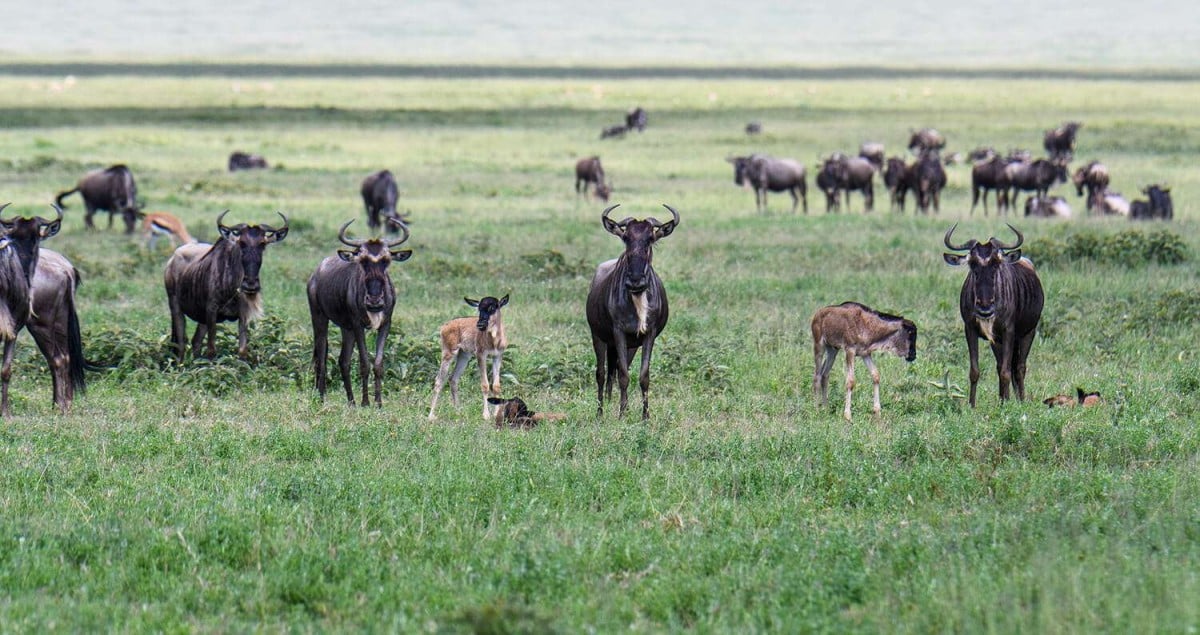
The month of August is the height of the dry season in Africa, and the most reliable time of year to observe wildlife. East Africa is experiencing cool and bright weather with no rainfall whatsoever.
Known as the “Golden Month,” it features the Great Migration of wildebeest in the Maasai Mara and Serengeti regions, as well as the optimal opportunity to track the mountain gorillas in Bwindi, Uganda.
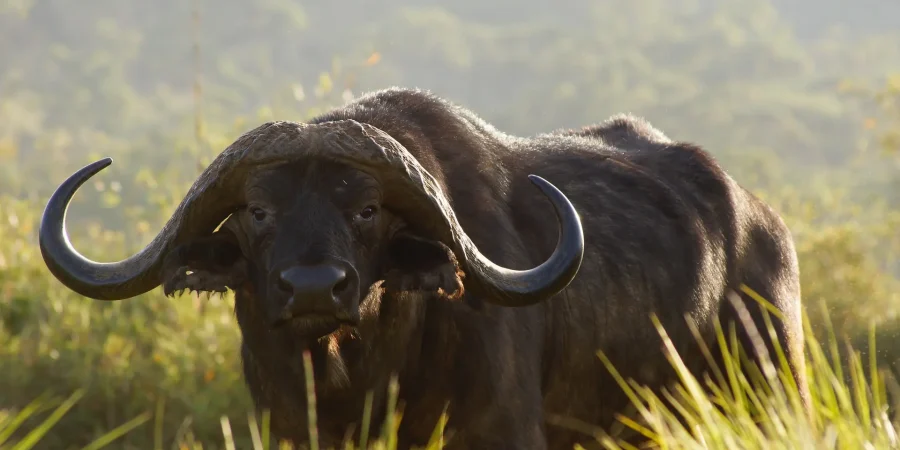
In Southern Africa, the country is in the midst of the dry winter season. World-renowned national parks such as Kruger, Etosha, and Okavango Delta are seeing thinning bush and drying out their temporary water sources, thereby concentrating the “Big Five” into areas where permanent water sources exist.
With daytime weather being pleasant and sunny, visitors need to be prepared for freezing cold mornings and evenings on game drives.
The differences in regions still prevail: whereas the north, Botswana, Namibia, Zambia, and Zimbabwe, boast plenty of sunshine, South Africa’s Western Cape, which includes Cape Town, experiences its rainy season, complete with cold and windy conditions.
At the same time, Victoria Falls witnesses its low water period, allowing tourists to have great, haze-free views of the rocky scenery.
August, indeed, is a splendid month for safaris, but make sure to pack enough clothes for hot daytime and cool nighttime conditions.
Kenya Safaris in August
August is the best time for safaris in Kenya due to the persistent dry season that results in the drying of vegetation and water holes.
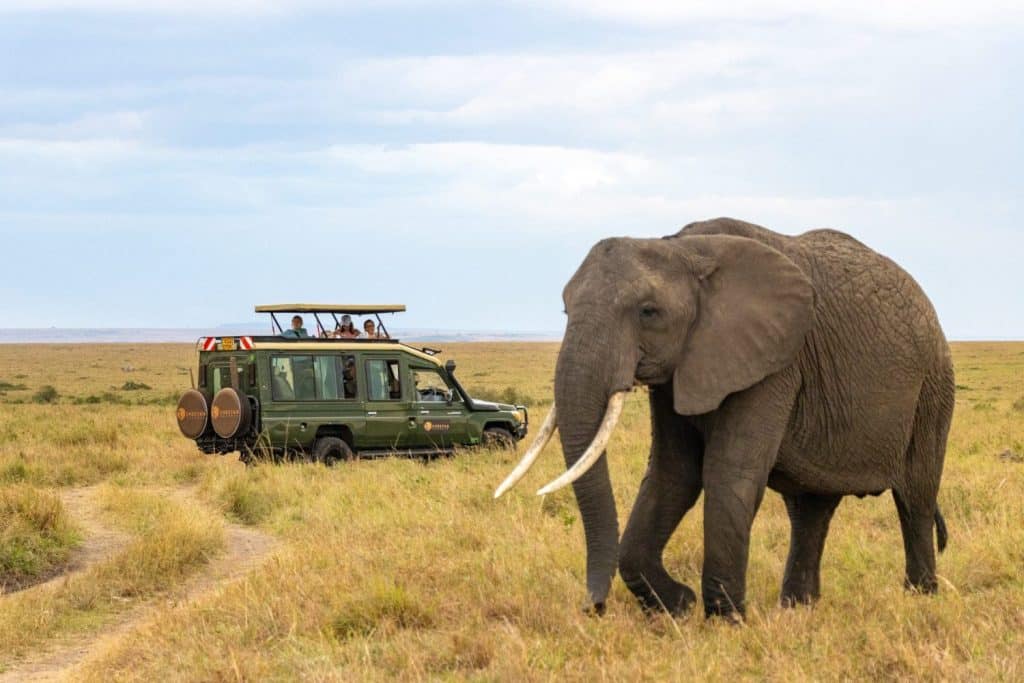
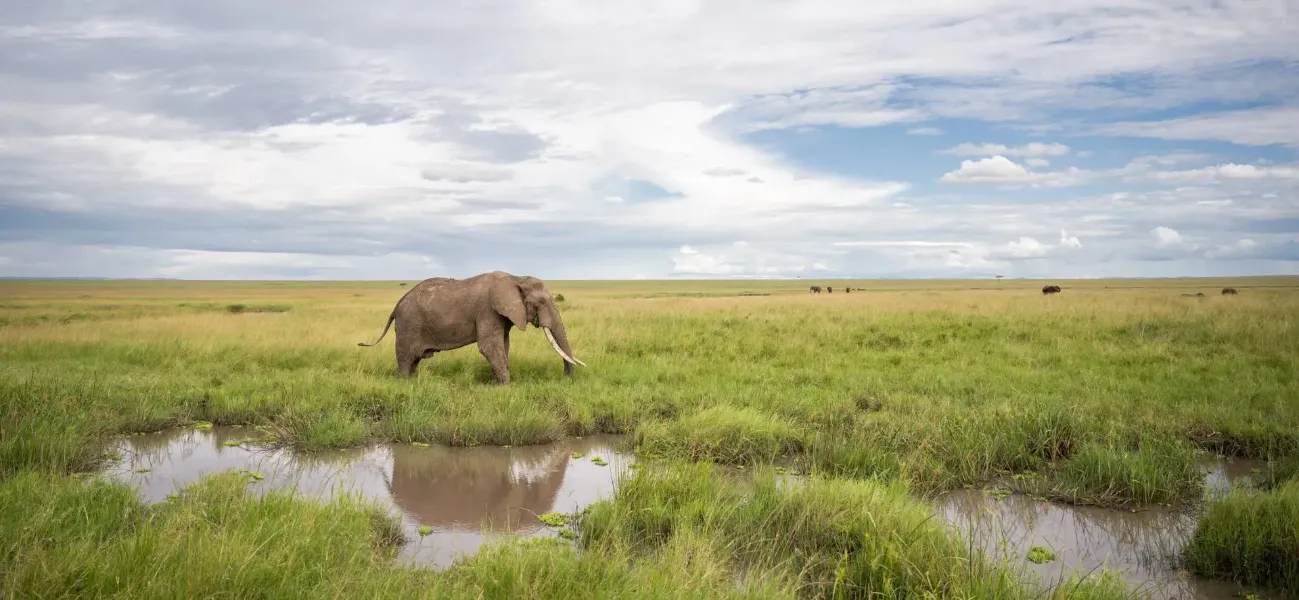
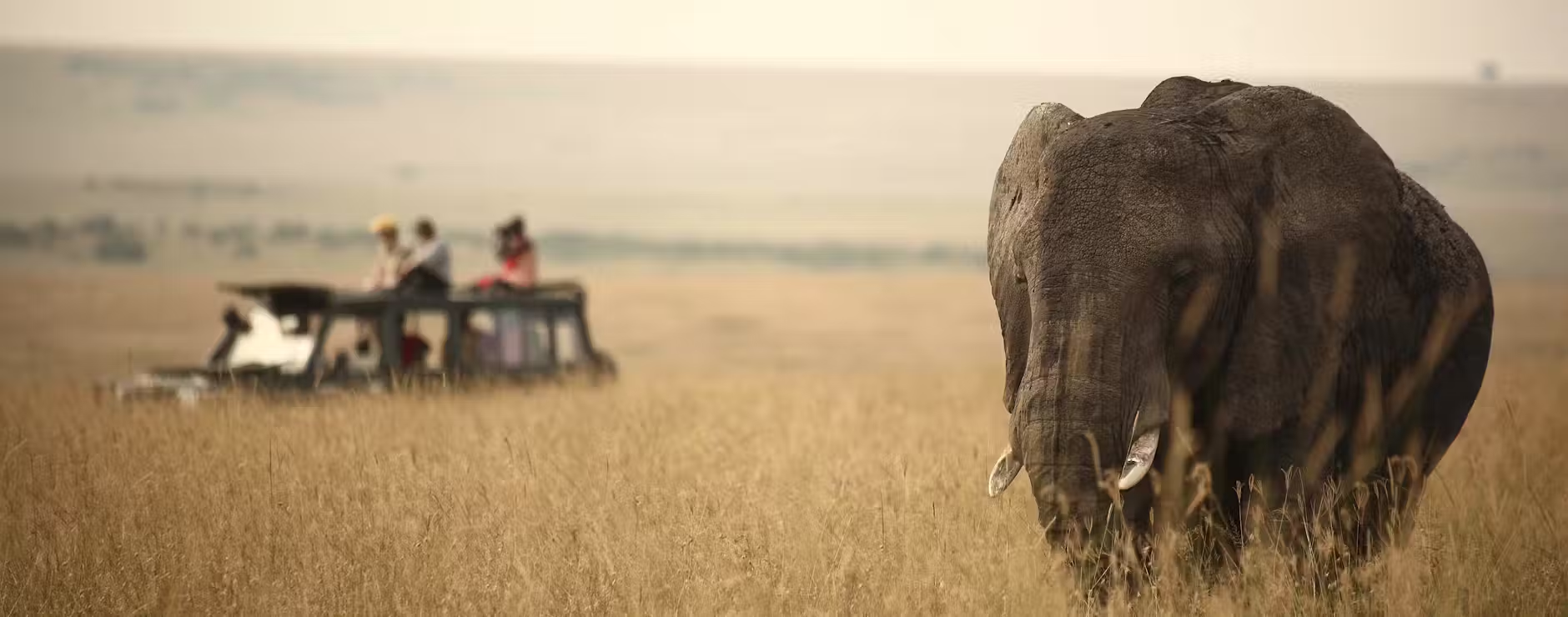
Due to the harsh environmental conditions, animals tend to move closer to the permanent waterholes, allowing tourists to view the Big Five.
The weather is pleasant throughout the day, although one needs to dress warmly during morning game drives.
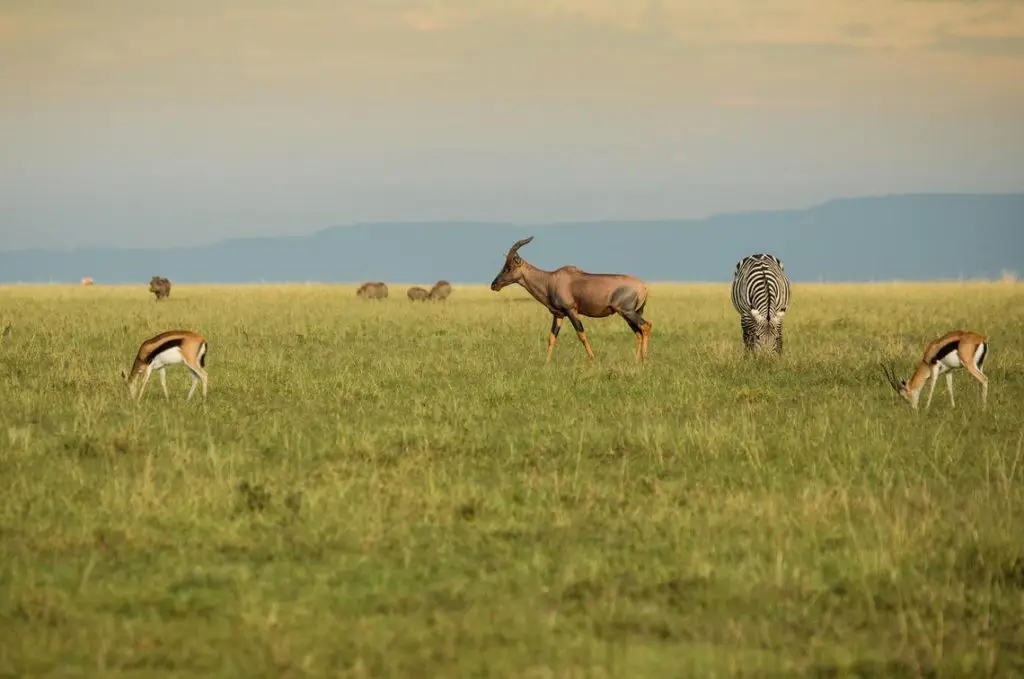
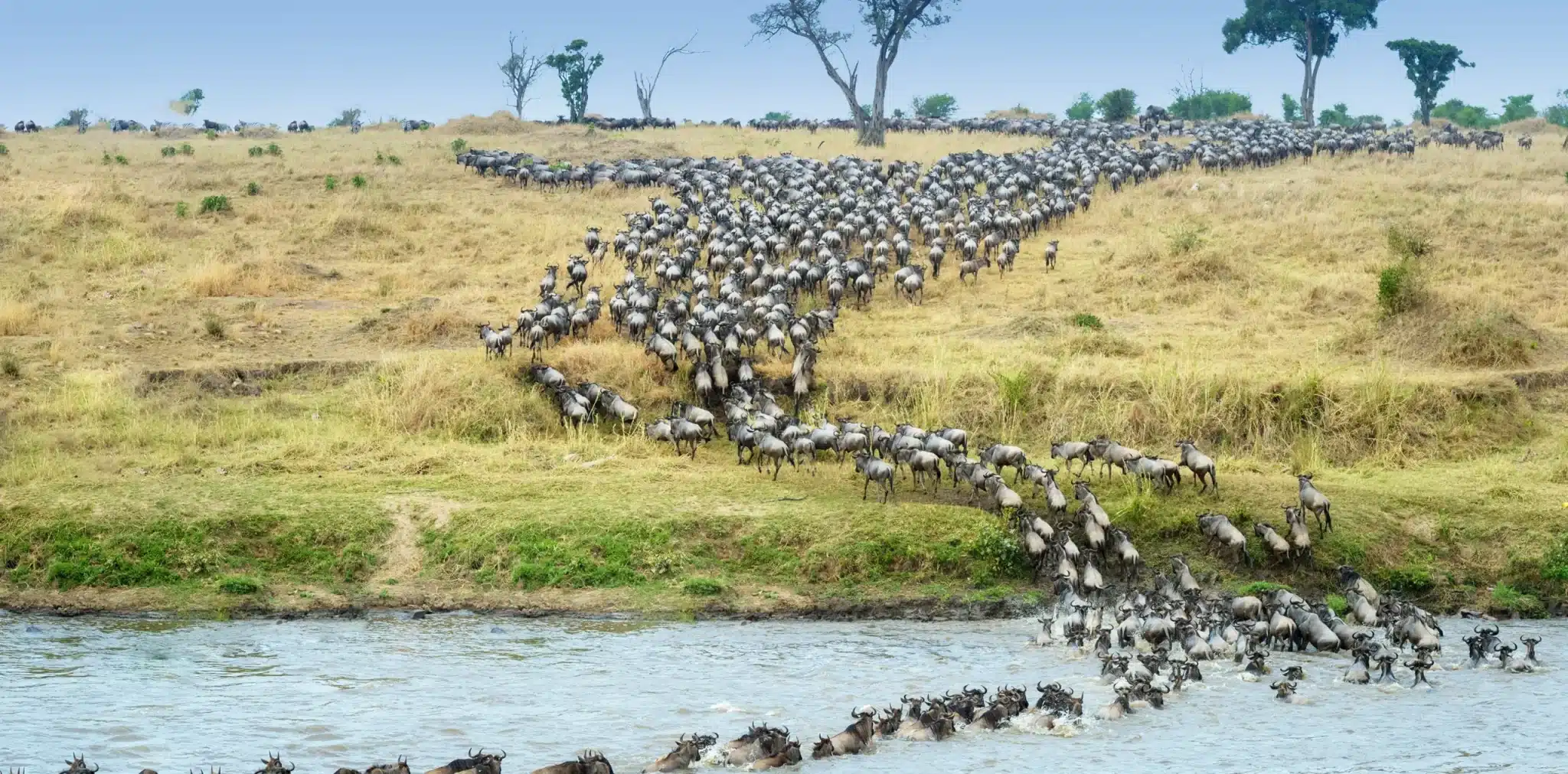
The most important event in August is the Great Migration, when millions of zebras and wildebeest cross the Mara River.
The migration is accompanied by life and death scenarios involving crocodiles and predators, such as lions, among others.
Since the migration attracts many tourists who travel from all over the world, August is the time when the best lodges in the Mara and other reserves are fully booked.
Apart from the migratory movements, August provides perfect weather for much more than mere drives. Dry earth makes it an ideal time for bushwalking and mountain hiking.
While the coastal areas still provide a warm holiday, the highlands within the country retain their cool temperatures. This diversity in climatic zones is beneficial to tourists who are prepared for hot days and cold nights.
Tanzania Safaris in August
August is unquestionably the ideal time to embark on a safari adventure in Tanzania. The weather is typically sunny and warm with temperatures ranging between 20°C and 28°C (68°F to 82°F).
The thinning vegetation and lack of clouds make it easy to spot wildlife such as the “Big Five.”
The northern part of the Serengeti is the prime location for an August safari due to the Great Migration taking place in that region.
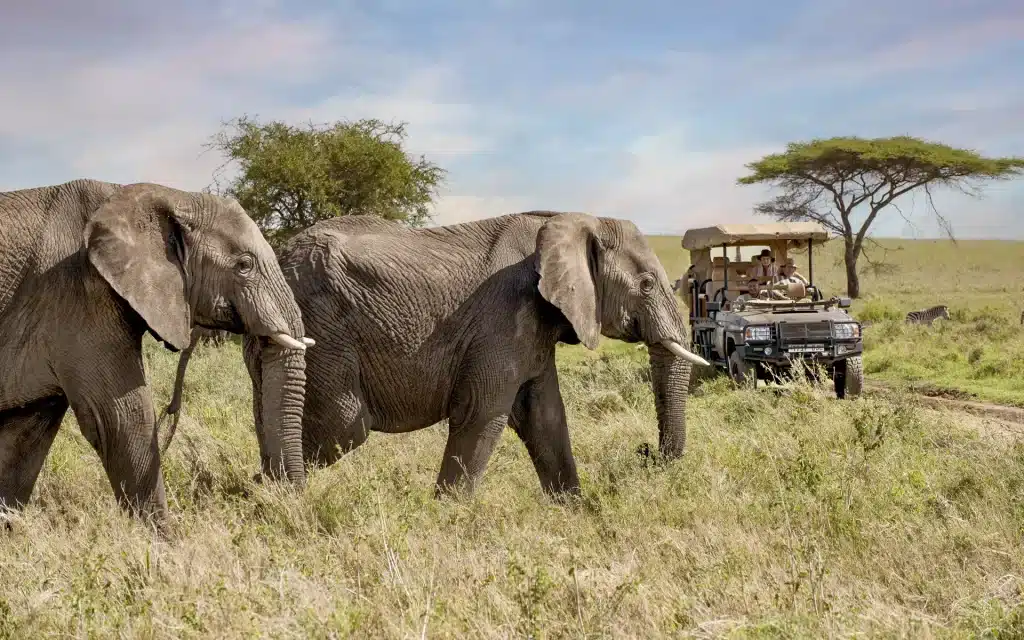
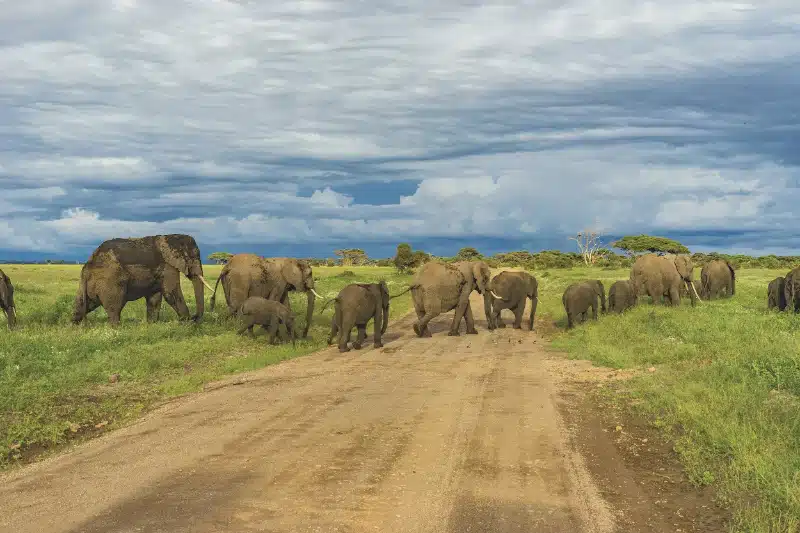
The herds of wildebeest and zebras make perilous crossings across the Mara River, where they face danger from crocodiles. In Tarangire, huge herds of elephants migrate in search of water in the Tarangire River.
The Ngorongoro Crater remains an all-year-round wildlife hotspot, especially since August sees more rain in the crater.
Since August is the busiest month for visitors in Tanzania, the major safari routes get busy. Therefore, the best choice for a tranquil safari is to visit the less frequented Southern and Western circuits, such as Ruaha and Katavi.
It is important to book the safari six to eight months in advance to avoid being disappointed.
Uganda Safaris in August
The month of August is the ideal time for traveling to Uganda because of its second dry season.
The absence of rainfall makes the thick vegetation cover of Bwindi Impenetrable National Park and Mgahinga National Park sparse.
As a result, tourists will have better chances of trekking the endangered species of gorillas in Uganda safely. Since many tourists are looking for favorable conditions, it is necessary to buy trekking permits several months in advance.
For instance, the dry climate forces many animals to move to the Kazinga Channel and the Nile River. Tourists can easily observe the movements of elephants and buffalo and watch the tree-climbing lions in Ishasha.
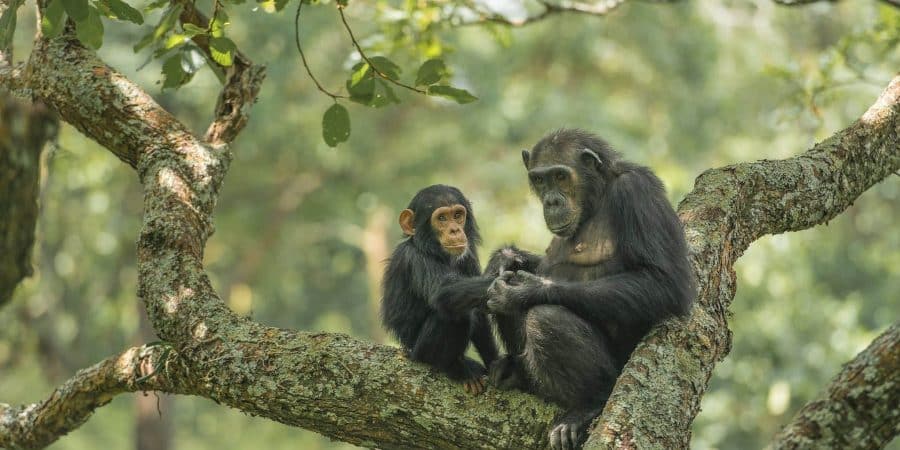
The dry conditions in Kibale National Park ensure successful tours of chimp trekking since chimpanzees are more active during this time.
Apart from the Big Primates, tourists can also enjoy boat safaris and birding in Uganda’s extensive wetlands. For example, Lake Mburo National Park provides a peaceful environment to observe zebras and giraffes on a guided tour.
On the contrary, the daytime temperatures are warm and comfortable, while nighttime temperatures are relatively cold in the highland forests.
South Africa Safaris in August
August provides a double-season experience for travelers to South Africa. While the northern part of the country experiences its dry season, August sees an end to its rainy period in the Western and Northern Capes.
While vegetation decreases significantly in Kruger National Park and other private game reserves such as Sabi Sands and Thornybush, wildlife has nowhere else to turn for sustenance but to water holes, which ensure the predictability of sightings.
The dry conditions continue in the interior parts of the country, while, conversely, regions like the Cape offer a stunning sight of flowers in bloom by mid-August.
Namaqualand offers its breathtaking sea of wildflowers as migrating whales arrive along the Cape coast in preparation for calving.
These contrasting scenes provide a unique opportunity for wildlife photography, and bookings are necessary due to the popularity of this month.
Travelers will experience different weather conditions from one region to another. In the north, expect pleasant sunny weather, with temperatures reaching around 25°C/77°F during the day, but extremely low temperatures (close to freezing) after sunset.
Meanwhile, the southwest continues to experience its rainy season, characterized by cloudy skies and wind.
Botswana Safaris in August
Botswana’s best time for safari is definitely August, when the dry season (May–October) brings an exciting theater of wildlife concentrated around the few remaining water resources.
For instance, in Chobe and Linyanti areas, where the foliage is scarce, the best viewing spots will show massive herds of elephants, the largest in Africa, gathered at river edges.
Although the landscape appears arid in other areas, in the Okavango Delta, flooding begins to reach its peak, allowing access to some deeper water routes suitable for mokoro trips.
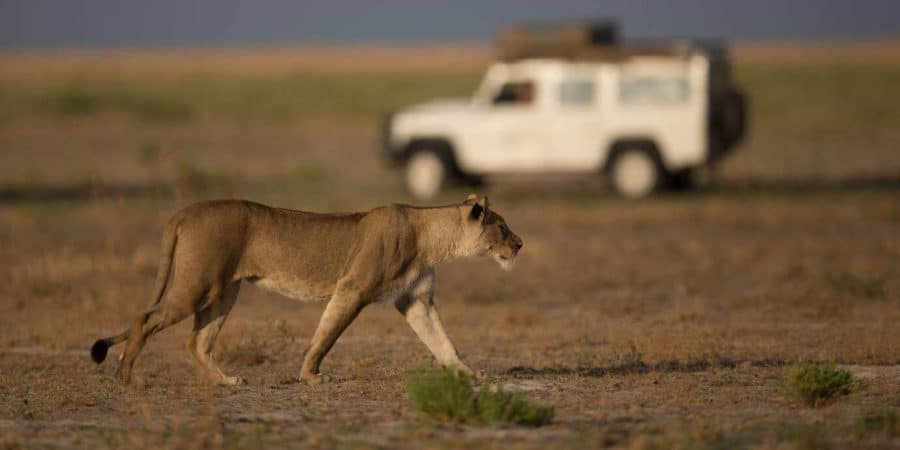
The climate of the month provides an ideal setting for the highest chances of meeting wild animals. Predators such as lions, leopards, and cheetahs become easier to spot among the barren, gold-colored plains as they hunt near waterholes.
But those who decide to come here should be aware that August is the “high season,” which makes it very expensive and highly sought after.
The weather makes for stark contrasts, which call for packing carefully. Although the afternoons are bright and pleasantly warm at temperatures ranging between 20 and 25°C, the lack of clouds sees nightfall bring temperatures down drastically.
Temperatures in the mornings on safari and evening returns are near freezing, necessitating that warm and removable layers be carried for such occasions. In case you’re planning, August presents an excellent opportunity to visit one of nature’s last bastions.
Namibia Safaris in August
August marks the height of a safari in Namibia, featuring clear blue skies and a setting where the dry winter season makes an impression on the scenery.
Since there is little to no rainfall, the sparse vegetation in Etosha National Park brings the animals, including elephant herds, lion groups, and even endangered black rhinoceroses, to gather at the permanent water holes.
Known as the “theatre style,” this viewing experience is one of the best game viewing options in Africa despite the chilly mornings.
Moreover, the cooler August weather is excellent for hiking through the majestic dunes in Sossusvlei and Deadvlei, where climbing up Big Daddy will not be too difficult due to the low temperatures.
Also, the angle of the winter sun offers an opportunity for ideal lighting for professionals. Apart from the famous dunes, visitors can enjoy tracking elephants adapted to desert conditions in the Hoanib Valley or meet the Himba people in Kunene.
For visitors on the coastal side, Swakopmund and Walvis Bay provide relief in the form of misty weather, and both towns act as centers of marine excursions as well as dune treks.
As August is when the season is at its peak for foreign tourists, many hotels located in Etosha and Sossusvlei fill up a year in advance.
However, for the lucky few who manage to get rooms, the month will prove to be an incredible experience of the different environments found in Namibia.
Zambia Safaris in August
August marks the peak of the dry season in Zambia, characterized by clear skies and ideal weather for wildlife viewing.
As seasonal pans dry up, animals, including large herds of elephants and predators such as lions and leopards, move closer to the rivers.
With limited resources, the environment forces the animals into high concentrations, making it possible to see many species during a safari in South Luangwa and Lower Zambezi.
Walking safaris have become a hallmark of August in Zambia, known for the experience of exploring the bush on foot.
Dry and brittle vegetation provides optimal visibility, enabling tourists to enjoy the safari experience without worrying about safety.
On water safaris, the Lower Zambezi National Park presents fantastic opportunities to observe hippos and elephants from close quarters on a boat and canoe ride.
As far as Victoria Falls is concerned, August marks the period when the water level reduces, providing the best opportunity for visitors to get panoramic views of the waterfall and its rock formations.
At high water levels, mist can obstruct the view of the falls.
However, the reduced water level in August allows tourists to undertake adventurous activities such as visiting the Devil’s Pool and Livingstone Island.
Zimbabwe Safaris in August
It is in August that Zimbabwe enjoys its driest months, which means fantastic conditions for wildlife watching.
The animals gather near the permanent rivers and artificially supplied waterholes because natural water sources become unavailable.
It allows visitors to enjoy the highest predictability of the Big Five, and their predators are likely to be there as well.
There are several options to explore the parks beyond typical game drives.
At Mana Pools National Park, you can go on walking or even canoe safaris in one of the most pristine places of the Zambezi River.
Thanks to the low vegetation, it will be safe and feasible to travel on foot. Another interesting spot would be the Chilojo Cliffs in Gonarezhou, offering a wild experience for intrepid explorers.
During the visits to Victoria Falls, the month presents ideal weather for photographing.
By then, the amount of water decreases, which means less mist, and you can take beautiful photos of the falls.
Days are quite sunny and comfortable, while nights are very cold, as a result of the clear sky.
Due to being the peak time of the year for Zimbabwe’s tourism, it is necessary to book hotels and permits up to 6–10 months beforehand.
Zanzibar Island Beach Holidays in August
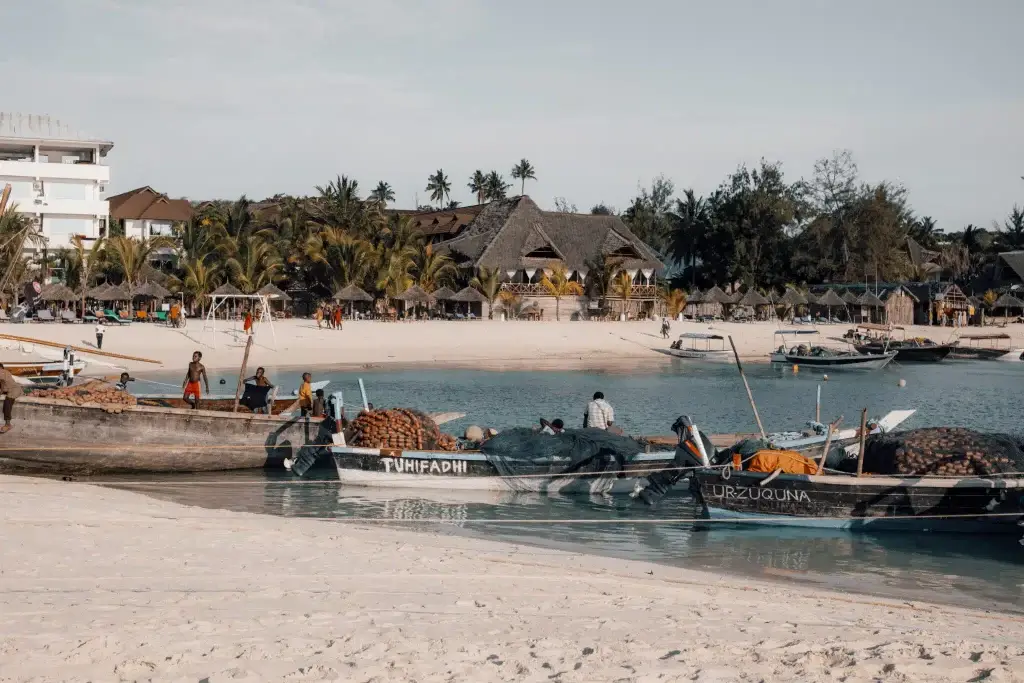
The month of August is ideal for visiting the Zanzibar beaches as the “cool” dry season provides sunny weather with minimal humidity levels.
The average temperature ranges between 25 and 28°C, which is ideal for engaging in both coastal and inland activities.
The trade winds ensure that visitors enjoy the cool breeze, even in the afternoon sun, as they tour the maze-like streets of Stone Town.
When it comes to swimming, August is known to provide clear waters with excellent visibility of up to 25 meters.
It is, therefore, the ideal month for divers and snorkelers who wish to explore the underwater sites of the famous Mnemba Atoll and the Matemwe reefs.
The northern resorts of Nungwi and Kendwa offer magnificent sunset views and deep-water swimming, while the southeastern region of Paje and Jambiani attracts kite surfers from all over the world due to its regular winds during this season.
Away from the shore, the arid conditions allow for simpler trekking within the Jozani Chwaka Bay National Park, home to the rare Red Colobus monkeys.
Tourists will also be able to explore the island’s renowned spice farms without having to endure the tropical rains.
This being one of the busiest times to visit, the island’s top-rated beach resorts will generally be fully booked; therefore, prior arrangements are advisable.