

- Quick Answer: Seeing Wild Dogs in Kenya
- Where to See African Wild Dogs in Kenya: Five Areas
- Where Else to See African Wild Dogs in Africa
- When Is the Best Time to See African Wild Dogs in Kenya?
- How Likely Are You to See African Wild Dogs on Safari?
- How to Plan a Kenya Wild Dog Safari
- How to Tell an African Wild Dog from Other Animals
- African Wild Dog Behaviour, Hunting and Family Life
- Why African Wild Dogs Are Endangered
- Plan Your Tailor-Made Kenya Safari
Karibu to one of Kenya’s most unpredictable and memorable wildlife encounters. African wild dogs, also known as painted wolves or African painted dogs, are among the most captivating predators you can hope to meet on a Kenya safari. Their speed, coordination and close pack bonds make even a brief sighting unforgettable.
Can you see African wild dogs in Kenya? Yes, though sightings are never guaranteed. They range across parts of Laikipia, the Samburu region, the Tsavo Conservation Area and the wider Maasai Mara ecosystem. Some areas offer far better prospects than others, and pack movements change quickly, so the smart approach is to choose a landscape with suitable habitat, knowledgeable guides and current information on where the packs are. Below are five areas to weigh up when planning your African wild dog safari in Kenya.
Please note: African wild dogs are endangered and wide-ranging. No safari, however well planned, can guarantee a sighting.
Quick Answer: Seeing Wild Dogs in Kenya
- Best region to start with: Laikipia and the connected Samburu rangelands, where wild dogs are actively monitored on community and conservancy land.
- Realistic expectation: an opportunistic bonus rather than a certainty, even in the strongest areas.
- Best odds: several nights in one suitable landscape, with a specialist who follows recent pack activity.
- Best paired with: big cats, elephants, the Samburu special species and the Great Wildebeest Migration, so the trip is memorable whether or not the dogs appear.

Where to See African Wild Dogs in Kenya: Five Areas
| Area | Wildlife highlights | Wild-dog viewing outlook | Suggested stay | Good first-time choice? |
|---|---|---|---|---|
| Laikipia conservancies | Wild dogs, elephants, big cats, rhinos, Grevy’s zebra | Among Kenya’s best prospects; monitoring and recent sightings vary by conservancy | 3 to 4 nights | Yes, for conservation-led safaris |
| Samburu, Buffalo Springs, Shaba | Grevy’s zebra, reticulated giraffe, gerenuk, Beisa oryx | Possible across the wider landscape, not guaranteed | 2 to 3 nights | Yes |
| Tsavo East and West | Elephant, lion, leopard, vast wilderness | Present in the wider ecosystem; a rare bonus | 2 to 3 nights | Yes, for wilderness and coast combos |
| Maasai Mara and conservancies | Big cats, Great Migration, plains game | Occasional and opportunistic only | 3 nights | Yes, for classic safaris |
| Other range areas (Kora, Machakos, Amboseli and conservancies, Chyulu Hills) | Varies; limited tourism infrastructure | Mostly range on the map; occasional real sightings | Specialist only | No |
1. Laikipia Conservancies
Laikipia is one of the best regions in Kenya to begin planning an African wild dog safari, particularly where conservancies and conservation organisations keep current information on pack movements. Rather than a single national park, it is a mosaic of private ranches, community conservancies and protected areas where wildlife shares the land with people and livestock.
Laikipia wild dogs are among the best studied in the country. The long-running Samburu-Laikipia Wild Dog Project, led by the Zoological Society of London and based at Mpala, has tracked pack movements, managed disease risk and supported a recovery of the local population on community and ranch land outside the formal parks. That on-the-ground monitoring is what gives a wild-dog-focused trip a realistic footing.
Several conservancies are worth researching, including Mugie, Ol Pejeta and Loisaba. Their access and current wild-dog activity differ, so we confirm what is realistic with each property before we build your itinerary. Three to four nights gives your guide time to follow current information, though no length of stay can promise a sighting.
2. Samburu, Buffalo Springs and Shaba
The Samburu region is a rewarding northern Kenya destination of dry riverine country, doum palms and rocky hills. Samburu, Buffalo Springs and Shaba national reserves sit within one connected ecosystem that spills into surrounding conservancies and rangelands.
African wild dogs move through this broader landscape, but a stay in Samburu will not automatically deliver a sighting; a single pack can cross a very large area in days. The region is especially appealing if you want to pair the chance of painted wolves with its own celebrated species: Grevy’s zebra, reticulated giraffe, gerenuk, Beisa oryx and Somali ostrich, the Samburu Special Five.
Safari tip: ask your specialist and lodge about recent wild-dog activity before committing your nights. The best opportunity is often on conservancy land outside the main reserve.
3. Tsavo East and Tsavo West National Parks
Tsavo East and Tsavo West form one of Kenya’s great wilderness landscapes, famous for scale, red-earth scenery, elephants and big cats. Painted wolves have a presence in the wider Tsavo Conservation Area, but they are not a routine sighting, and it would be misleading to call them easy to see or dominant here.
One of our most memorable sightings came on exactly this kind of drive, led by our Gold guide Felix. Transferring from Amboseli to our Tsavo West lodge with our frequent guest Lynne, we entered through the Chyulu gate and worked our way past the Shetani lava flows. Along the road ahead lay a pack of around thirty wild dogs, sprawled out with full bellies and far too content to move, and among them were puppies. Tsavo West is often quiet, and with fewer vehicles about, wildlife that is usually shy is more willing to come into the open. Some of the best painted-wolf encounters happen during an otherwise ordinary transfer or game drive.
Choose Tsavo for its vast landscapes, long drives, fewer vehicles and wildlife that can remain completely unpredictable, plus its natural link to the coast, with wild dogs as a bonus rather than the reason to go.
4. Maasai Mara National Reserve and Surrounding Conservancies
The Maasai Mara is Kenya’s best-known safari destination, celebrated for big cats, open grasslands and the annual wildebeest migration. Painted wolves have been recorded in the wider Mara ecosystem, but they are not a reliable sighting in the main reserve, and even in the quieter neighbouring conservancies an encounter remains opportunistic. If wild dogs are your main reason to travel, talk through the northern circuit with your safari planner before settling on the Mara.
5. Other Areas Where African Wild Dogs May Occur
Kenya’s national wildlife assessments, including the 2021 National Wildlife Census, associate further landscapes with wild-dog range, among them Kora and Kitui, Machakos, and the Amboseli area with its surrounding conservancies and the neighbouring Chyulu Hills. Appearing in distribution records does not make these established viewing destinations; consider them only when recent, credible information confirms a pack is present and the area can be visited responsibly.
We have had our own encounters along this southern corridor. Leaving Amboseli early one morning through the Meshanani gate with our Silver guide Richard, heading for Namanga to drop guests at the border ahead of the immigration rush, we came across a pack of about ten wild dogs running across the road. Before we could lift a camera, they had melted into the bush. That is exactly how painted wolves behave where they are not habituated to vehicles.
Some of these areas have limited visitor infrastructure and no dependable way of locating packs, so your itinerary should rest on current information from conservation organisations and experienced guides, not on historical records alone.
Where Else to See African Wild Dogs in Africa
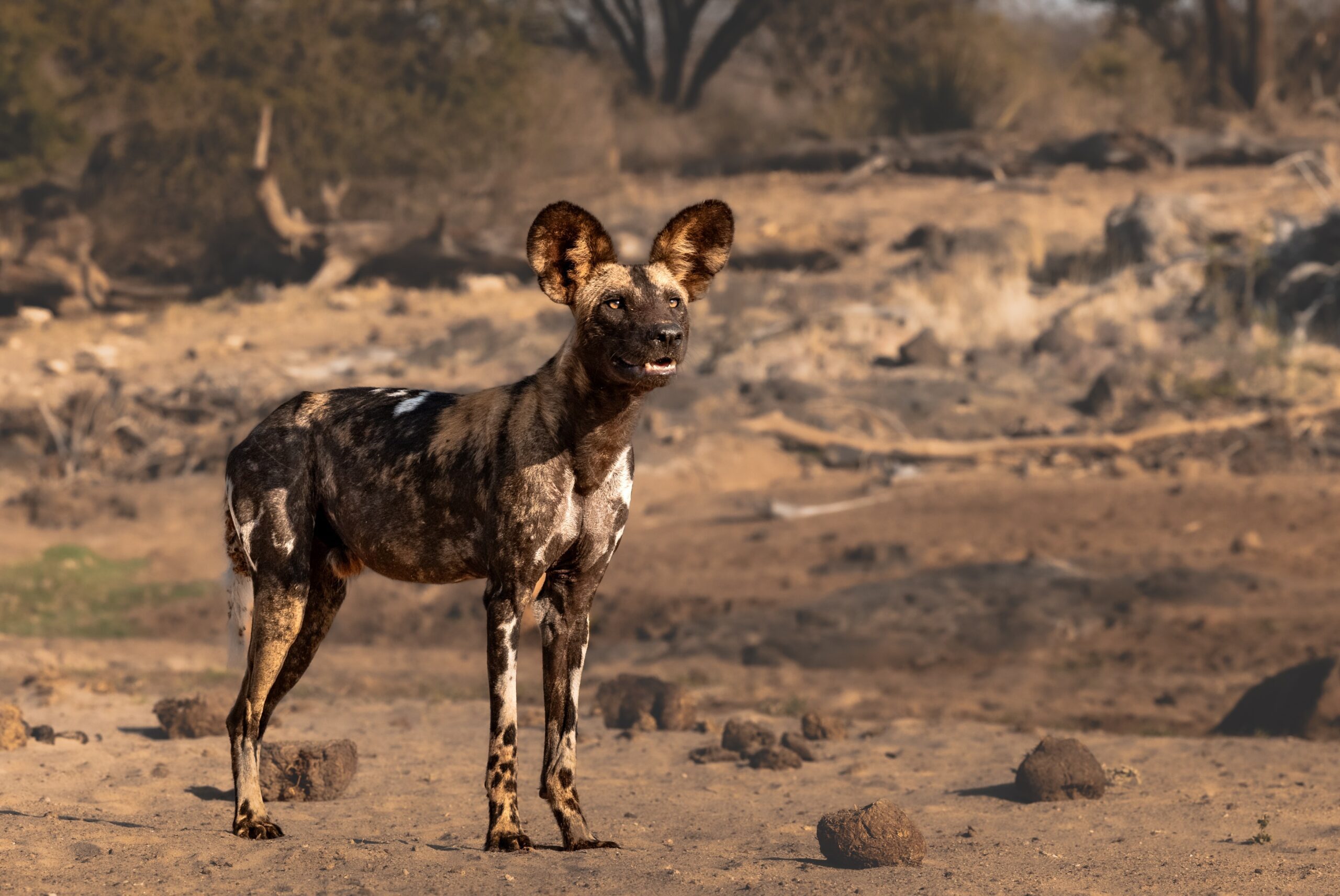
Of all the best places to see wild dogs in Kenya, Laikipia is the natural starting point. It is also honest to say that some other parts of Africa hold larger and more regularly seen populations. If painted wolves are the single most important species on your list, it is worth knowing how Kenya compares, and how it can be combined with one of these destinations. As a Kenyan-owned operator that also runs safaris in Tanzania and across Southern Africa, we plan these combinations regularly.
| Country | Key areas for wild dogs | Why it stands out |
|---|---|---|
| Tanzania | Nyerere (formerly Selous) and Ruaha national parks | One of Africa’s largest wild dog populations; a quiet southern circuit easily paired with Kenya |
| Botswana | Okavango Delta, Moremi, Linyanti and Kwando | Widely considered one of Africa’s leading wild dog destinations |
| Zimbabwe | Mana Pools and Hwange national parks | Relaxed packs, walking encounters and a long-running painted dog conservation project |
| Zambia | South Luangwa, Lower Zambezi and Kafue | Growing populations and superb dry-season viewing |
| South Africa | Greater Kruger private reserves, Madikwe | Well-managed populations with excellent guiding and photography |
Tanzania deserves particular attention for our guests. Nyerere and Ruaha sit on the country’s quiet southern circuit and hold some of the most significant wild dog numbers anywhere in Africa. A Kenya safari through Laikipia and Samburu, followed by a fly-in extension to southern Tanzania, gives you two very different wild dog landscapes on one seamless itinerary. Botswana and Zimbabwe are the classic Southern Africa pairing, arranged through our trusted ground partners. As with Kenya, nowhere offers a guarantee; the strongholds simply offer better odds.
When Is the Best Time to See African Wild Dogs in Kenya?
Painted wolves are active year-round, so no single month guarantees a sighting. Rainfall, prey movements, and denning all influence where the animals are. The drier periods generally make wildlife viewing easier, while the green season brings fewer visitors and beautiful light for photography, but neither is a promise of better wild-dog sightings.
One pattern worth knowing is denning. When a pack is raising pups, adults may return repeatedly to the same general area, which makes their movements more predictable. Dens themselves, though, can be hard to find and are highly sensitive, so responsible guides avoid crowding them and follow local conservation rules. Ask your safari specialist whether any current denning activity is known and whether viewing is appropriate, and always check recent sightings close to your travel dates.
How Likely Are You to See African Wild Dogs on Safari?
Even where they are known to occur, African wild dog sightings in Kenya depend on luck, pack movements, habitat, and the skill of your guide. A specialist safari improves your odds of a well-informed search but cannot promise success. Before you book, ask when wild dogs were last seen, whether there are resident or monitored packs, whether the lodge receives current wildlife updates, how many nights are recommended, and what else you will see if the dogs stay hidden. The right frame of mind is to value the whole safari while giving yourself the best realistic chance of meeting this rare predator.
How to Plan a Kenya Wild Dog Safari
Choose the right area. If wild dogs are your main interest, look first at Laikipia and its conservancies. If you also want the Samburu specials, big cats, elephants or the Great Migration, build a broader circuit around those goals.
Allow enough time. Packs range widely, and a short visit can coincide with a stretch when they are elsewhere. Several nights in one suitable area beats a rushed stopover.
Work with an experienced local safari company. A locally based specialist can compare conservancies, match you to the right camps, arrange private guiding and check current wildlife information on your behalf. As a Kenyan-owned operator, this is the on-the-ground detail we handle for every wild-dog enquiry.
Know what the days look like. A wild-dog day starts before dawn, when packs are most active, with your guide checking recent sighting areas and known dens, reading fresh signs and sharing radio updates. After a midday rest at camp, the search resumes as temperatures drop. One thing we always say to guests: no guide controls where wildlife goes. A specialist puts you in the right landscape at the right time, and the rest is up to the dogs.
Travel responsibly. Keep a respectful distance, follow your guide’s instructions, and never ask a vehicle to chase, surround or crowd the pack. Interfering with hunting, resting or denning is harmful and, with an endangered species, simply unacceptable.
How to Tell an African Wild Dog from Other Animals
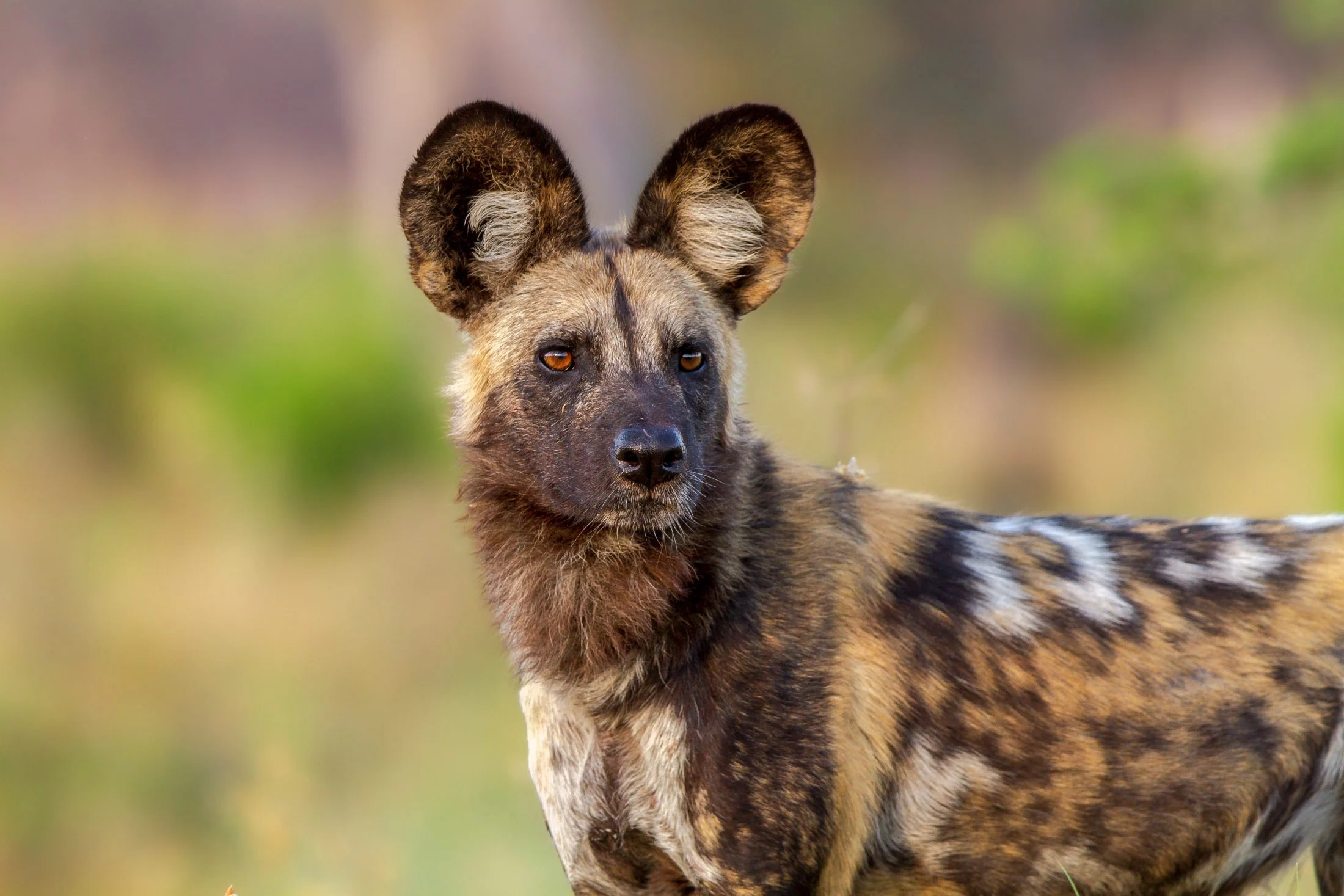
Painted wolves in Kenya are often confused with other predators at a distance. The easiest field markers are the huge round ears, the irregular painted coat of black, brown, white, and tan, and the white tail tip.
- Vs domestic dog: a distinct wild species, Lycaon pictus, with a unique blotched coat and four toes on each foot, unlike many other canids that have five on the forefeet.
- Vs hyena: hyenas are bulkier with sloping backs; wild dogs are lean and long-legged with upright rounded ears.
- Vs jackal: jackals are smaller, uniformly coloured and usually alone or in pairs; wild dogs move in cohesive packs.
- Vs cheetah: a cheetah is a spotted cat with black tear marks; a wild dog is a mottled canid with oversized ears.
African Wild Dog Behaviour, Hunting and Family Life
A pack is a tight cooperative unit that hunts, raises young and defends territory together. Rather than relying on a burst of speed, wild dogs hunt as a coordinated team, using stamina and gentle chirping calls to work prey over distance. Their social bonds run deep: pack members regurgitate food for pups, nursing mothers and injured individuals that cannot keep up, a level of care few other predators show. When a litter is born the whole pack shifts around the den, with adults taking turns to guard the pups. This denning stage is one of the most important, and most vulnerable, points in a wild-dog family’s year.
Why African Wild Dogs Are Endangered
The African wild dog is listed as Endangered on the IUCN Red List, with a small, fragmented population spread thinly across sub-Saharan Africa. Numbers are far lower than most first-time safari-goers expect, which is why sightings are such a privilege. The main threats are habitat fragmentation, infectious disease often spread from domestic dogs, and conflict with people and livestock. Because packs need room to roam, wild dogs are one of the clearest indicators of whether a landscape is still ecologically connected.
African wild dog conservation in Kenya centres on monitoring the packs that remain, reducing disease risk, maintaining corridors and supporting coexistence with pastoralist communities, much of it on the community land where the country’s wild dogs actually live. At Cheetah Safaris, we believe a meaningful safari should connect rare wildlife encounters with a deeper understanding of the habitats, conservancies and communities that allow these populations to survive.
Plan Your Tailor-Made Kenya Safari
Would you like to search for African wild dogs in Kenya and explore the country’s wildlife beyond the usual highlights? Cheetah Safaris can design a tailor-made journey around your interests, from Laikipia’s conservation landscapes and the northern rangelands of Samburu to the Great Migration in the Mara or a safari paired with an Indian Ocean beach holiday.
Tell us what you hope to see, when you would like to travel, and how many days you have, and our safari specialists will build a realistic itinerary with the right destinations, camps, and guiding. Asante for reading, and karibu Kenya.